Key insights from Grow with Braze Seoul 2026
Published on April 24, 2026/Last edited on April 24, 2026/13 min read
Team Braze
BrazeContents
How South Korea’s leading brands are using AI as a connection catalyst to earn trust, anticipate needs, and prove the impact of human-centered engagement.
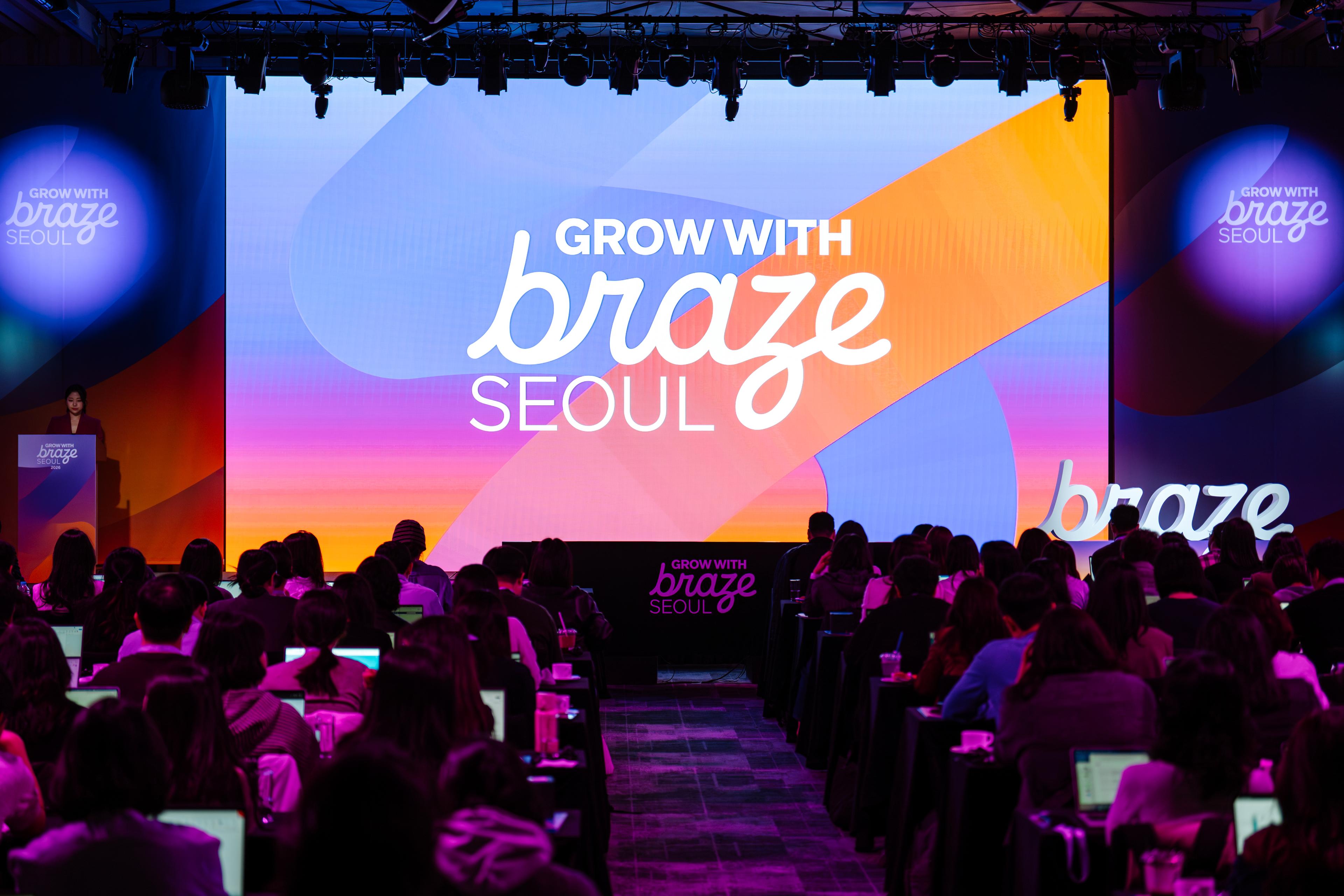
Our Grow with Braze Seoul 2026 event brought together over 600 marketing, CRM, data, and customer experience leaders at The Westin Seoul Parnas. The day was anchored by one theme: AI is the connection catalyst, not a substitute for human relationships, but the force that helps brands build real connections at scale.
What followed was a full day of keynotes, customer spotlights, partner sessions, and product demonstrations across fourteen sessions. South Korea’s leading brands showed what that conviction looks like in practice: From rebuilding CRM infrastructure at 11st, to using AI-predicted re-treatment cycles at Babitalk, to turning a single click into a personalized enterprise sales conversation at Canva.
Opening the conversation: The Harmony of customer engagement
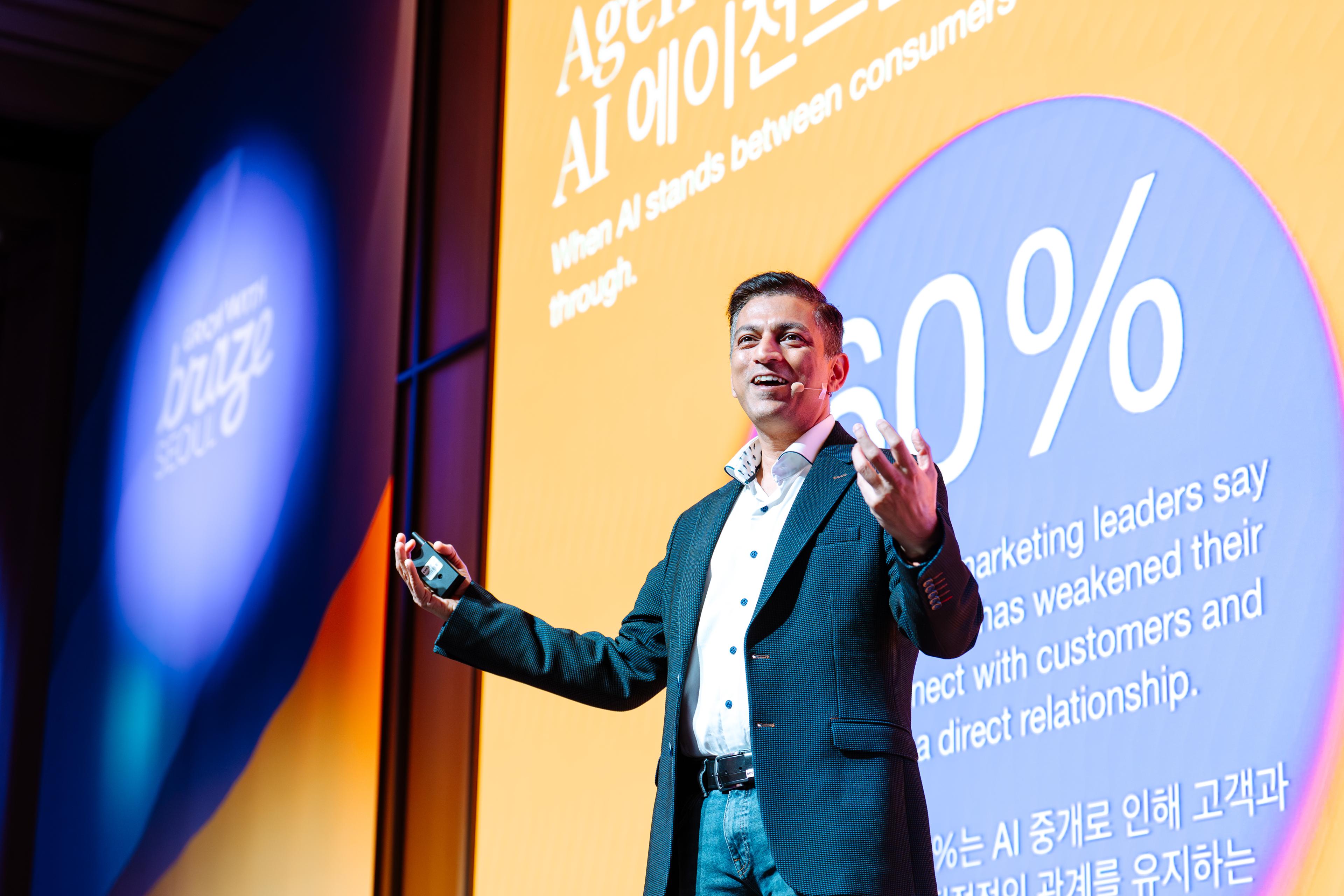
Shahid Nizami, Vice President of Sales for APAC and GCC at Braze, opened the day by drawing an unexpected parallel with BTS. Just as the group’s seven members each play a distinct role yet produce something powerful in harmony, customer engagement works the same way: AI, messaging, data, human creativity, and infrastructure must each play their part. When they work in concert, engagement stops being a metric and starts being a relationship.
Shahid shared findings from the 2026 Global Customer Engagement Review and outlined three trends shaping the market:
- Trend 1: Brands know less than they want: While 93% of marketing leaders say AI enables them to understand customer preferences with more accuracy, only 53% of consumers feel brands are accurately predicting their wants and needs, a 40% gap. Marketers who close the gap, are the ones who will win.
- Trend 2: AI agents are the new intermediaries: 60% of South Korean marketing leaders say AI intermediation has weakened their ability to maintain direct customer relationships, yet only 19% of global consumers currently use AI agents as go-betweens. The window to build direct trust is still open.
- Trend 3: AI isn’t enough: Only 31% of South Korean marketing leaders say their content is assembled for each user at the moment of engagement. The opportunity lies in moving from static segmentation to real-time, AI-powered orchestration that still feels human.
Closing with three imperatives for marketers: Invest in best-in-class engagement infrastructure, lean into openness and relevance, and maintain a human touch, Shahid punctuated the infrastructure message with two announcements for the Korean market: A dedicated Seoul Data Center and native KakaoTalk messaging support.
Seoul Data Center
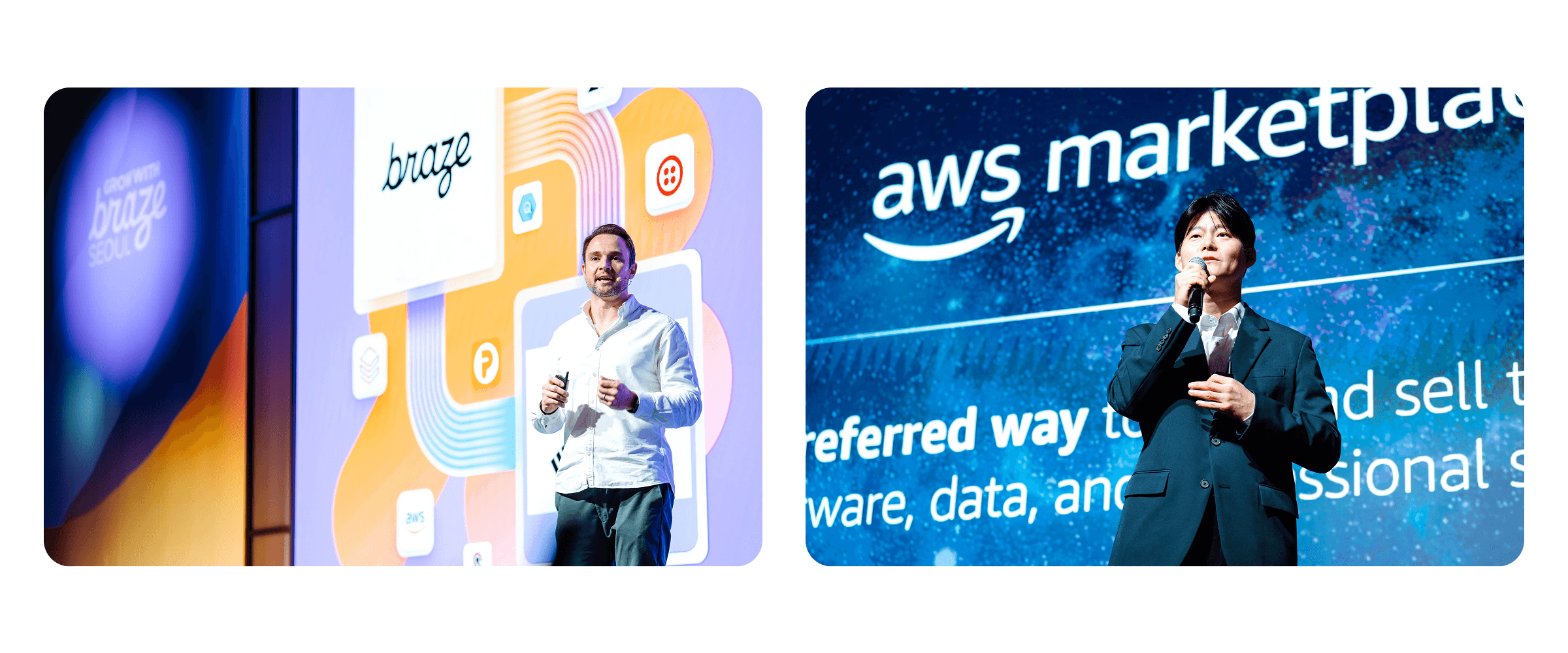
John Ashton, VP of Partnerships at Braze, announced a significant milestone investment joined by Alex Kim, Head of AWS Marketplace for Korea and Japan to reinforce how AWS’s cloud infrastructure supports this vision.
A dedicated Braze Data Center in Seoul, built on AWS infrastructure and is expected to go live in June 2026. For Korean brands operating under strict privacy regulations and prioritizing local data hosting, the ability to manage data locally while connecting to the global Braze ecosystem removes a significant barrier to adoption.
As John put it: Secure locally. Connect globally. Engage brilliantly.
CJ OliveNetworks: Loyalty is a spectrum, not a binary
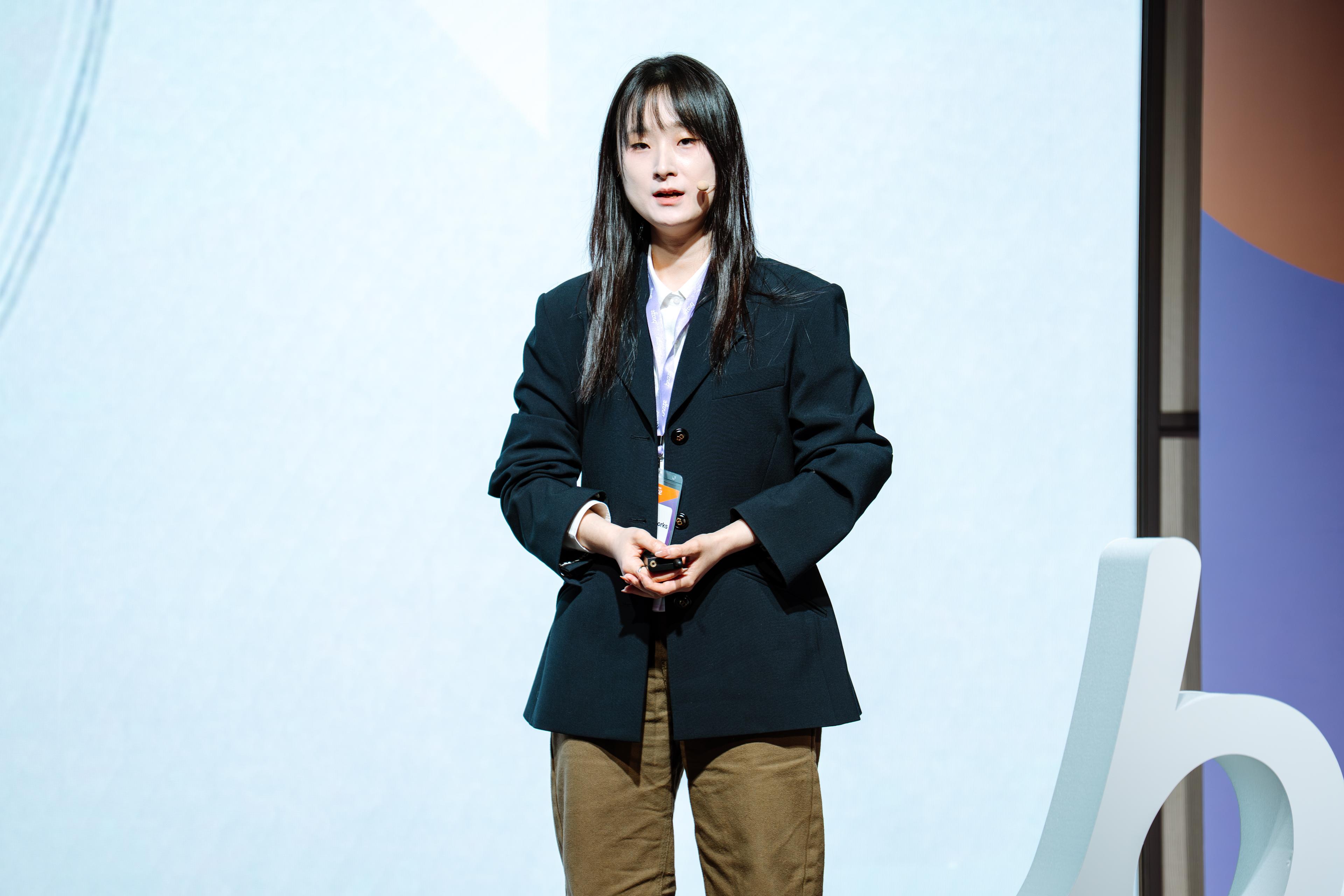
Hyeonjeong Cho, Customer Success Manager at CJ OliveNetworks | Team MAXONOMY, challenged the audience to rethink loyalty in the AX (AI Transformation) era. For most brands, loyalty is an asset measured through retention, LTV, and repurchase rates and ultimately asking, “Is this customer still spending?”
Hyeongjeong argued this framing misses the point: a customer who repurchases regularly may be doing so out of habit or lack of alternatives, not genuine affinity.
True loyalty, she explained, is a psychological and relational spectrum, not just a yes-or-no binary. Brands need to distinguish between behavioral loyalty (repeat transactions) and attitudinal loyalty (genuine connection), and design CRM programs that nurture the latter. In the AX era, where AI helps process signals at speed, the brands that invest in understanding what loyalty means from the customer’s side will be the ones that build truly durable relationships.
AB180 and Martinee: Reading the context behind the click
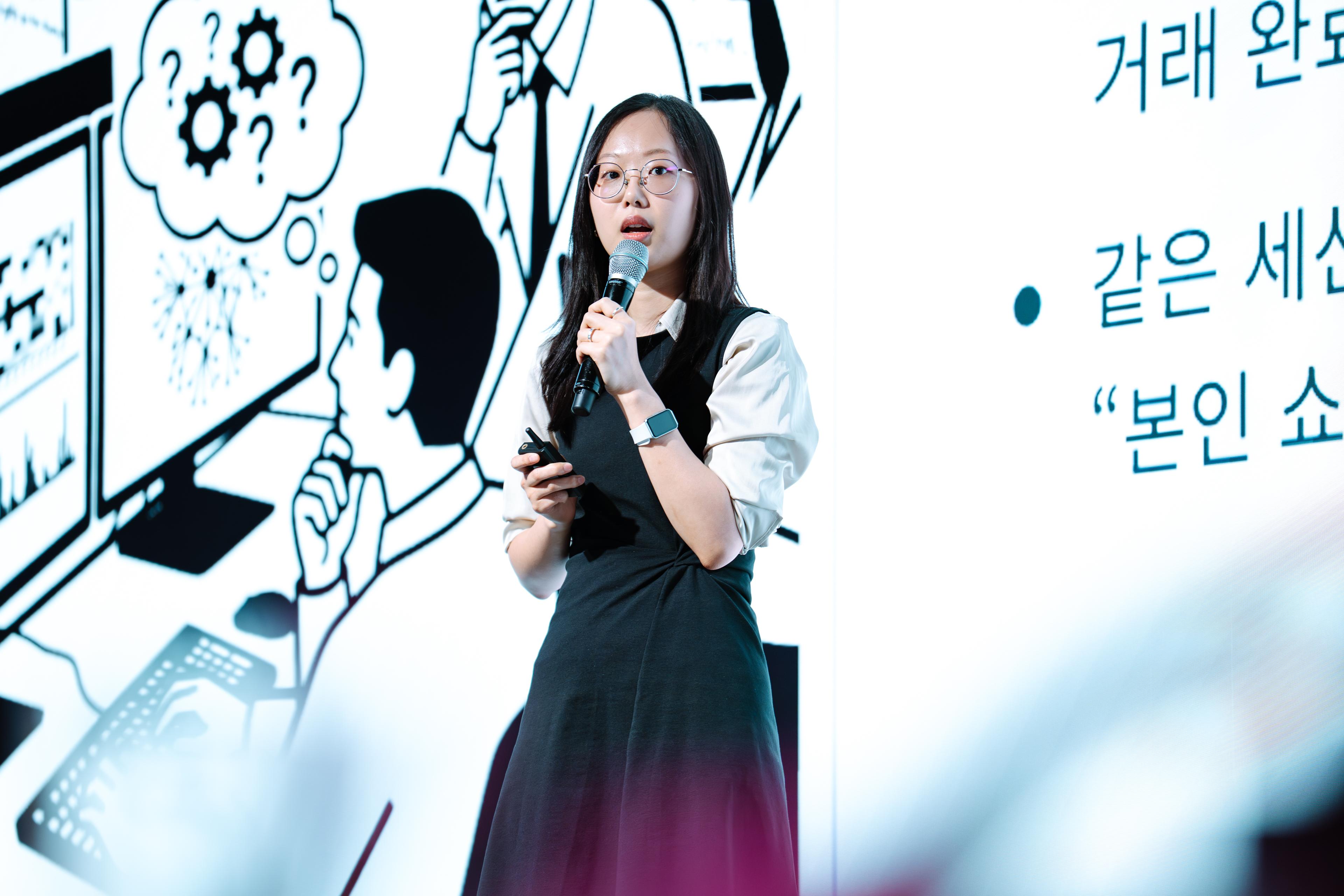
Two partner sessions converged on the same insight: The best CRM reads context, not just behavior.
Damin Oh, Solutions Architect at AB180, opened with a deceptively simple observation: people exist before they consume. When engagement focuses only on what a user browsed, it captures the “what” but misses the “why.”
She illustrated this with an example: Browsing business shoes for a presentation, men’s shoes as a sibling’s birthday gift, running shoes to get back into fitness, and laptop bags for a heavy computer. In the app’s data, all four needs collapsed into “shoes viewed 3 times, bags searched 2 times.” The result is a generic push notification of a discount on the recently viewed brand or product, though technically correct is contextually hollow.
Damin outlined how to use behavioral patterns as inference signals rather than taking them at face value and leverage tools like BrazeAI™ Operator to accelerate pattern recognition. Her core message: AI can find patterns faster, but understanding the person behind the pattern remains the marketer’s irreplaceable role.
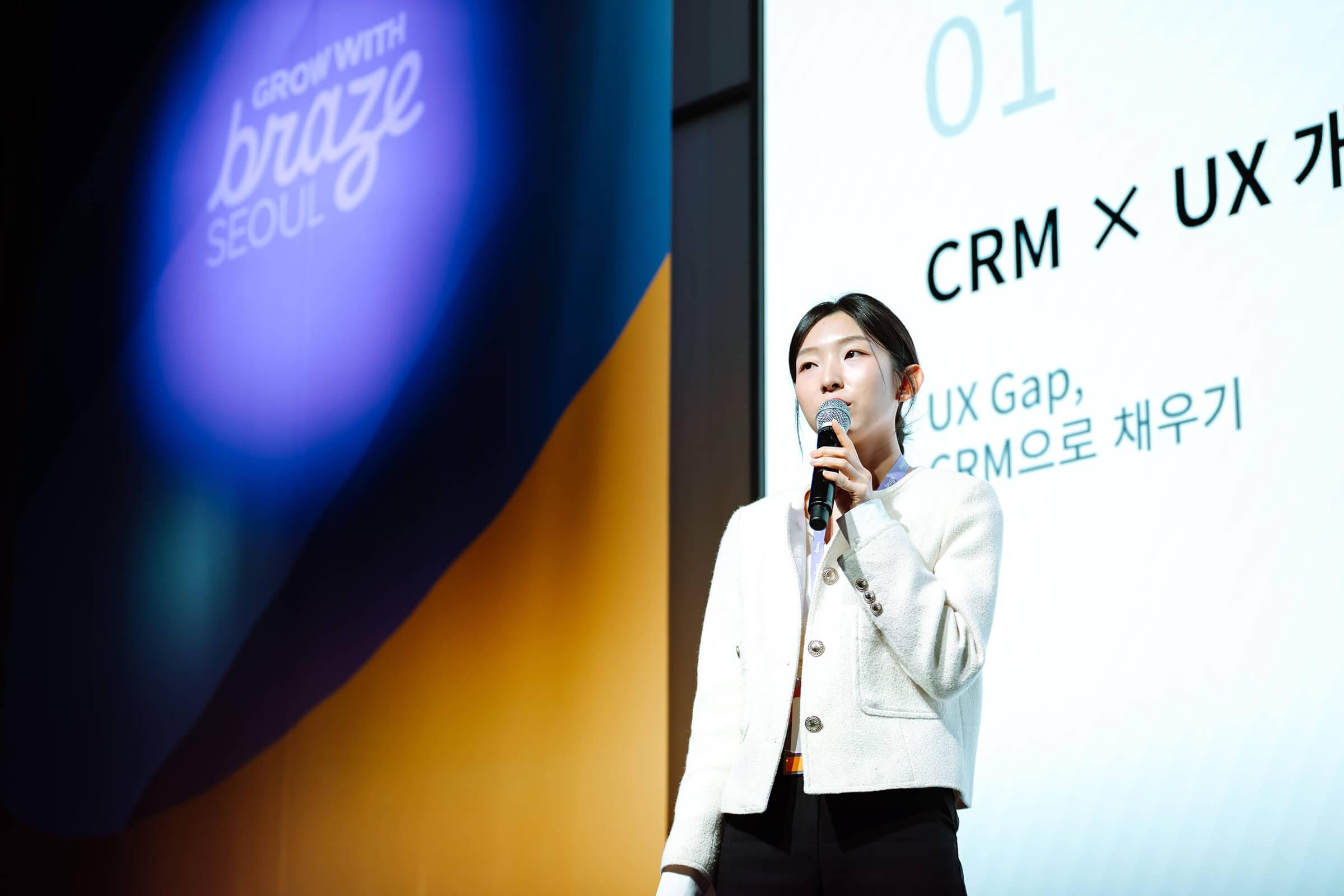
Chanhee Kim, CRM Lead at Martinee, reinforced this from the practitioner side. Distilling patterns from over 30 client engagements, Chanhee identified one common thread across leading brands, that send messages that prompt the thought of “Oh right, I was meaning to do that!” rather than “So what?”
She shared the three trends driving results. Firstly, using CRM to fill UX gaps, a book platform saw author alert sign-ups increase 287% after CRM messages explained a feature the UI couldn’t communicate alone. Second, identifying the precise moment to nudge users toward membership lock-in. Third, deliberately simplifying UX writing to drive action. A promotional campaign using contextual personalization delivered a 230% increase in purchases versus the control group.
Canva: How a single click becomes a sales conversation
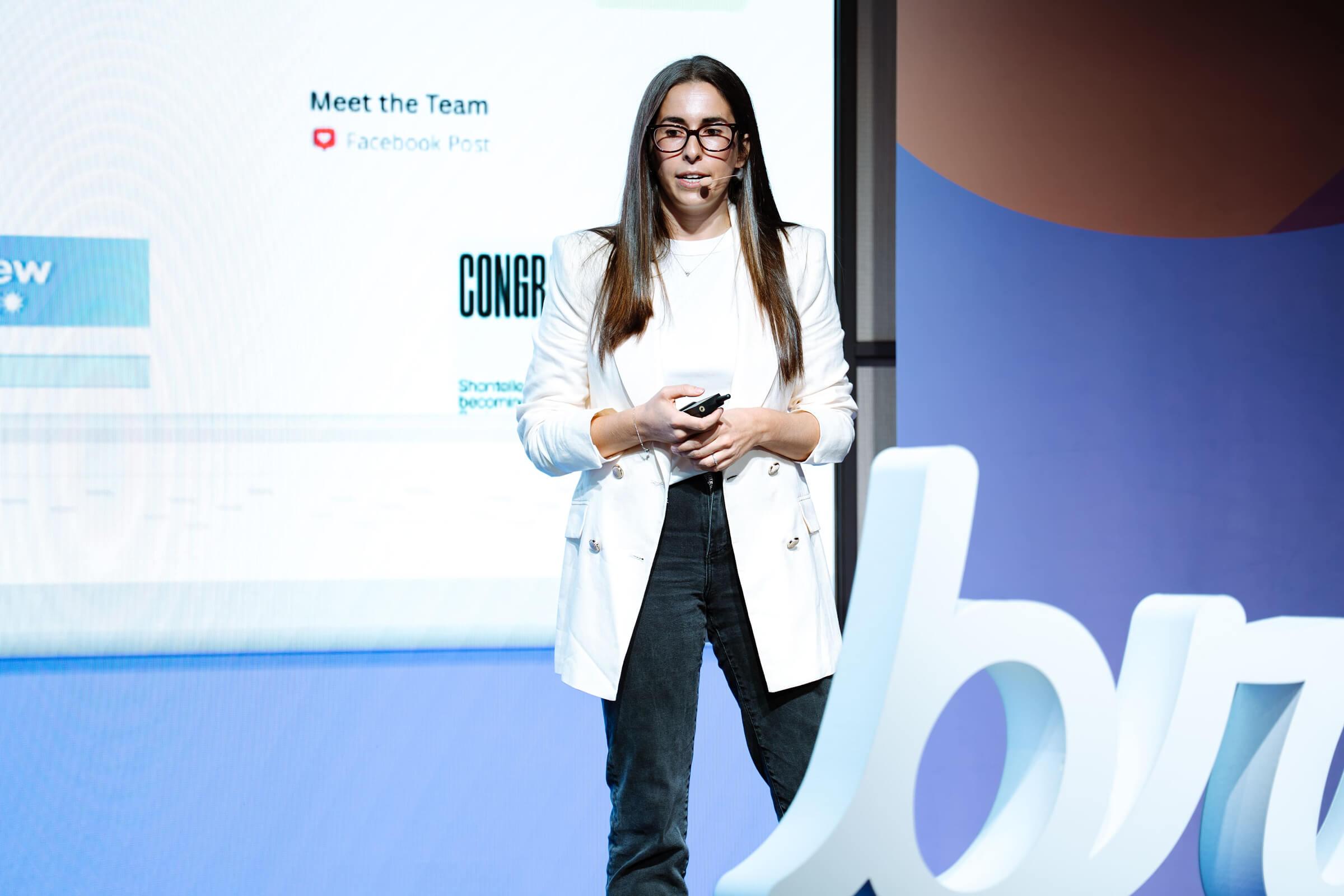
Jess Baden, Lifecycle Marketing Lead at Canva, shared how her team turns first-party behavioral data into actionable signals across 190 countries.
The standout campaign tackled enterprise lead conversion: Users clicking a “Contact Sales” CTA in emails were dropping off at the form page. Using Braze’s link aliasing feature, the team built an abandoned-intent flow. If a user clicked but didn’t complete the form within one hour, they received a contextual follow-up email introducing Canva Enterprise. The team extended personalization to the landing page itself using Braze Catalogs, dynamically matching each user’s company name to a custom URL. Over 150,000 users were retargeted through the program.
Baden also shared how Canva improved onboarding results with progress-based milestone nudges and turned a 12-hour manual newsletter build into a self-running personalization engine demonstrating that scale and relevance aren’t mutually exclusive when the right signals are captured.
Across all three campaigns, the pattern was consistent, anticipating what the user needed next and letting the journey respond in real time, rather than waiting for them to come back on their own.
Braze: Smarter messaging and the marketing auto-pilot
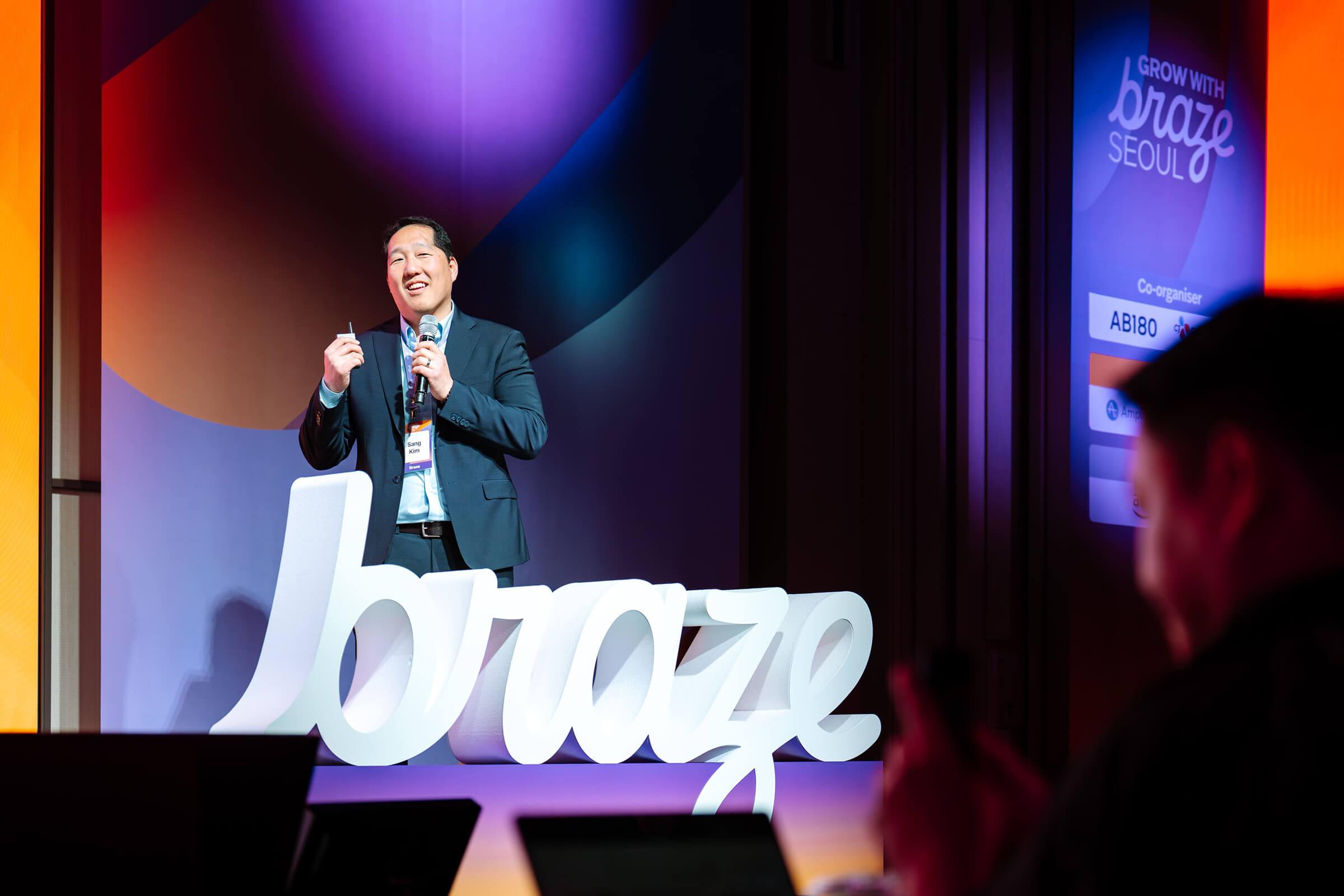
Sang Kim, Senior Customer and Partner Trainer at Braze, walked through the BrazeAI™ suite, covering how top brands use AI to accelerate content creation, personalize at scale through predictive recommendations, and optimize the metrics that matter most. Data from the 2026 Global Customer Engagement Review showed that top-performing brands are 39% more likely to personalize journey paths based on individual data and 31% more likely to use AI for customer segmentation.
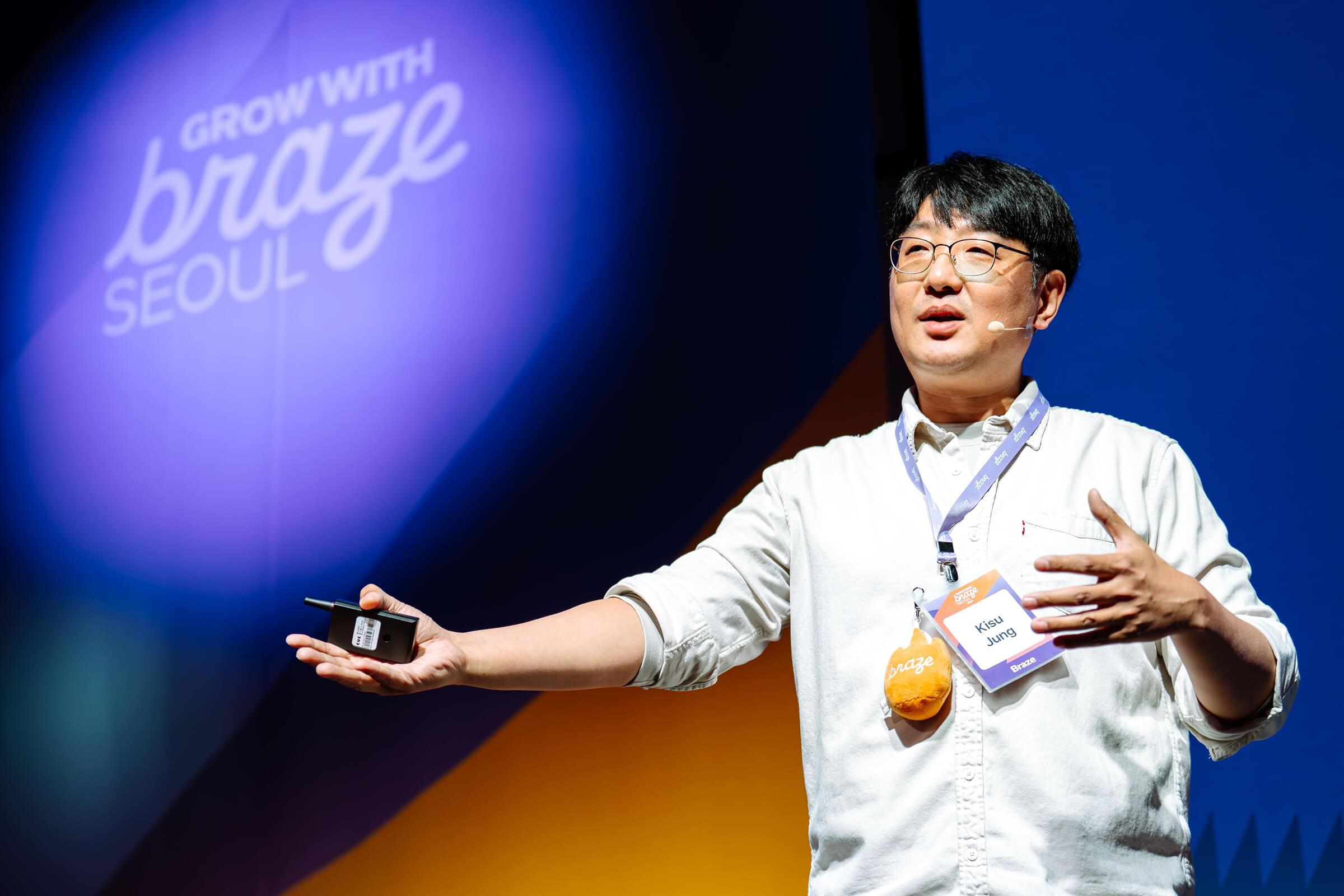
Kisu Jung, Staff Solutions Consultant at Braze Korea, brought this to life with a live demonstration of BrazeAI Operator™.
Using a complex prompt generated via Gemini, Kisu built a multi-stage abandoned cart Canvas in real time, complete with timed push notifications, conditional email follow-ups, high-LTV KakaoTalk coupon delivery, Liquid personalization, and A/B test variants. A second demonstration generated an interactive roulette gamification campaign as an in-app message from a single prompt.
The takeaway: AI removes the technical barriers between idea and execution without replacing the marketer’s judgment.
CJ ENM and Babitalk: From guesswork to precision
Two customer spotlights showed what happens when marketers move from intuition-based campaigns to data-driven precision.
Beomjoong Yoon, Growth Marketer at CJ ENM’s Commerce Division (CJ OnStyle), introduced “Full-Stack CRM”: a marketer who owns the entire pipeline from data extraction and hypothesis to HTML implementation and analysis.
The results spoke for themselves, sharing that a well-designed campaign achieved a 12% direct push open rate which is six times the typical 2% benchmark driven by precise segmentation and click rates reached 56%, nearly double the 30% ceiling of mass promotions, powered by personalization through Connected Content and Liquid. Campaign recipients also showed a 1.6X conversion rate lift versus control groups.
Beomjoong’s message was clear: Sending the right message to the right customer at the right time measurably changes outcomes.
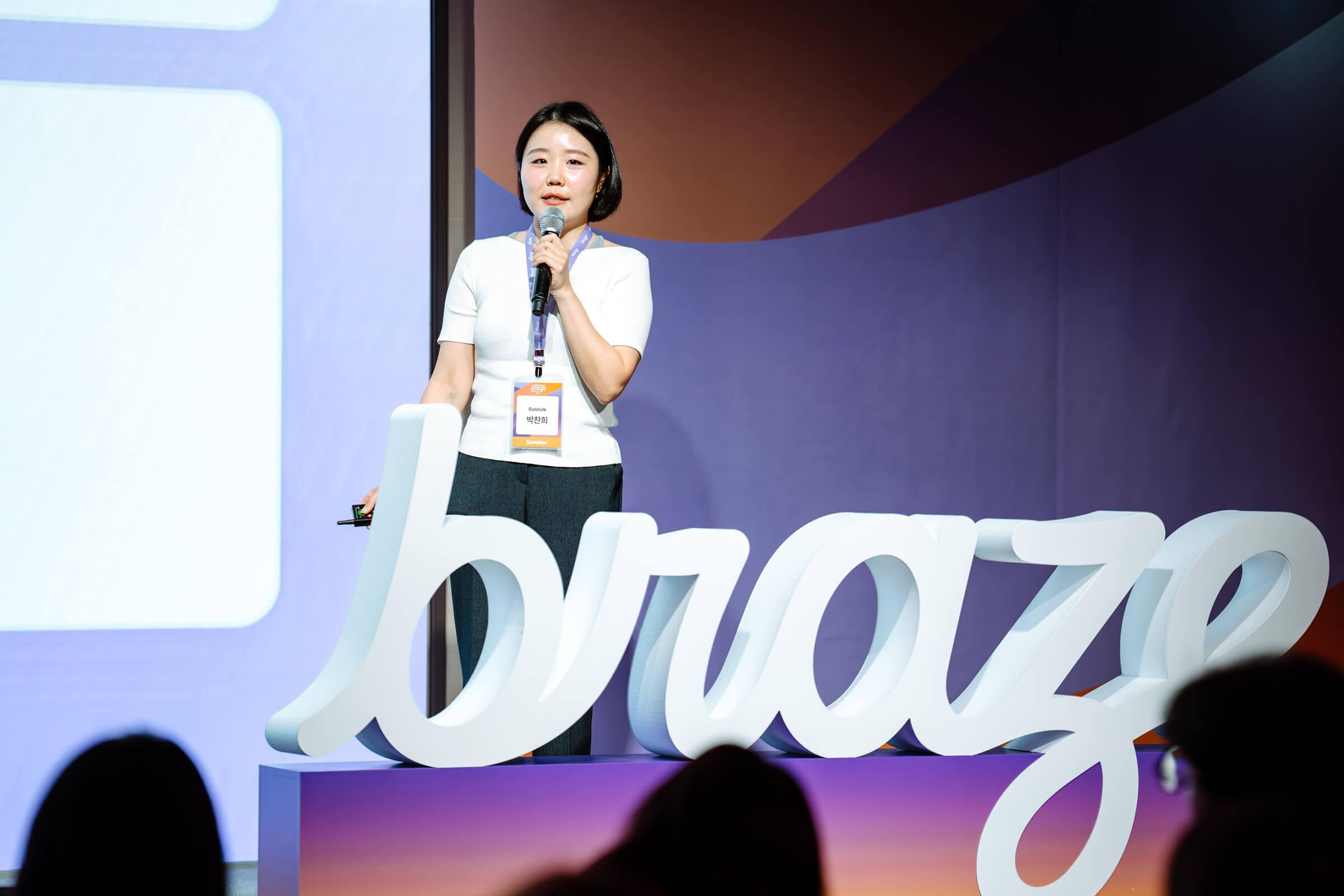
Chanhui Park, CRM Team Lead at Babitalk took a different path to the same conclusion. Babitalk wanted to nudge users when their next aesthetic treatment was due inspired by a simple hair salon reminder text. But treatment types vary wildly and a blanket reminder at a fixed interval failed across multiple A/B tests.
The solution: Babitalk’s engineers built a personalized re-purchase prediction model calculating optimal timing for each individual user based on treatment type and personal purchase patterns. The model output was piped into Braze via the Catalog API, enabling automated, individually-timed KakaoTalk messages.
The shift from “guesswork engagement” to “predictive engagement” required tight collaboration between CRM marketers, AI engineers, and data engineers, further driving home the point of the human role in an AI accelerated world.
11st, Amplitude, and NNT: Rebuilding foundations and looking ahead
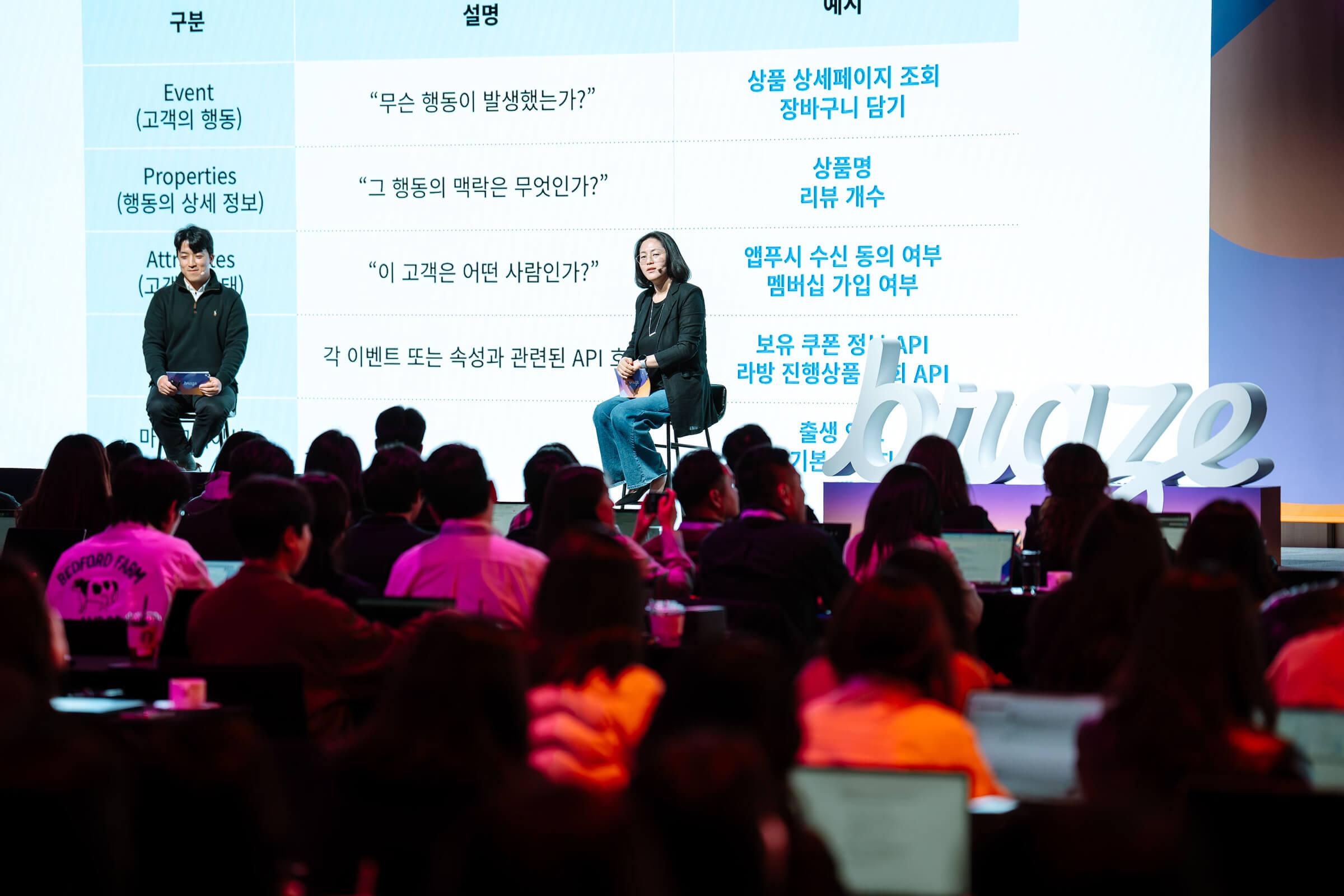
Youngjin Lee, Marketing Manager at 11st, and Sunkyu Lee, CEO of Martinee, delivered a candid fireside chat about what it takes to migrate from a legacy CRM platform to Braze.
11st was an early innovator in marketing automation, but as the business grew, each new category and promotion added its own consent structure and notification system making a coherent customer view impossible. The decision was not a tool replacement but an engagement operating system rebuild, driven by the need for what the team called 'contextual commerce'. Interactions that anticipate needs in real time rather than recommend yesterday's browsed products. A refreshingly honest session about the decisions, trade-offs, and organizational alignment required to modernize at scale.
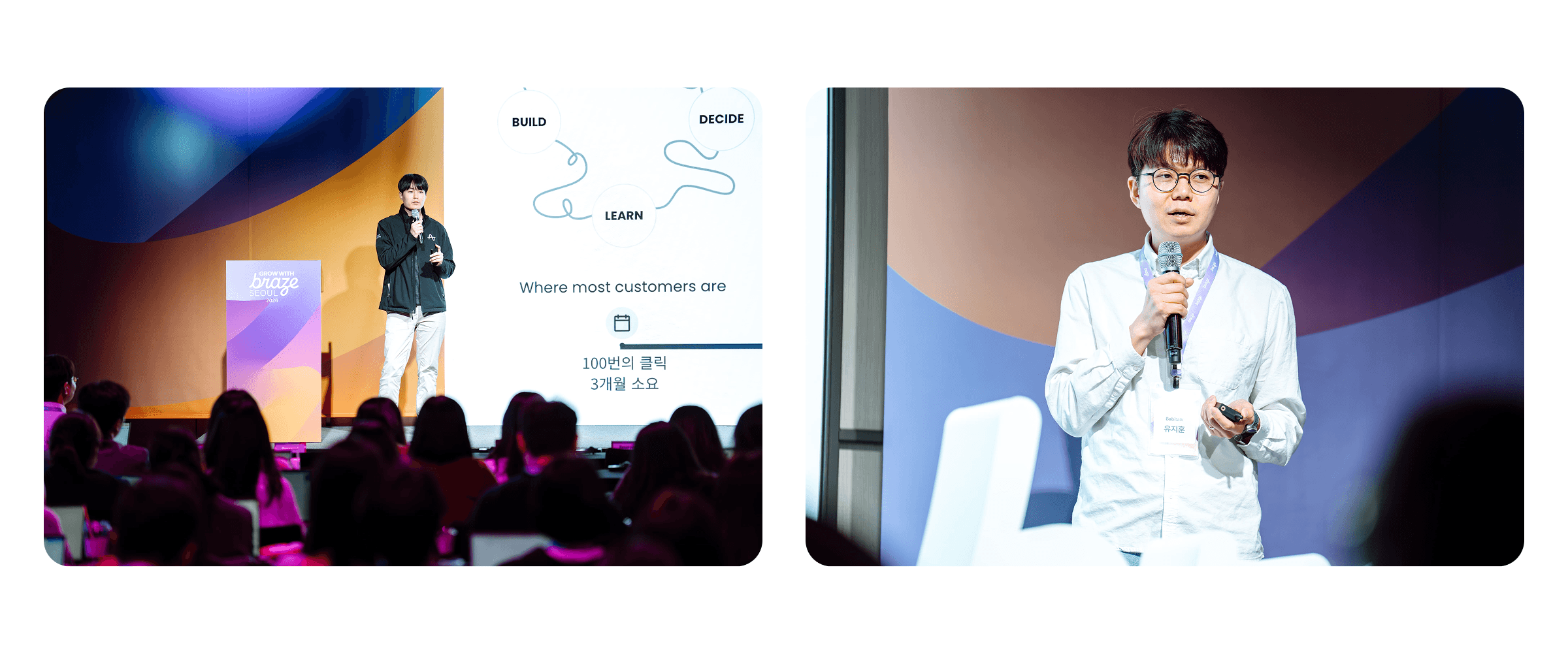
‘Jeehoon Yoo, Data Team Lead at Babitalk, and Seonghwa Jeong, Senior Solutions Engineer at Amplitude, showed how Amplitude's shift to an AI-native analytics platform is changing how teams make sense of their data.
At Babitalk, where 82% of staff use Amplitude and monthly active usage sits at 63.9%, analysts had been spending up to 60 minutes manually pulling performance reviews for each meeting, with the resulting insights locked in documents that most of the team never saw.
By connecting Amplitude to Claude through MCP, they found a shortcut: Instead of explaining every data definition to the AI from scratch, the team simply points it to dashboards they've already built. The AI reads the charts in context and produces a daily Slack summary highlighting what changed, why it matters, and what to watch all without needing an engineer to set up or maintain.
It's a practical example of how AI can bridge the gap between having data and actually acting on it.
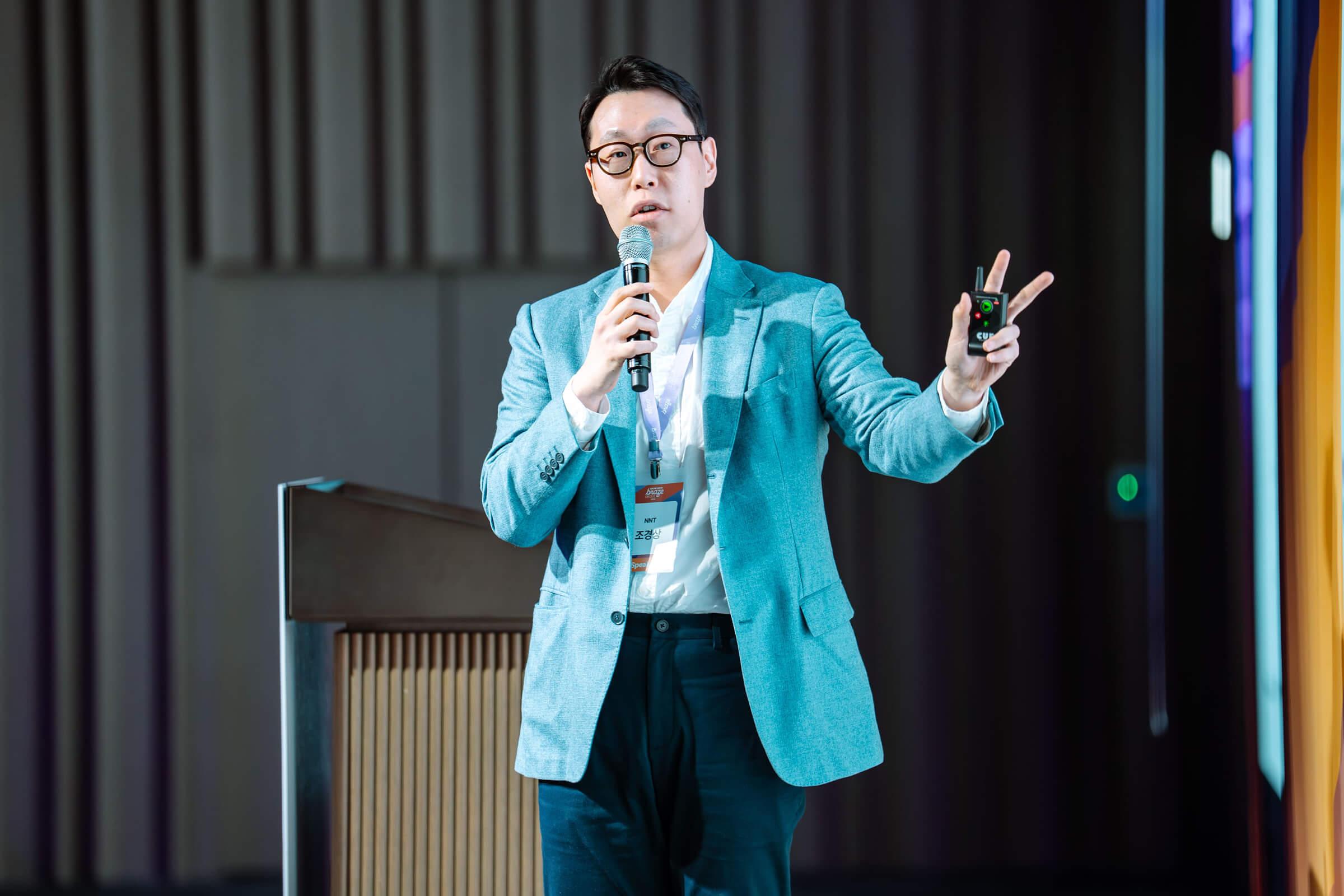
NNT’s approach combines bandit algorithms for intelligent variant selection with generative AI for rapid creative production, pointing toward a future where every CRM message continuously learns and improves in real time.
Kevin Cho, CEO of NNT, looked further ahead, arguing that what most brands call CRM “automation” remains mechanical and frozen: technology has evolved, but the conversations brands have with customers are stuck at a decade-old level.
Cho framed the problem around three areas.
- Customers evolve from novices to connoisseurs, and CRM that ignores that progression drives experienced users away.
- Pinterest cut notification volume by 24% and saw click-through rates rise 31%, proving that knowing when to stay silent matters as much as knowing when to speak.
- Duolingo's data shows even the best copy loses half its effectiveness after 15 days, repeating a winner eventually turns it into noise.
NNT's solution layers the Braze contextual bandit algorithm for real-time variant selection with their own Creative Agent, which generates dozens of fresh copy and image variants weekly to keep the system fed. Cho's closing point was that algorithms can only select, they can't create, the floor is set by automation; the ceiling is set by human creativity.
Closing remarks: AI is the connection catalyst
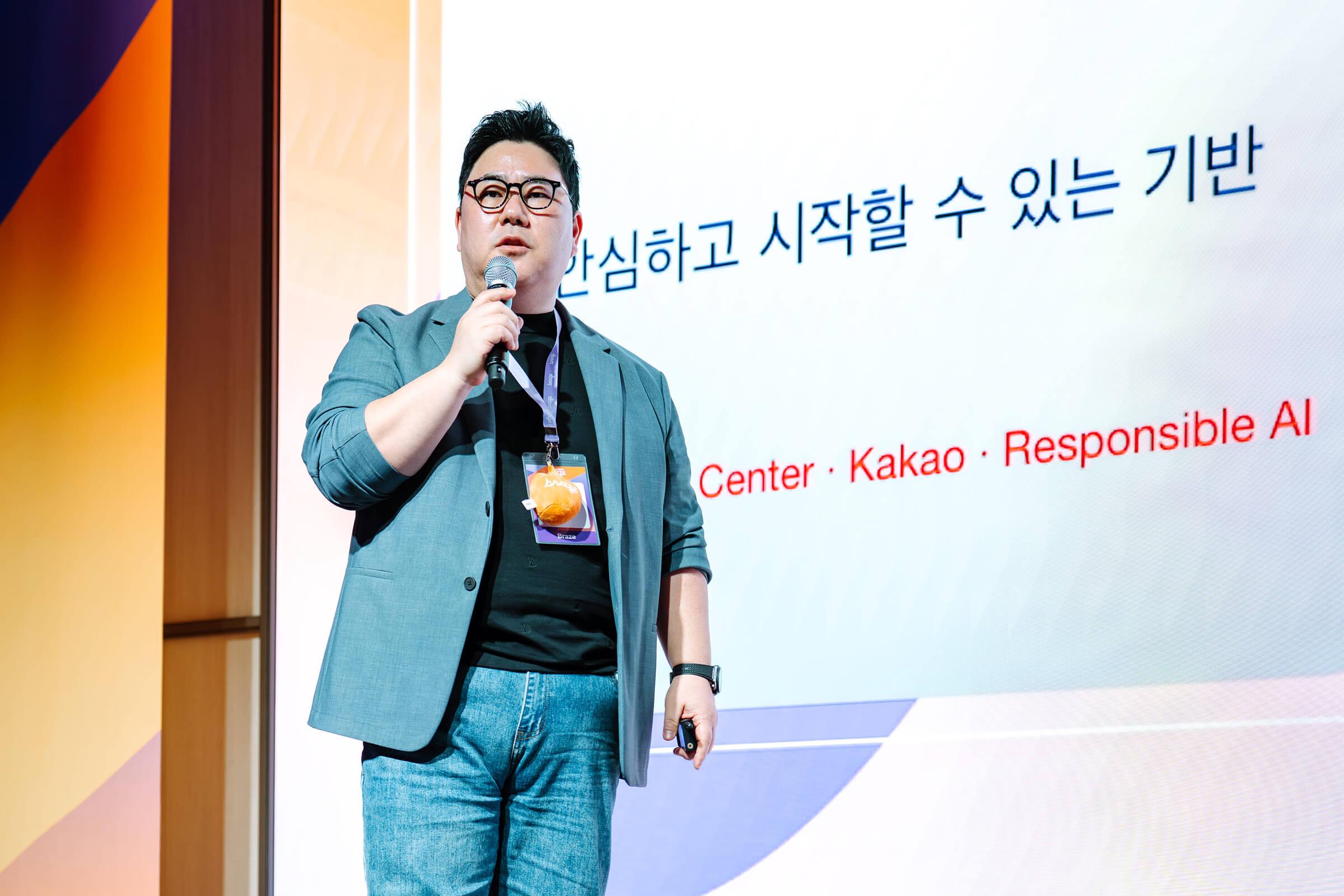
Jay Park from Braze Korea closed the day by distilling fourteen sessions into three takeaways. First, trust: the Seoul Data Center, KakaoTalk support, and governance standards that Braze adopts.
As the 11st case showed, even the best campaigns can’t scale without a solid operating base. Second, context and timing: success comes not from sending more messages but from understanding why a particular message is needed at a particular moment. Canva read a single click as enterprise intent. Babitalk predicted when each user would be ready. CJ ENM matched segment, content, and channel for a 1.6X conversion lift. Third, smarter execution: AI isn’t replacing marketers but reducing the repetitive work that slows them down and returning time for the judgment and experimentation that only humans can do.
Jay’s closing message captured the day: better connection drives better growth.
Three takeaways for customer engagement leaders
- Trust is infrastructure, not sentiment. From local hosting to channel support to governance, the brands that move fastest solve for trust first. Without it, personalization stays theoretical.
- AI is an execution layer, not a strategy replacement. Every AI session reinforced the same point: AI accelerates creation, sharpens judgment, and reduces toil. The strategy, empathy, and creative direction remain human.
- Loyalty is earned on the customer’s terms. Repurchase doesn’t equal loyalty. Brands that measure only transactions miss the psychological dimensions that determine whether a customer will stay when alternatives appear.
Conclusion: Growth starts with connection
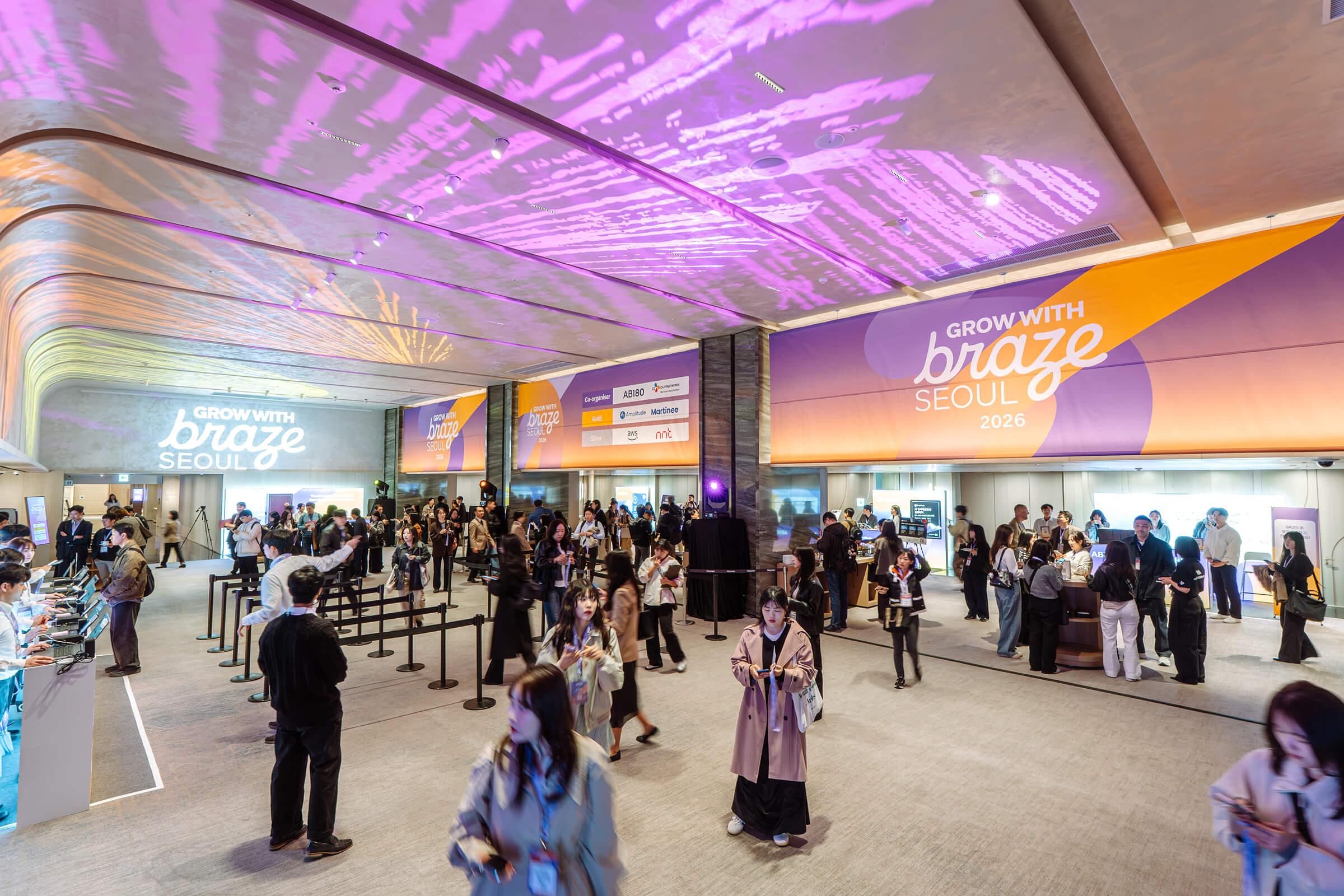
As the sessions gave way to networking and coffee, the conversations carried on. What lingered was not any single metric, but the consistency of the conviction underneath: genuine growth comes from genuine understanding.
AB180 is urging marketers to look beyond behavioral data to the human context behind every action. Babitalk built an AI model to predict the right moment for every user. CJ ENM proved that full-stack execution changes numbers. Canva turned a single click into a sales conversation. 11st is rebuilding its CRM foundation for the next era. And Braze is investing in the local infrastructure, a Seoul data center, native KakaoTalk support, and AI-powered tools, that gives Korean brands the confidence to move faster.
AI is the catalyst. The relationship is the strategy. And Seoul is very much leading the way.
Related Tags
Be Absolutely Engaging.™
Sign up for regular updates from Braze.
Related Content
 Article16 min read
Congratulations to the Forge 2026 Torchie Awards winners
September 29, 2026 Article6 min read
Bring 1:1 decisioning to every marketing journey with BrazeAI Decisioning Studio™ Go
September 28, 2026 Article12 min read
Made for this: How Braze is providing new ways to build, support, and extend your campaigns
September 28, 2026