SMS marketing strategy: How to engage customers and drive conversions
Published on May 27, 2026/Last edited on May 27, 2026/15 min read

Lexie Haggerty
Senior Product Marketing Manager, BrazeContents
SMS marketing strategy has become a focus for brands aiming to drive retention, loyalty, and conversions on mobile. And it's no wonder. Americans send roughly 2 trillion SMS messages a year, and with open rates often reported at 98%, SMS stands out as a direct, personal, and high-performing channel within the mobile marketing stack.
But strong results don't happen by chance. A well-structured SMS marketing strategy means thinking carefully about how you grow your subscriber list, how you segment and personalize messages, how to respond to customer behavior in real time using automation,, and how SMS connects with email, push, in-app, web, and paid messaging as part of a wider cross-channel program. This guide walks you through all of it, with real-world examples and measurable outcomes from brands already succeeding in this area.
TL;DR
- SMS has a 98% open rate, making it one of the highest-attention channels available to marketers, but strong performance depends on building a compliant program and a high-quality subscriber list from the start.
- Segmentation by behavior, purchase history, and lifecycle stage, combined with dynamic content personalization and AI optimization, is what separates high-performing SMS programs from generic list blasts.
- The two main types of SMS, namely promotional and transactional, can both be leveraged to engage customers across the entire lifecycle from activation to monetization to retention.
- SMS performs consistently better when integrated with email, push, in-app, and web messaging as part of a coordinated cross-channel strategy than when it operates as a standalone channel.
- The brands generating the strongest SMS ROI treat it as a long-term relationship channel, using dynamic personalization, behavioral triggers, AI optimization, and automation to stay relevant throughout the customer lifecycle, not just around promotional peaks.
Key takeaways
- Explicit opt-in and TCPA compliance are non-negotiable before sending any SMS campaign. Consent is the foundation the entire channel is built on.
- Opt-out rate is a leading indicator of SMS program health. A spike after a specific campaign tells you something went wrong with the campaign’s relevance, timing, or frequency, and catching it early prevents a fixable problem from becoming a long term flaw in your strategy.
- The measurement that matters most is not campaign-level clicks or conversions, but whether SMS-subscribed customers retain and spend at higher rates over time than those who are not subscribed.
What is an SMS marketing strategy?
An SMS marketing strategy is a structured plan for reaching opted-in customers via text, with the right content, at the right time. It governs everything from how you build your subscriber list, what types of use cases you will leverage the channel for, and how you will personalize your content to drive long-term value for your SMS subscribers.
SMS reaches customers who have actively chosen to hear from you, in a space they check often, making it particularly effective for time-sensitive messages, conversion-driving offers, and re-engagement.
A well-timed text can recover an abandoned cart, flag expiring loyalty points, or confirm a delivery. It also works naturally alongside email, push, in-app, and web messaging, strengthening a cross-channel strategy rather than competing with it.
SMS within the mobile messaging mix: SMS, MMS, and RCS
SMS is text-only, up to 160 characters, and works on any mobile device without an internet connection. High-volume sends from businesses to consumers (A2P messaging) typically use short codes. MMS messaging adds images, GIFs, and video for visually driven campaigns, while RCS delivers branded, interactive experiences directly in the device's native messaging app.
Building a high-value SMS subscriber list
For SMS, list quality has a direct impact on every campaign you send. Elevated opt-out rates, carrier filtering, and deliverability issues are all direct consequences of messaging people who didn't ask to hear from you. A smaller list of opted-in subscribers will consistently outperform a larger, indifferent one.
Organic list-building: In-app, website, email, and social
Organic opt-ins convert most reliably at high-intent moments, when a customer is already engaged with your brand and the value exchange is clear.
Your existing email subscribers are a strong starting point. They've already opted in to communications from you, making them more receptive to SMS than a cold audience.
A targeted email campaign explaining what SMS subscribers receive exclusively can convert a meaningful portion of that list. Beyond email, a few other owned channels work well for building an SMS subscriber list.
- Website pop-ups and sign-up forms. Lead with a specific incentive, such as a discount or early sale access, and make the value of subscribing immediately clear.
- Checkout. A customer actively completing a purchase is in a high-intent moment, making it a natural, unforced point to ask for SMS consent.
- In-app prompts. App users are already engaged. A prompt after a positive action, such as a completed purchase or a loyalty milestone, arrives at a good time.
- Social media. Story-based promotions and posts highlighting exclusive subscriber benefits can drive opt-ins from existing followers.
- In-store and packaging. For brands with a physical presence, in-store signage, or packaging can extend list growth well beyond digital channels through text-to-join or QR code methods.
Segmentation and SMS personalization
People who receive texts that feel impersonal or poorly timed don't stay subscribed for long. Segmentation and SMS personalization work together to make each message feel relevant to the person receiving it.
Different types of segmentation
SMS segmentation allows you to segment your campaigns to certain groups of users based on how they are interacting with your brand. Purchase history, browsing patterns, and campaign engagement tell you more about what someone wants to hear next than demographics alone. Here are some of the most useful groupings to build.
Behavioral
Customers showing clear signals, such as browsing without buying, subscribing to your loyalty program, making frequent purchases, or going quiet for 60 days, each warrant messages specific to where they are.
First-time purchasers, high-frequency buyers, and customers approaching a loyalty tier milestone have different needs and different likely responses.
Location-based
Particularly valuable for brands with physical locations. Geographically relevant offers and in-store invitations reach customers who can act on them.
Engagement-based
Customers who engage consistently with your SMS are a different audience from those who subscribed months ago and have never clicked. Separating them lets you message each appropriately.
Dynamic content and real-time personalization
Dynamic content then personalizes messages using actual customer data pulled directly into the copy. For example, a customer who abandons a cart can receive a message referencing the exact item they left. The specificity turns a general broadcast into something that reads like it was written for that person.
SMS personalization can respond to behavior as it happens through real-time orchestration. Triggers like a price drop, an item coming back-in-stock, or a defined period of inactivity can each fire a message automatically at the right moment without any manual intervention.
AI optimization for maximum engagement
AI send-time optimization analyzes each subscriber's individual engagement history and delivers messages when that specific person is most likely to open and act. Engagement patterns can vary considerably across any list, and a single scheduled send time will always miss a significant portion of your subscribers. For maximum engagement, timing impacts relevance.
Additionally, AI decisioning leverages machine learning to dynamically tailor message content and delivery strategies based on real-time data, enhancing personalization and effectiveness. AI agents can autonomously manage and optimize campaigns by continuously learning from subscriber interactions to drive better engagement outcomes.
SMS campaign types and use cases
SMS campaigns serve different purposes depending on where a customer is in their journey with your brand. The four types below cover everything from time-sensitive offers to real-time alerts, and mapping each to the right moment keeps an SMS program relevant across the full customer lifecycle.
1. Promotional campaigns
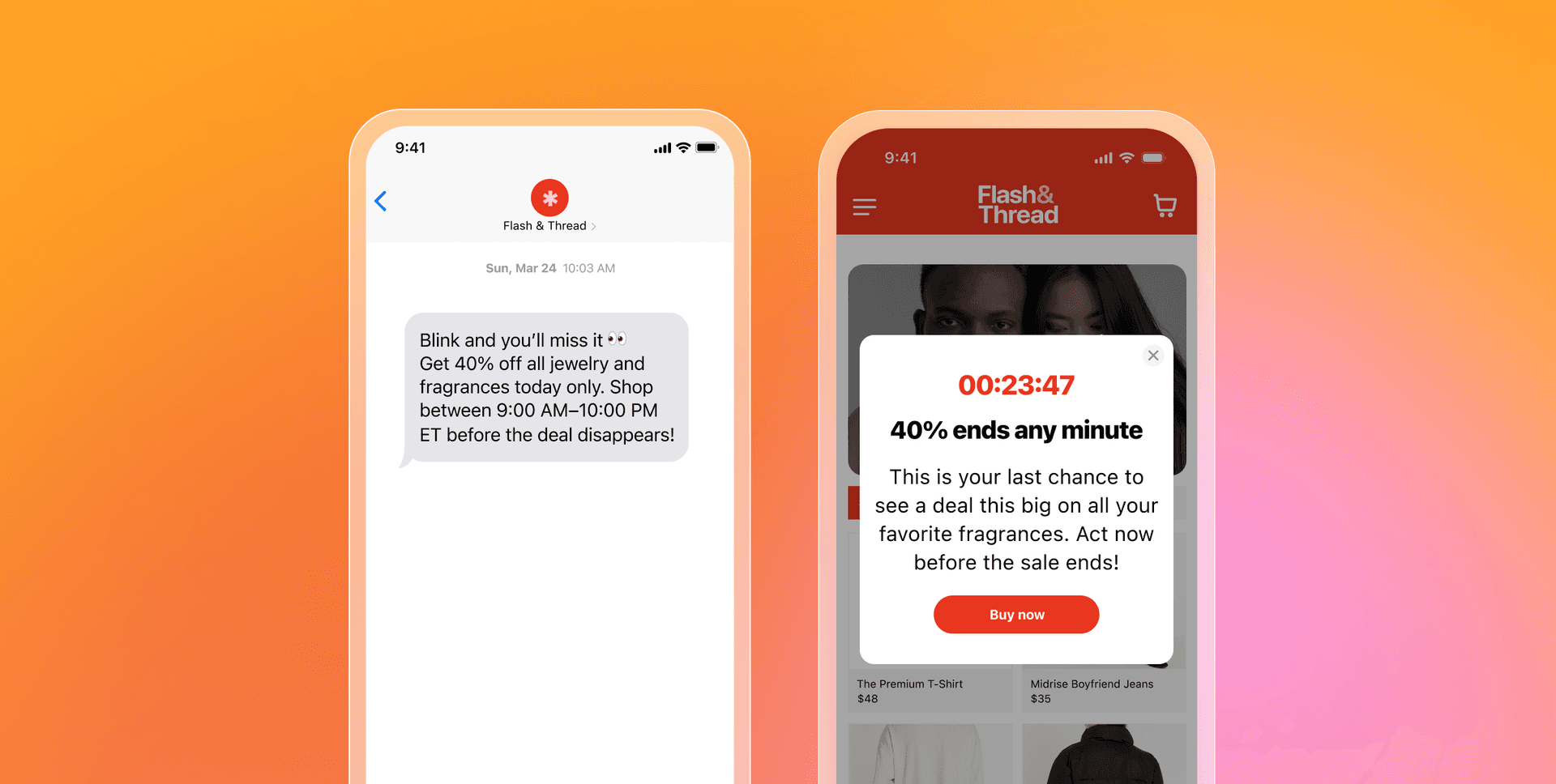
Promotional campaigns are brand-initiated and built around time-sensitive offers, key seasonal windows, product launches, and more. SMS works well for them because urgency and directness reinforce each other. Here are the most common promotional use cases:
- Flash sales
- Seasonal sales, such as Black Friday or end-of-season promotions
- SMS-exclusive discount codes
- New product launches
- Early access and pre-sale offers for subscribers or loyalty members
- Bundle and cross-sell promotions
- Clearance and end-of-line sales
- Brand events and store openings
- Referral incentives
A type of promotional campaigns, retention campaigns target customers who are at risk of drifting away or who have already gone quiet. A specific, relevant message at the right moment gives those customers a concrete reason to re-engage. Here are the most common retention use cases.
- Win-back offers for lapsed customers
- Loyalty points balance updates
- Tier upgrade notifications
- Loyalty program onboarding
- Post-purchase review or feedback requests
- Re-engagement campaigns for subscribers who have stopped clicking
- VIP-exclusive communications
- Churn prevention offers
2. Transactional campaigns
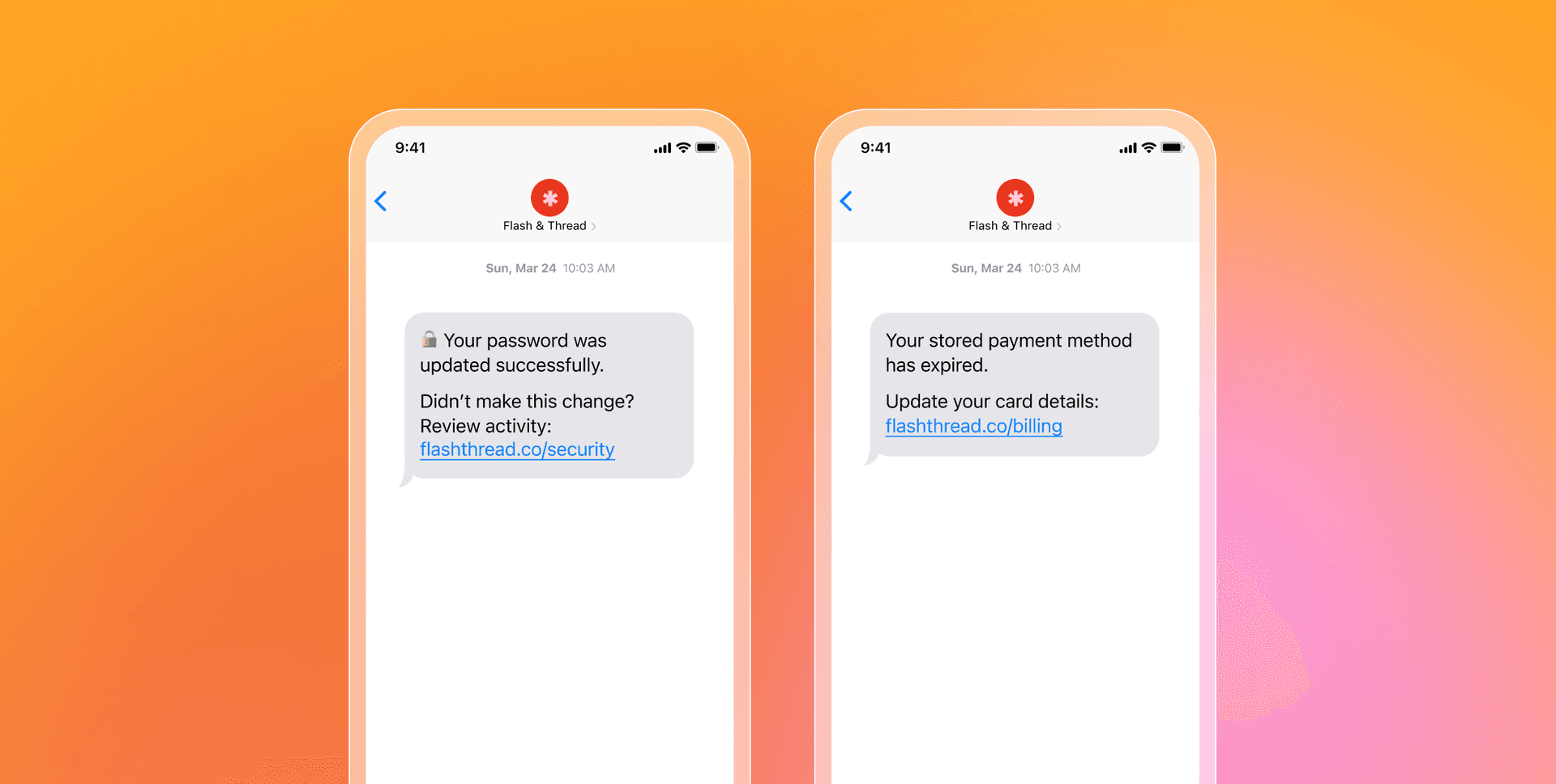
Transactional messages are typically triggered by a customer action and carry information the recipient is already expecting related to an order, transaction, and other activity. Because customers actively want to receive them, they consistently generate some of the highest engagement metrics in the channel. Here are the main transactional use cases:
- Order confirmation
- Payment confirmation
- Shipping notification
- Out-for-delivery update
- Delivery confirmation
- Order cancellation notice
- Refund notification
- Booking or reservation confirmation
- Account verification and two-factor authentication
- Password reset
- Return or exchange confirmation
SMS Automation and cross-channel SMS orchestration
Automation gives marketers the ability to respond to customer behavior in real time via text. Behavioral triggers, such as an abandoned purchase, a loyalty milestone, or a period of inactivity, push the right message automatically and are built around that specific moment. The program stays relevant without requiring anyone to manually plan each send.
Cross-channel orchestration connects SMS with email, push, in-app, and web messaging so that every channel plays a distinct role in the same customer journey. When those channels share customer data and a single customer view, the experience stays coherent across every touchpoint, and SMS can focus on the moments where its directness and immediacy have the most impact.
Real-time SMS: triggered messages and moment-based engagement
Real-time personalization uses live data to build each message around what a customer just did. Connections between your customer engagement platform or CRM and operational systems, such as your inventory management tool, mean a notification can fire immediately after a relevant event, with content that reflects exactly what prompted it. And because every send generates data on what worked, AI optimization runs a continuous improvement loop in the background, refining timing, content, and audience selection with each campaign so the program is always learning.
Examples of SMS marketing success
Looking for inspiration? These brands used SMS strategically to drive real results with different types of SMS marketing campaigns and as part of broader cross-channelmarketing strategies. From growing subscriber lists to increasing conversions, here’s how they made the most of the channel with Braze.
Dutch Bros drove 230% ROI with personalized SMS
Dutch Bros is a drive-thru coffee company with over 800 locations across the U.S., renowned for its energetic culture and strong customer community. The brand aims to deliver personalized experiences that mirror the friendly interactions customers have with their "broistas" (baristas) in-store.
The challenge
As Dutch Bros expanded, their fragmented messaging systems led to inconsistent customer experiences and increased operational costs. The CRM team sought a unified platform to streamline communications, personalize customer interactions at scale and reduce the complexity of their tech stack.
The solution
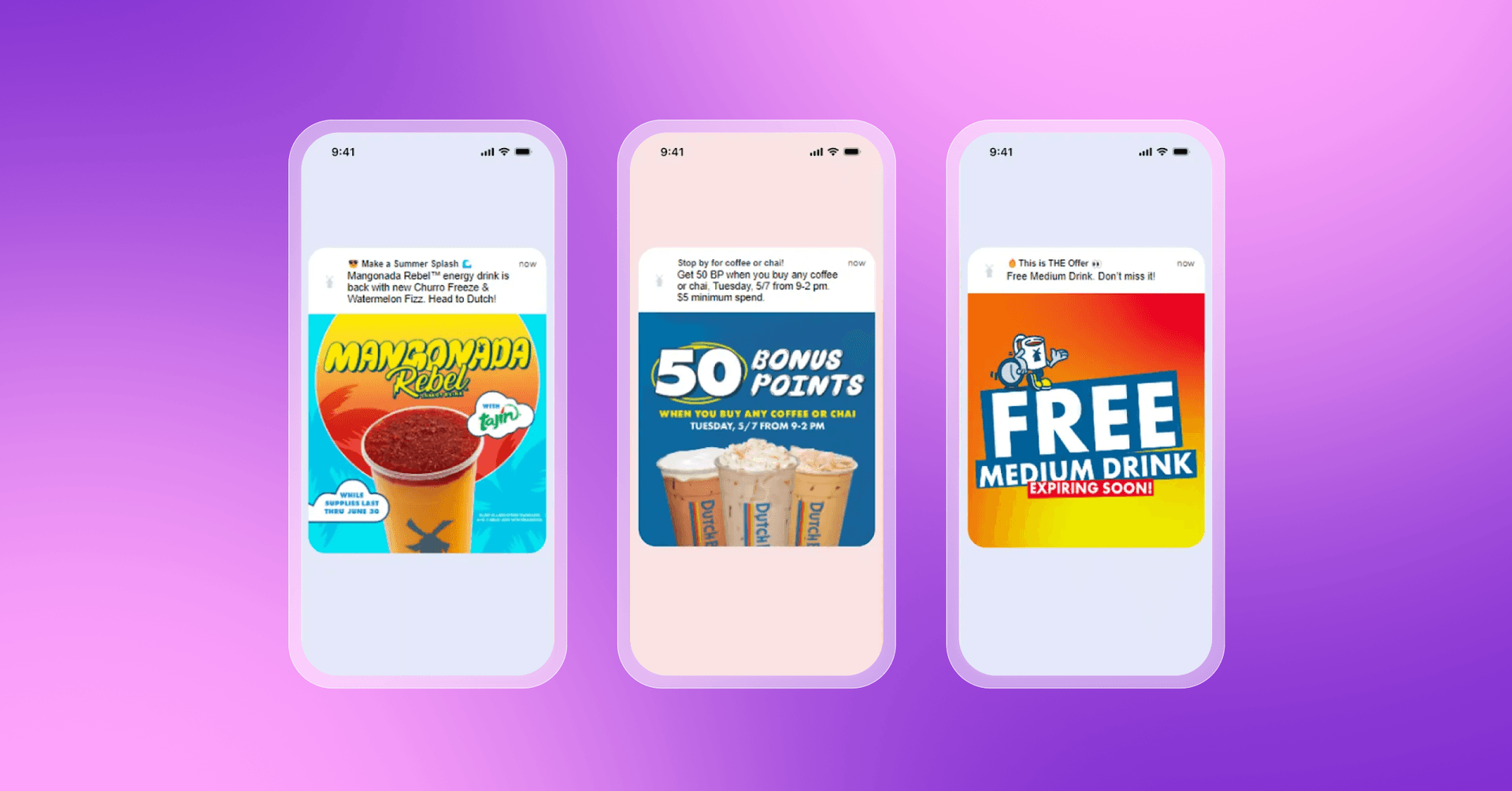
Partnering with Braze Technical Account Management (TAM) and Support Engagement Lead services, Dutch Bros implemented a cohesive cross-channel messaging strategy that included SMS, email marketing, push notifications, and in-app messaging. Utilizing Braze Canvas, (a no-code journey orchestration tool) and real-time data capabilities, they delivered personalized content tailored to individual customer behaviors and preferences.
The results
By consolidating their messaging platforms and enhancing personalization, Dutch Bros achieved a 230% increase in ROI from CRM campaigns and realized a 31% reduction in costs through platform consolidation. This strategic shift not only improved customer engagement but also streamlined operations and reduced overhead.
sweetgreen sees 10% conversion lift with SMS
sweetgreen is a fast-casual restaurant brand on a mission to build healthier communities by connecting people to real food. With a focus on digital innovation and a loyal mobile audience, sweetgreen wanted to strengthen its customer engagement strategy while streamlining internal workflows.
The challenge
sweetgreen’s marketing team wanted to encourage and remind customers to order through their app for delivery, rather than through a third-party delivery provider. They also needed a faster, more flexible way to launch personalized SMS campaigns. Their previous system required significant development support, which slowed down execution and limited experimentation, especially when campaigns needed to go live quickly.
The solution
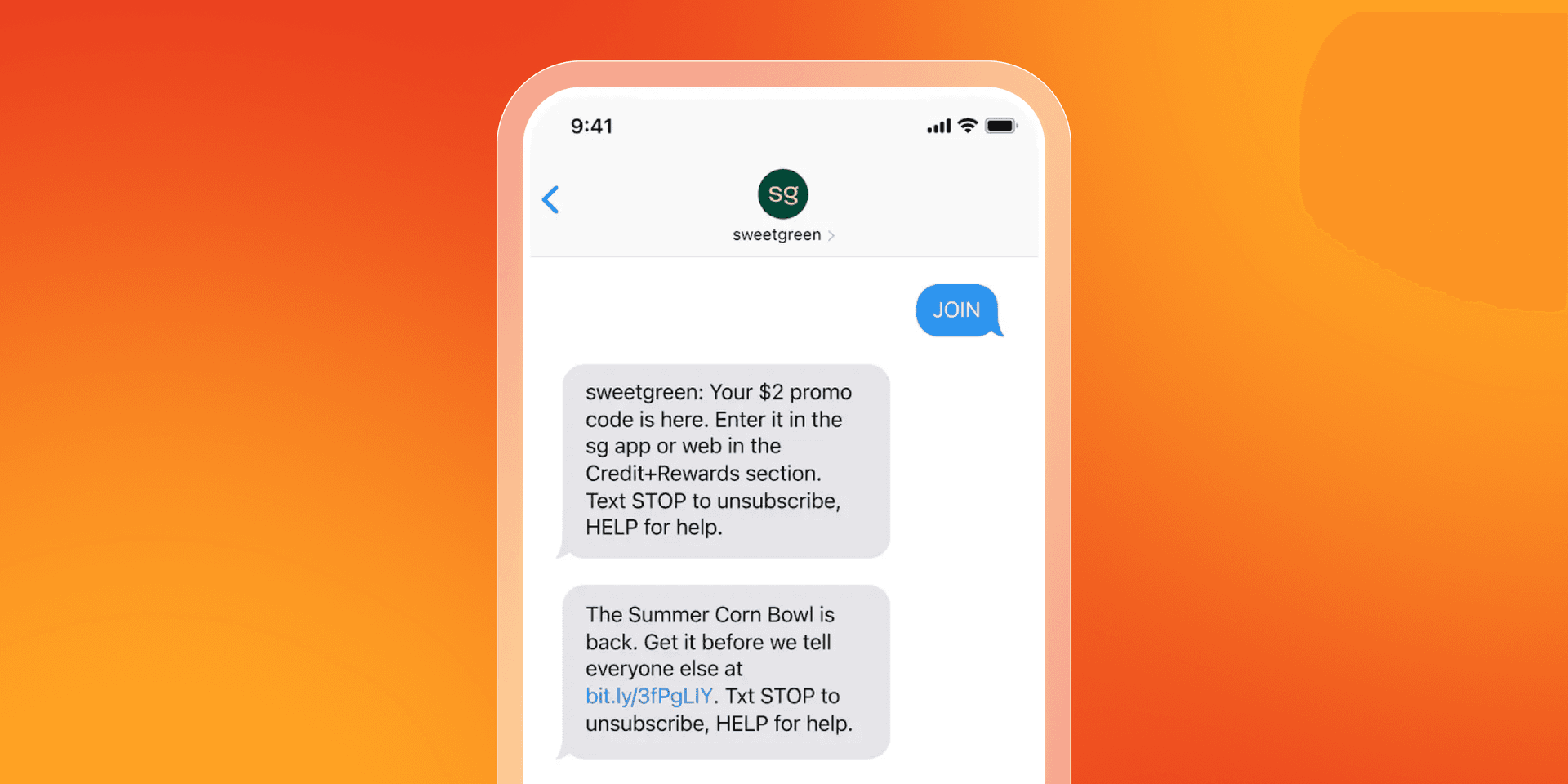
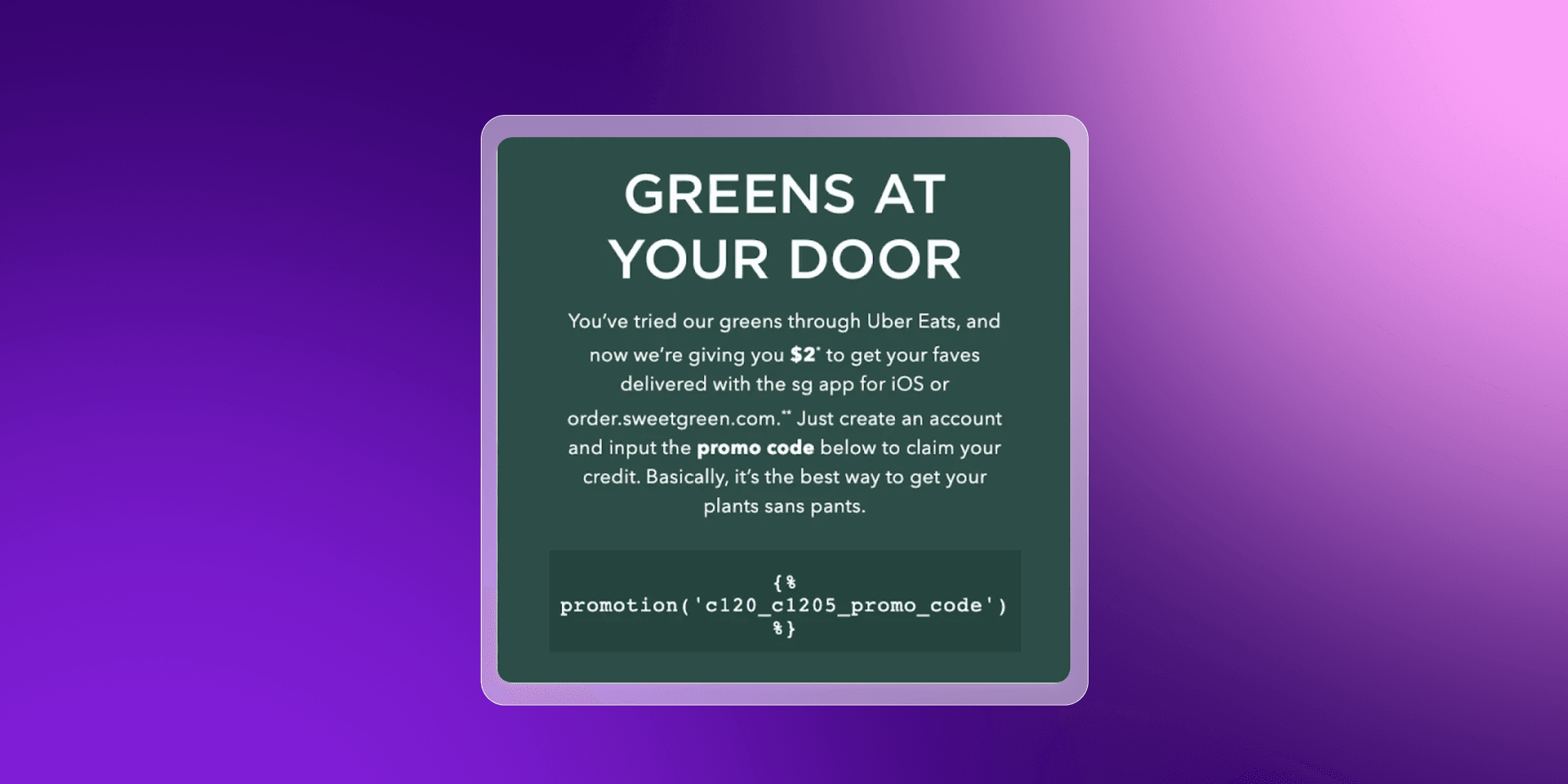
sweetgreen adopted Braze and used the native Promotion Code feature to run promotional SMS campaigns that could be built and deployed directly to drive app orders—no development time required.
The results
The SMS campaign drove a 10% conversion rate using promo codes in their SMS campaigns and added 10,000 new SMS subscribers. By reducing reliance on engineering, sweetgreen’s marketing team gained agility and the ability to scale their mobile strategy faster.
KFC Australia triples purchases with SMS during holiday campaign
KFC Australia, a leading quick-service restaurant brand, sought to enhance customer engagement and drive incremental revenue through its mobile app, especially during the competitive holiday season.
The challenge
The team aimed to identify the most effective channel to boost purchases among app users, particularly those who hadn't enabled push notifications or had unsubscribed from email communications.
The solution
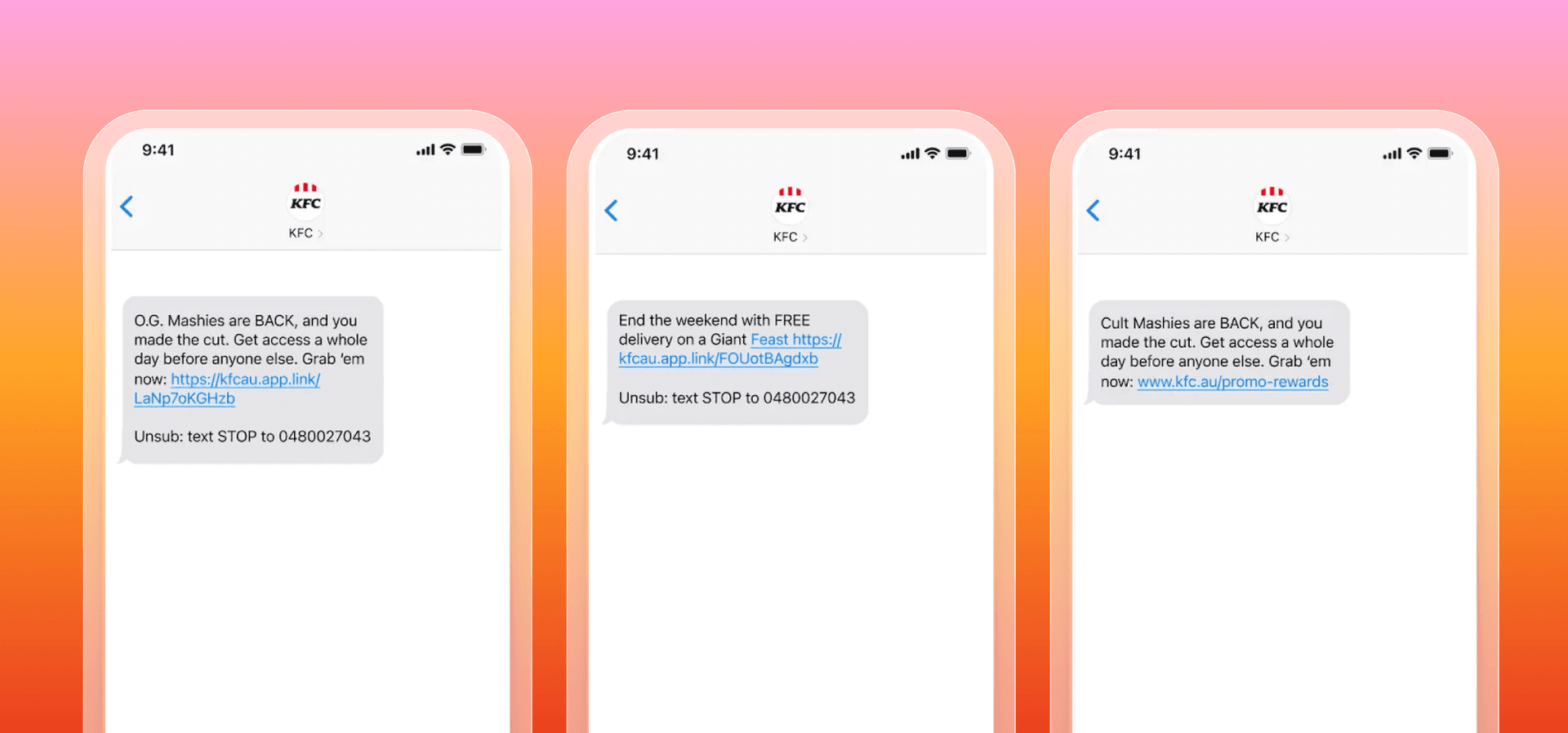
Collaborating with Braze and using Tech Alloy partners Snowflake and mParticle, KFC Australia conducted a two-month experiment between Boxing Day and Australia Day. They segmented their audience into three groups, testing SMS vs push, and sent highly personalized messages using Braze Canvas.
The results
The SMS campaign led to a 3X increase in purchases compared to push notifications. The SMS group also experienced a 31% rise in incremental sales and a 30% uplift compared to the control group.
Picklebet uses personalization and wins big with 116% increase in sessions
Picklebet is an Australian sports and esports betting platform aiming to deliver a modern, engaging experience for the next generation of fans. Founded in 2019, the company focuses on providing a better entertainment experience across sports, esports, and racing.
The challenge
In a crowded market, Picklebet sought to differentiate itself by creating a more personalized customer experience. The goal was to maximize retention and customer lifetime value (LTV) without relying on expensive promotions.
The solution
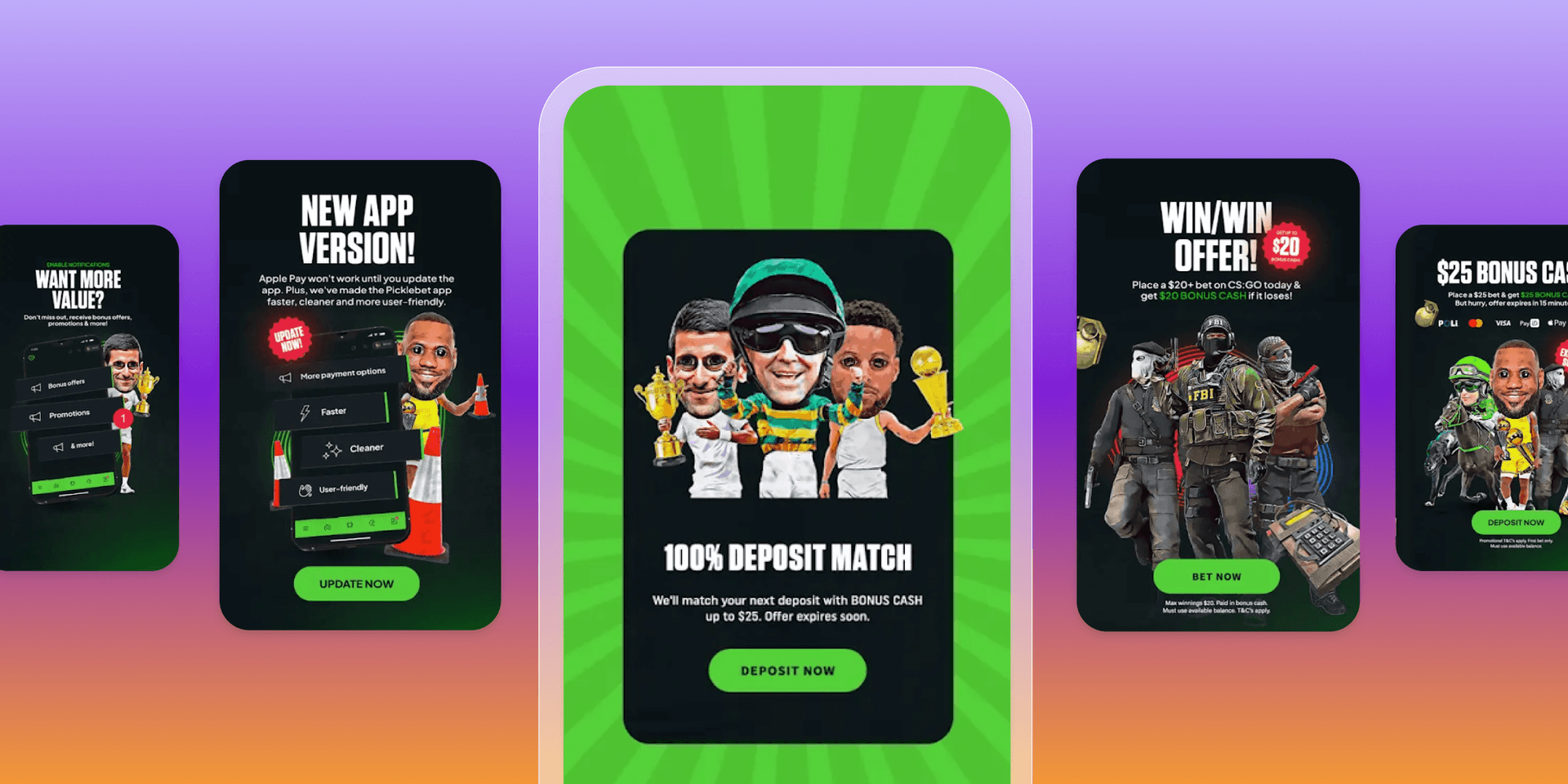
Picklebet integrated Braze with its proprietary betting and promotional engine to deliver personalized offers to individual users based on their preferences. With Braze Canvas, the team orchestrated complex cross-channel journeys across in-app messages, SMS, email and push notifications. This setup allowed the marketing team to control which content certain customers saw on their app front end, providing VIP customers access to exclusive betting markets, using SMS messages to send time-sensitive messages to drive users to the app.
The results
After overhauling its cross-channel messaging campaigns, Picklebet achieved a 116% increase in sessions per user, a 13% increase in retention, and a 550% improvement in customer acquisition cost (CAC) payback periods.
Measuring success and optimizing SMS campaigns
Four engagement metrics give you the clearest picture of SMS program health.
Delivery rate shows what percentage of messages reached subscribers' phones, and a sustained dip usually points to list quality or carrier filtering issues worth investigating.
Click-through rate tracks how often recipients acted on a linked message, giving you a baseline for comparing performance across sends.
Conversion rate connects each campaign directly to a business outcome, such as a completed purchase or a renewed subscription.
Opt-out rate is the one to watch closely. A spike after a specific send is a signal that something went wrong with relevance, timing, or frequency.
Connecting SMS performance to customer engagement and retention goals
Campaign-level metrics show what worked in a given send. Cohort analysis of SMS subscribers compared to non-subscribers reveals whether the channel is building the kind of long-term customer relationships that justify the investment.
When SMS is part of a wider cross-channel strategy, analysis also captures how it contributes to customer engagement alongside other channels, giving a more complete picture of what's driving growth.
Continuous A/B testing will help to improve an SMS strategy over time. Variables worth testing include message copy, send time, offer, creative (for MMS), and more. A program that tests consistently builds a body of knowledge about its own audience.
Final thoughts and takeaways
SMS gives brands access to a channel most people check within minutes of receiving a message. Using that access well means starting with a compliant SMS program, segmentation and personalization built on what customers have actually done, and messages timed to when they're relevant. Programs built on those basics improve with every send.
Running SMS as part of a coordinated program amplifies its impact. When SMS is connected to email, push, in-app, and web messaging through shared data and automation, each channel can respond to what customers are doing across every touchpoint. The experience feels joined up from the customer's perspective, and the performance data tells a more complete story about what's driving retention.
An SMS program with genuine staying power treats the channel as a vehicle for ongoing customer relationships. Campaign-level metrics are one part of the picture. How SMS subscribers retain and spend compared to non-subscribers is a more complete measure of the channel's contribution. With the right data connections, powerful automation, and a habit of testing, marketers can drive long-term impact on retention and revenue.
SMS marketing strategy FAQs
What is an SMS marketing strategy, and why is it important for retention and conversions?
An SMS marketing strategy is a planned approach to reaching opted-in customers via text message with timely, relevant content. It matters for retention and conversions because SMS is a direct, personal channel that garners high open rates, making it one of the most effective ways to re-engage customers and drive purchases at the moments that count.
How can brands build and maintain an SMS subscriber list effectively?
Brands can build an SMS subscriber list effectively by collecting phone numbers at high-intent moments and offering a clear incentive for subscribing. Maintaining the list means regularly removing invalid and deactivated numbers, honoring opt-outs right away, and continually adding new subscribers who are likely to engage on the channel.
How does SMS complement email, push, in-app, and web messaging in a cross-channel strategy?
SMS complements a broader cross-channel strategy by handling the moments that need maximum immediacy and directness, such as time-sensitive offers, transactional updates, and high-priority alerts. Email works for longer-form communication, push for in-app users, and in-app messages for contextual nudges, while SMS reaches customers regardless of whether they have the app open. SMS pairs well with email: email for broader reach to your entire customer base and SMS for more targeted outreach to your high-value customers.
What are best practices for segmenting and personalizing SMS campaigns?
Best practices for segmenting and personalizing SMS campaigns include segmenting your SMS subscriber list by behavior, purchase history, and lifecycle stage, then using dynamic content to make each message specific to the user. AI send-time optimization personalizes delivery further by identifying when each subscriber is most likely to engage, rather than applying a single send time to the whole list.
How can brands measure the impact of SMS marketing campaigns on engagement and revenue?
Brands can measure the impact of SMS marketing campaigns by tracking delivery rates, click-through rates, conversion rates, and opt-out rates at the campaign level, then connecting those engagement metrics to broader business outcomes like retention and lifetime value. Cohort analysis comparing SMS-subscribed customers to non-subscribed customers reveals the channel's long-term contribution to revenue.
Related Tags
Be Absolutely Engaging.™
Sign up for regular updates from Braze.
Related Content
 Article6 min read
From Account Executive to Sales Manager: John Murphy on Building a Career at Braze
May 28, 2026 Article11 min read
Exploring the technical side of ingesting data into Braze
May 28, 2026 Article10 min read
Marketing automation segmentation: How to create hyper-targeted campaigns
May 28, 2026