Omnichannel personalization: Delivering consistent, connected customer experiences
Published on December 15, 2025/Last edited on December 15, 2025/11 min read
Team Braze
Contents
Most marketing teams already personalize messages within individual channels, but customers don’t experience those touchpoints separately. They move between digital and physical spaces, expecting each interaction to feel seamless and consistent.
Omnichannel personalization brings those moments together. It connects the data, decisioning, and delivery layers so that each message feels timely, relevant, and consistent—no matter where it’s seen.
Many brands still face familiar challenges, including disconnected tools, fragmented data, and campaigns that operate in isolation. With Braze, marketing teams can activate their data and content in real time to deliver experiences that drive engagement and build stronger, longer-term relationships.
This guide explores what omnichannel personalization means today, why it matters, and how connected experiences help brands strengthen loyalty and growth across channels.
What is omnichannel personalization (and why it matters now)
Omnichannel personalization creates a unified customer experience across touchpoints. It uses real-time data to tailor interactions based on each person’s behavior, preferences, and context—so messages feel relevant and connected wherever they appear.
Multichannel marketing, by contrast, runs separate campaigns across different platforms. The audience may be the same, but the experience often isn’t.
Omnichannel personalization links channels into a cohesive experience, aligning activity around the customer journey rather than the campaign calendar.
Customers already expect to experience consistency, whether they’re opening an email, browsing an app, or walking into a store. When those expectations aren’t met, the break in continuity is immediate—and that’s where many brands start to lose engagement.
The cost of fragmented engagement
Even the strongest message loses impact when channels don’t connect. Disjointed communication leads to duplicate offers, mixed signals, and moments that feel out of sync with what a customer has already done. Over time, that disconnect erodes trust—a quality more valuable, and more fragile, than ever.
When customer data is scattered across systems, teams only see fragments of a person’s journey. One platform might label someone as new while another treats them as loyal, creating confusion that customers notice immediately. A recent report shows that 64% of online shoppers say they can tell when a journey feels personalized—so it’s likely they can also tell when it’s not, or when something isn’t quite right.
More research shows that digital channels now dominate engagement, yet consumers rank them among their least trusted sources when making buying decisions. At the same time, it’s been found that more than half of consumers only buy from brands they completely trust, and inconsistent or irrelevant experiences are enough to break it. When that happens, engagement drops, loyalty weakens, and churn increases as customers look for brands that deliver a smoother experience.
To avoid those gaps in the customer experience—and to do so at scale—brands must build a connected foundation of data, AI decisioning, and delivery, so that each channel works together as part of a single experience.
How omnichannel personalization works
Omnichannel personalization runs on three connected layers: Data, decisioning, and delivery. Each has a different job, but they only create real impact when they work together.
1. Unified customer experience
Data is where it all begins. A unified customer profile brings each interaction—online, in-store, in-app—into one place. That single view helps marketing teams understand context and intent, so each decision that follows is based on the full picture, not fragments.
2. Real-time decisioning
Decisioning is what turns that insight into action. AI helps determine the next best message, channel, or moment for each person, adapting in real time as behaviors change. It’s what keeps personalization relevant and responsive rather than repetitive.
3. Cross-channel personalization
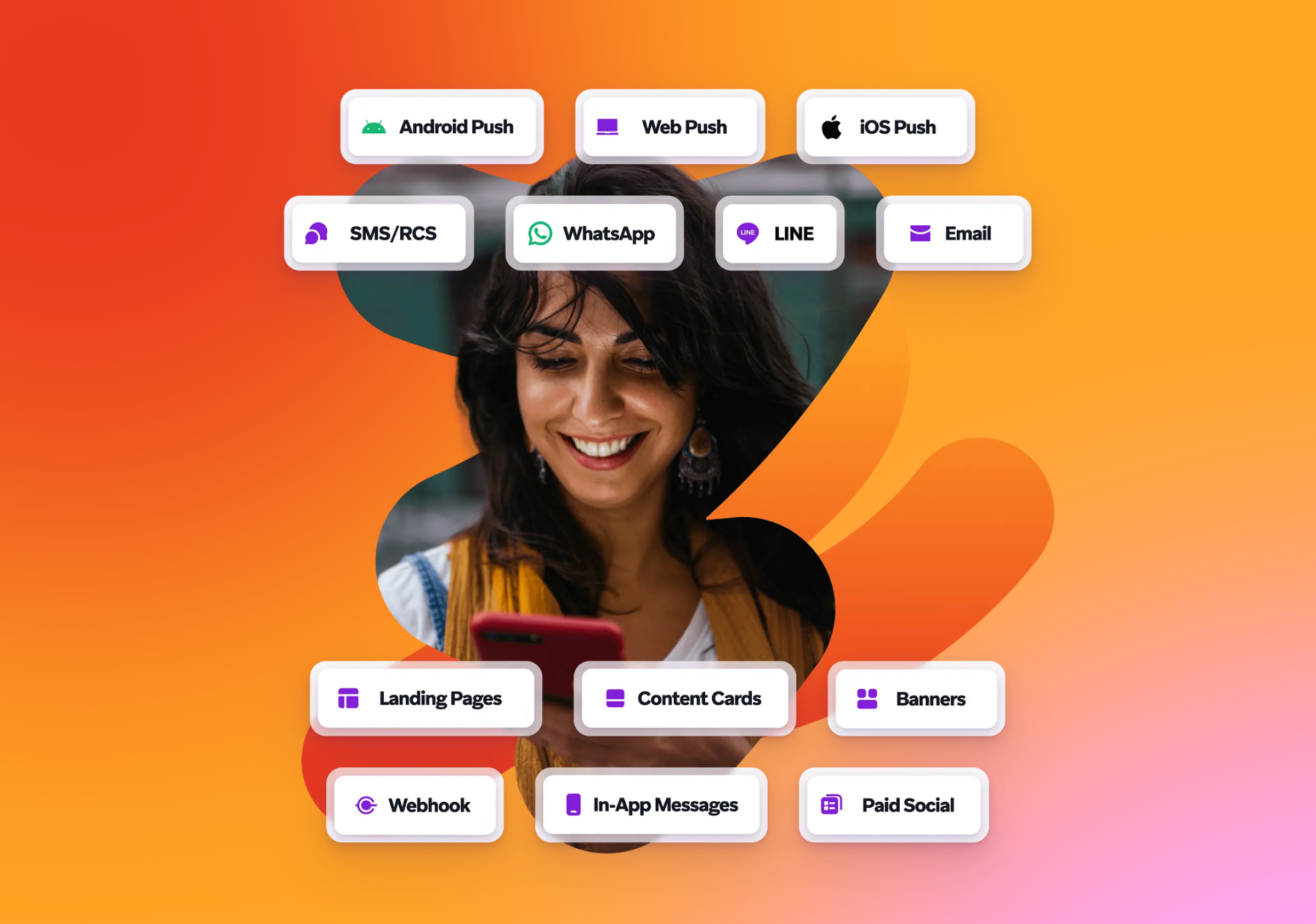
Delivery is where the experience comes to life. Real-time orchestration across channels—email, mobile, web, and beyond—keeps each message consistent, no matter how or where someone engages. It’s the difference between campaigns that overlap and experiences that flow.
When these layers are connected, marketing automation starts to feel more like a conversation with your customer, and they gain an experience that makes sense to them. It’s intuitive, timely, and consistent, end-to-end.
AI and automation: Powering personalized customer journeys at scale
Customer journeys are unpredictable. People switch channels, devices, and intentions faster than any marketing team could manually track. AI and automation make it possible to keep each interaction relevant, consistent, and in sync.
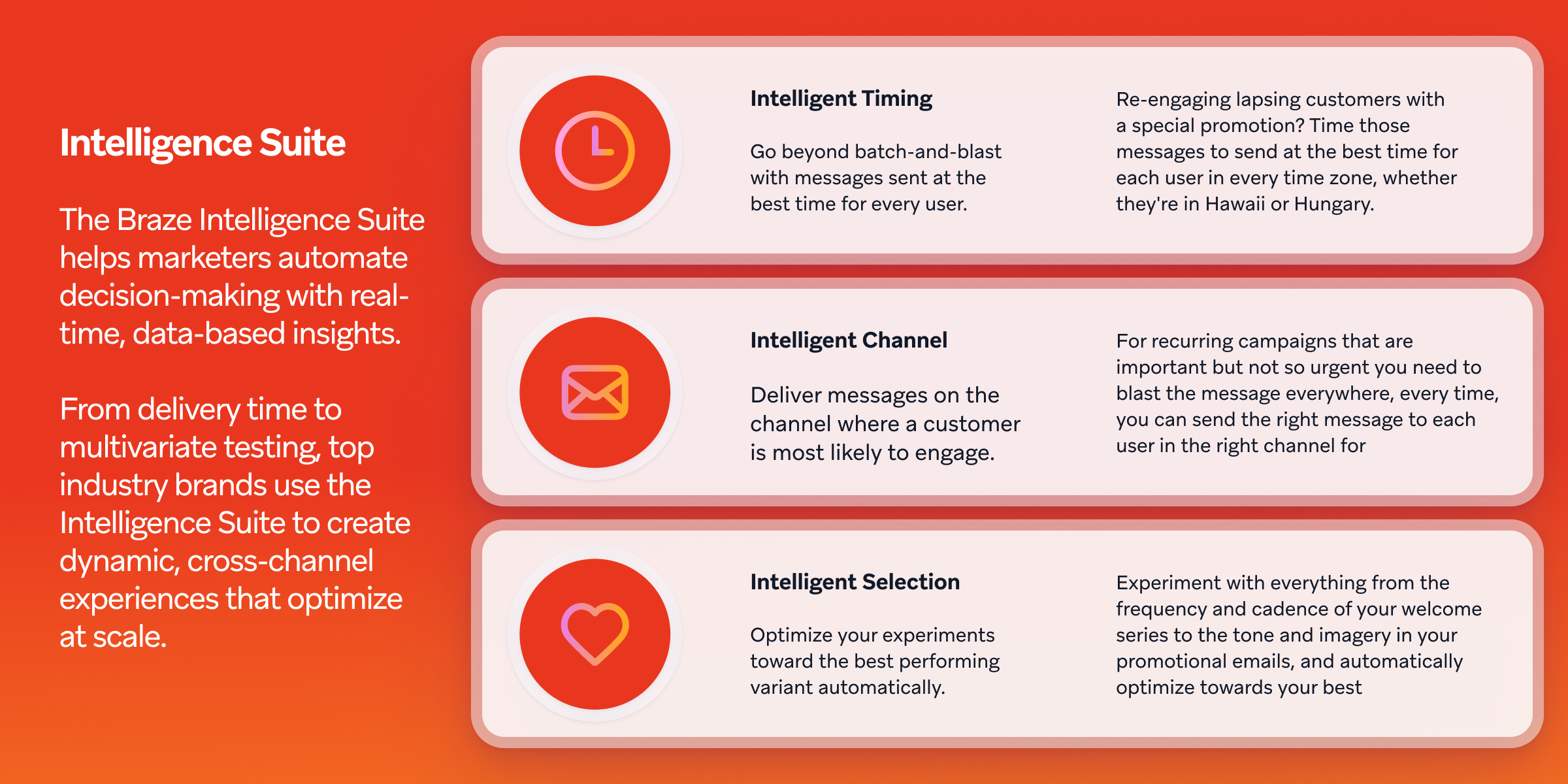
With the Braze Intelligence Suite, marketers can automate key parts of that process. Intelligent Channel determines the best channel for each recipient—email, push, SMS, or another option—based on what’s most likely to reach and resonate. Intelligent Timing uses engagement patterns to decide when someone is most likely to respond. Together, these features remove the guesswork, helping teams move from reactive scheduling to proactive engagement.
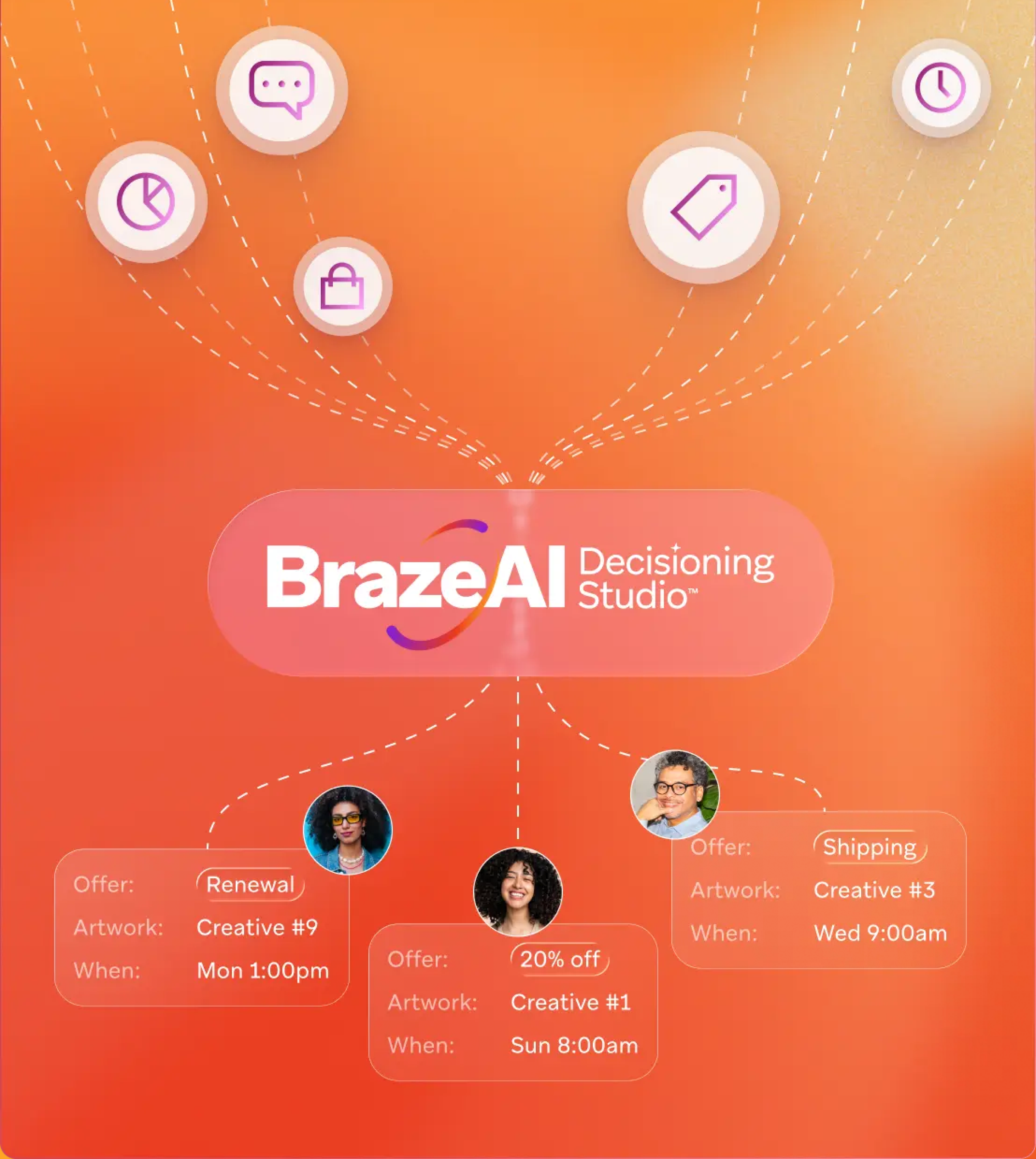
Beyond automation sits BrazeAI Decisioning Studio™, which introduces reinforcement learning to the mix. Traditional “next best action” models rely on predictive AI that uses past behavior to forecast future outcomes. They work, but they’re static—good at prediction, less good at adaptation or motivation customers to act. Next Best Everything changes that. Built on reinforcement learning, BrazeAI Decisioning Studio™ learns continuously from every customer interaction, optimizing timing, channel, frequency, and creativity in real time.
By experimenting automatically, the system balances business goals with customer preferences and tailors each message as conditions change. Marketers can then work on customer journey mapping, to design personalized customer journeys in Canvas that evolve in response to real customer behavior and context.
Personalization becomes truly one-to-one, giving each customer an experience that feels unique to them.
Getting started with omnichannel personalization in Braze
Omnichannel personalization can feel complex, but it doesn’t have to start that way. Small, connected steps can quickly build momentum and reveal where personalization drives the most value.
1. Map the customer journey
Start by identifying the key touchpoints where customers engage—sign-up, purchase, renewal, or re-engagement. Understanding these moments helps you see where connected messaging will have the greatest impact.
2. Audit your data and channels
Look at how data currently flows between systems. If insights from email, mobile, and in-store interactions live separately, focus on bringing them together. A unified customer view is the foundation for consistency.
3. Automate one connection
Choose a high-impact use case—like cart recovery or onboarding—and connect two or more channels in Canvas. Use Intelligent Channel or Intelligent Timing to test which combination drives stronger engagement.
4. Layer in AI decisioning
Once data and delivery are connected, introduce BrazeAI Decisioning Studio™ for real-time, 1:1 personalization. It learns continuously from each interaction, fine-tuning timing, content, and channel selection for each customer.
Examples of omnichannel personalization in action
Personalization succeeds when it feels genuine, timely, and built around real people. Across industries, brands are using Braze to turn customer data and automation into experiences that strengthen loyalty and trust, showing how thoughtful use of technology can bring brands and customers closer together.
KFC Spain’s bold customer engagement strategy turned critics into fans
KFC Spain turned its most criticized product into one of its biggest success stories—using personalization to rebuild trust and spark conversation.
The challenge
For years, KFC Spain’s fries were its most complained-about product, inspiring thousands of negative reviews and jokes online. Even after reformulating the recipe, the team faced a harder task—reconnecting with customers who had already walked away.
The strategy
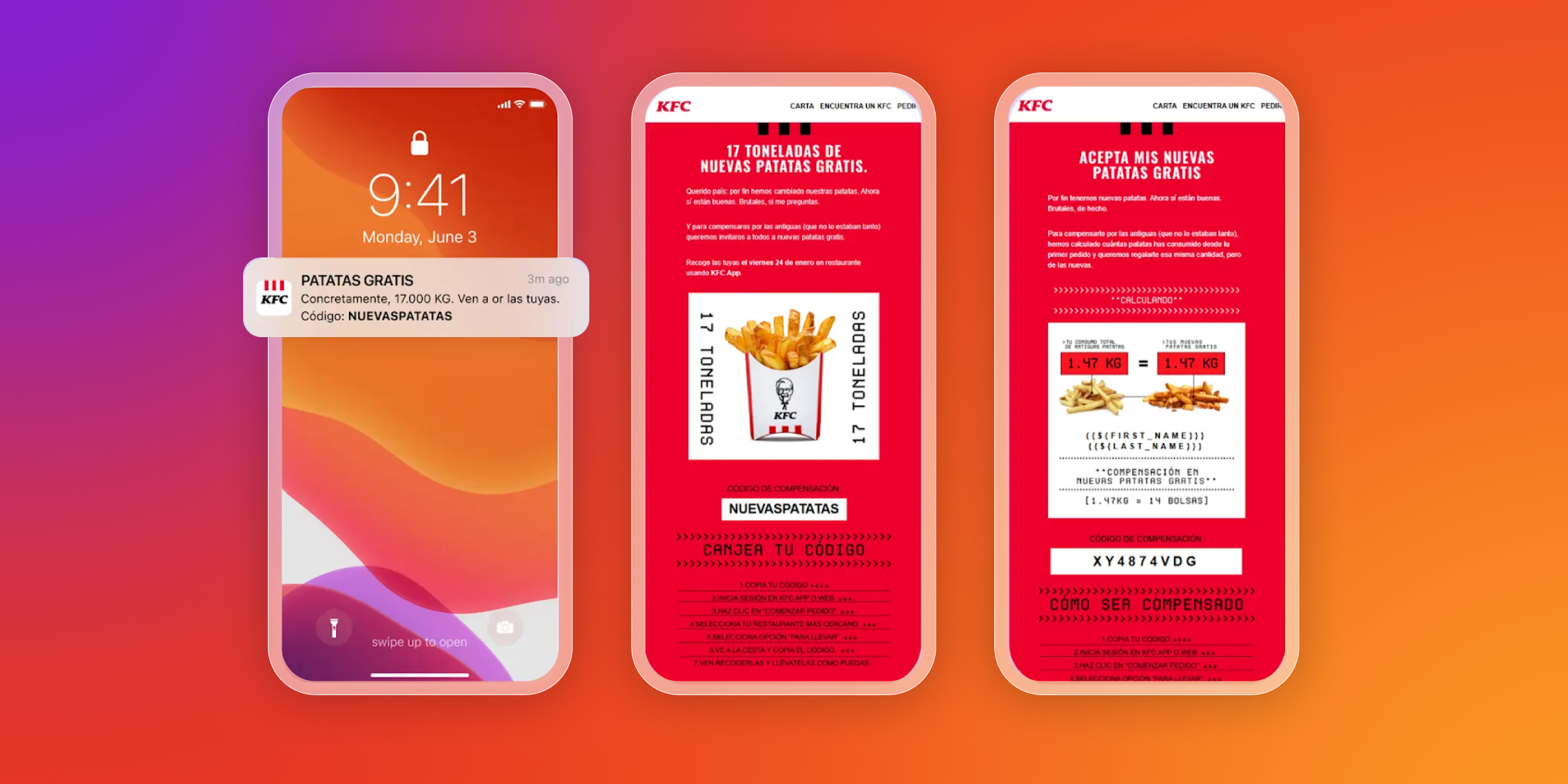
Using Braze, KFC identified everyone who had purchased the old fries. Through a cross-channel “Fries Compensation” campaign, those customers received a personalized apology and a free order matching the size of their previous purchase. Personalized emails, in-app messages, and push notifications delivered through Canvas made each interaction feel direct and sincere.
The wins
- 95% email open rate – KFC’s highest CRM performance to date
- 679% increase in app downloads
- 233% growth in daily active users
- 20x increase in daily orders on launch day
- 42 million impressions and 1.3 million social interactions across digital channels
- Highest-ever daily app sales achieved—even after giving away 17 tons of fries
Wondery boosts audience engagement with Braze Content Cards™
Wondery, a leader in the podcasting industry, wanted to deepen connections with its listeners and spotlight Wondery+, its premium subscription service. As the company expanded, the team looked for new ways to highlight relevant shows, encourage discovery, and strengthen long-term engagement through its app.
The challenge
Wondery’s previous marketing tools were limited to basic email campaigns and couldn’t support its vision for personalized, in-app storytelling. The team needed a way to promote new content without disrupting the listener experience and to connect its growing catalog of shows to the right audience segments.
The strategy
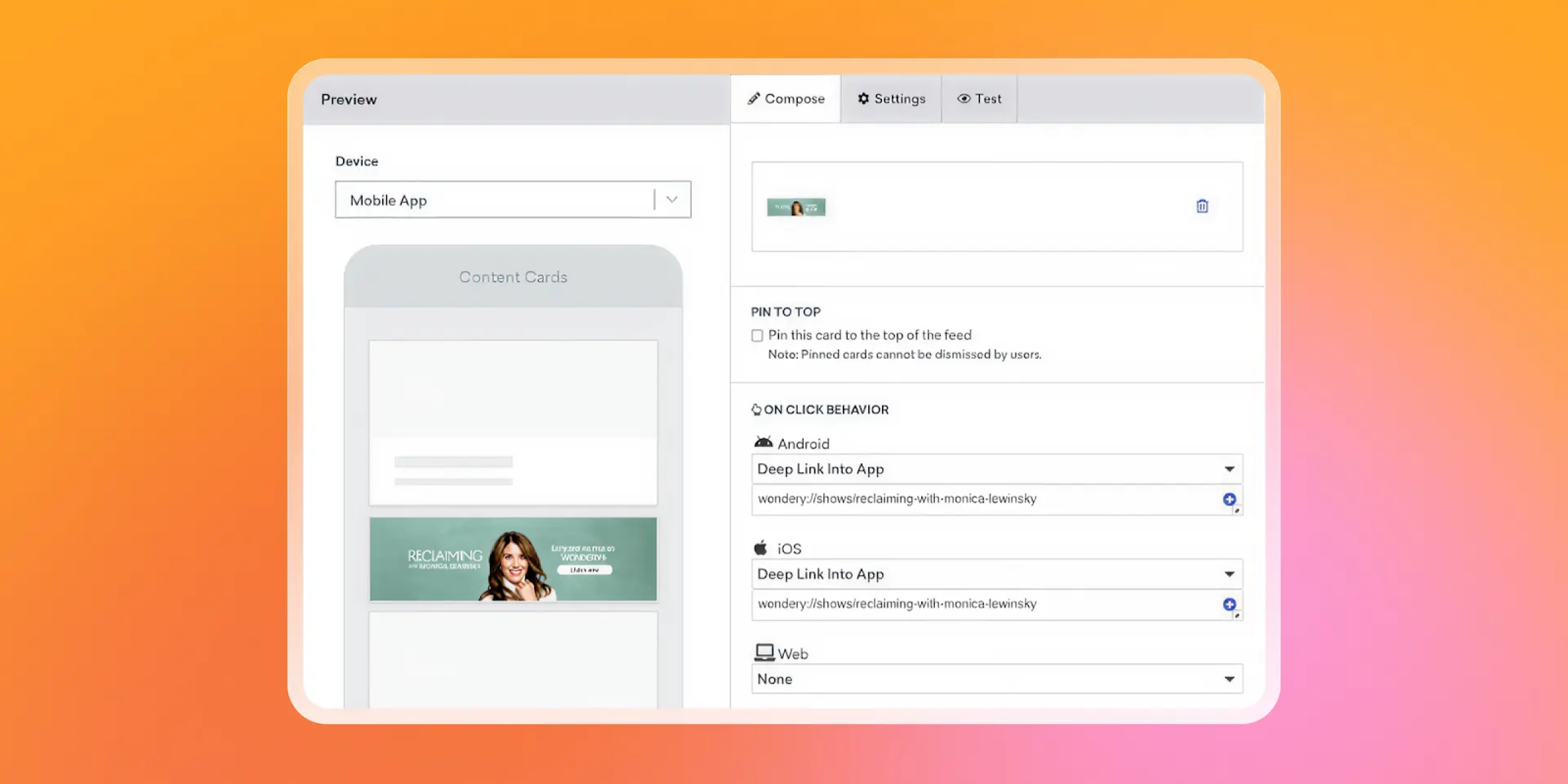
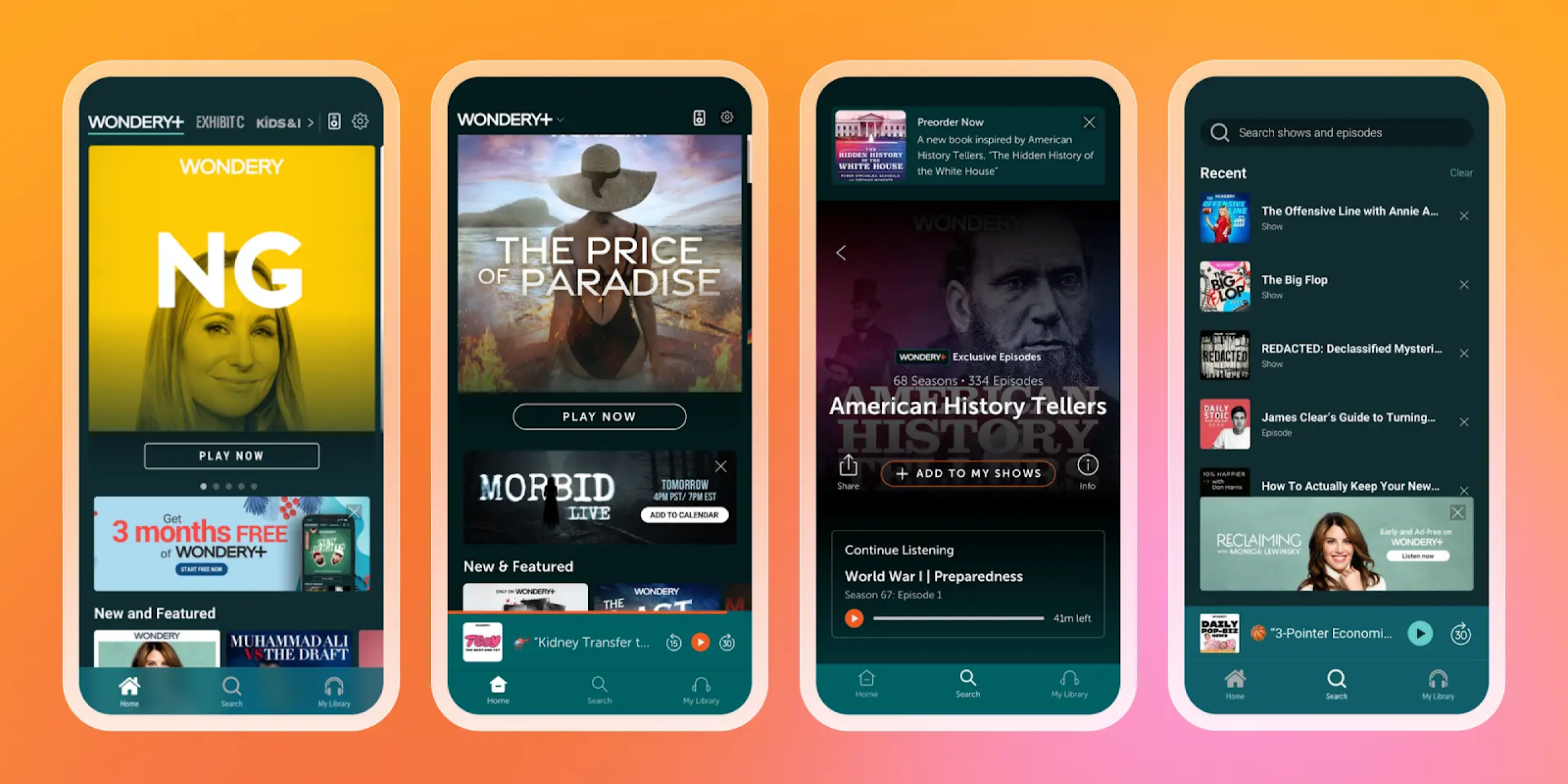
Using Braze Content Cards™, Wondery delivered personalized content recommendations directly within its app. Each card featured rich visuals, curated show suggestions, and clear calls to action that matched user interests and listening habits. The persistent, in-app format made it easy for listeners to re-engage without interrupting playback. Integration with Amplitude provided deeper insights into audience behavior, helping the team refine campaigns over time.
The wins
- 64% increase in unique episodes listened to per week among users who engaged with Content Cards
- 152% higher total click-through rates compared to unique CTRs, showing repeat engagement
- 6% lift in Wondery+ conversions versus other CRM channels
- Faster campaign creation and iteration, with minimal engineering support required
Endowus transforms the investing experience with cross-channel customer journeys
Endowus, a digital wealth platform based in Singapore, wanted to modernize how investors manage and grow their savings. The company set out to simplify a process that had long been slow, manual, and dominated by traditional banks—bringing the investing journey online and into customers’ hands.
The challenge
Before partnering with Braze, Endowus relied mainly on web-based communication and manual outreach. As the company launched its mobile app, it needed a way to connect experiences across channels and keep customers informed throughout the investing process without overwhelming them.
The strategy
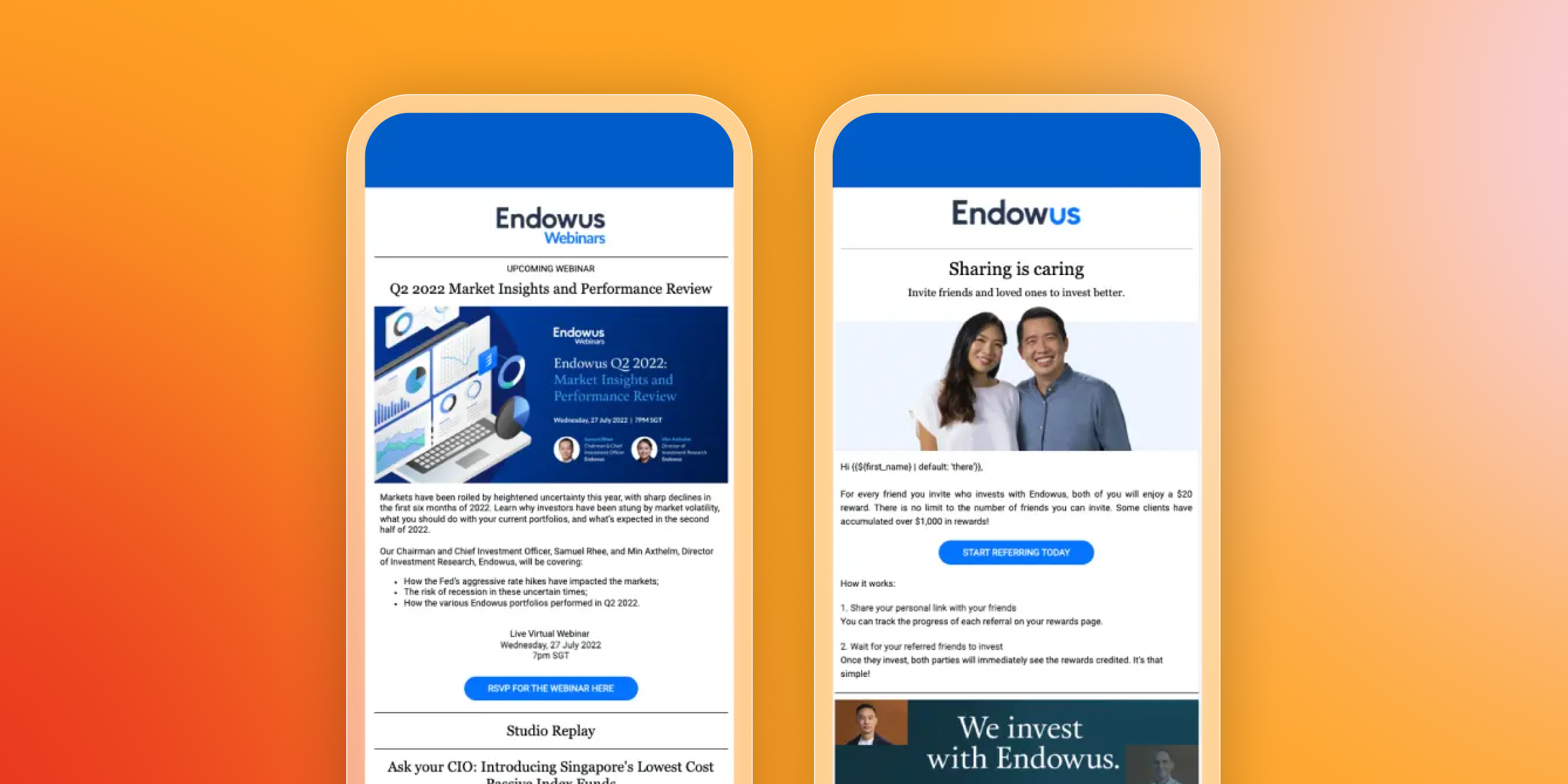
Using Canvas, Endowus built automated journeys triggered by real customer behavior—whether someone completed onboarding, made their first investment, or gave feedback. The team used action-based and time-based triggers to personalize each message, creating a flow that guided customers step-by-step. With segmentation and frequency capping in place, the marketing team could balance relevance with respect for customer attention.
The wins
- 30% increase in email open rates through personalized, behavior-based journeys
- Shorter campaign setup time thanks to automation within Canvas
- Stronger engagement across onboarding and feedback touchpoints
- Improved efficiency for a lean team able to test, iterate, and scale quickly
How Braze makes omnichannel personalization seamless
Personalization only works when each tool, channel, and data source speaks the same language. Braze is the activation engine that brings that connection to life, giving marketing teams a place to plan, build, and adapt customer experiences in real time.
A strategically prepared customer engagement effort can enhance experiences and maximize sales throughout the year, especially during peak seasons and holidays.
Connected Content brings live information—like stock levels, pricing, or local updates—straight into the message as it’s sent. That live link means customers always see something current and relevant, not a snapshot of last week.
Canvas helps teams design journeys that feel natural. Each path adjusts automatically to what customers do next, coordinating each message across email, push, SMS, in-app, and more.
AI Decisioning takes care of the finer details. It learns what timing, channel, and creative work best for each person, fine-tuning each message so personalization stays accurate as behavior changes.
Braze also connects easily with CDPs and other martech tools, so brands can activate the data they already trust without rebuilding their stack. This open approach gives marketers more control today and sets the stage for what’s coming next—personalization that learns continuously and responds on its own.
The future of omnichannel personalization
The next wave of personalization will be driven by intelligent systems that act autonomously. Instead of relying on fixed rules or scheduled campaigns, agentic AI will guide engagement flows that adapt naturally to each customer’s context and behavior.
Personalization will also become continuous. Each interaction will feed back into the system, allowing it to learn and improve on its own—adjusting timing, content, and channels in real time.
To make that possible, Braze is building an environment where automation, orchestration, and AI decisioning work together seamlessly. This approach gives brands the power to evolve with their customers, learning and improving with interactions.
Key takeaways of Omnichannel personalization
- Omnichannel personalization connects each touchpoint into one consistent experience, strengthening retention, trust, and customer lifetime value.
- Success depends on three connected layers: unified data, intelligent decisioning, and real-time delivery.
- These capabilities make it possible to personalize at scale while keeping each interaction relevant and authentic.
- Braze brings those elements together—linking data systems, AI decisioning, and message delivery to help marketers build experiences that feel personal on each channel.
Omnichannel personalization FAQs
What is omnichannel personalization?
Omnichannel personalization is the process of delivering consistent, connected experiences across all customer touchpoints by using unified data, automation, and real-time decisioning.
How does omnichannel personalization differ from multichannel marketing?
Multichannel marketing uses several channels separately, often with disconnected campaigns. Omnichannel personalization links those channels together through shared data and real-time coordination, creating one continuous customer journey.
Why is data unification critical for connected customer experiences?
Data unification is critical for connected customer experiences because without it, brands can’t deliver contextually relevant messages or maintain consistency across touchpoints.
How can AI and automation improve omnichannel personalization?
AI and automation can improve omnichannel personalization because it analyzes behavior and context to choose the right message, channel, and timing, making personalization at scale possible.
How does Braze enable personalization across customer touchpoints?
Braze connects customer data with automated decisioning and message delivery in one platform. This setup allows brands to personalize each message in real time—no matter which channel a customer engages with.
Related Tags
Be Absolutely Engaging.™
Sign up for regular updates from Braze.