Agentic AI in marketing: From static journeys to autonomous optimization
Published on August 08, 2025/Last edited on April 29, 2026/7 min read

Team Braze
Contents
AI is already transforming how marketers build, test, and deliver campaigns—but most systems are still limited by static flows that require manual oversight and slower, less sophisticated experimentation. Agentic AI changes that.
Rather than following rigid rules, agentic AI marketing works toward a defined goal and adapts in real time. It can choose the best moment to send a message, shift the customer journey based on behavior, and even run and iterate tests autonomously, at a massive scale—all within the strategy set by the marketer.
This article breaks down what agentic AI is, how it differs from traditional automation, and which tools can bring this concept to life. If you're ready to expand upon campaign logic and into real-time personalization and optimization, you’re in the right place.
TL;DR:
- Agentic AI in marketing is designed to enable autonomous, real-time adaptation and optimization of customer journeys and campaigns, moving beyond static workflows to deliver personalized, goal-driven experiences at scale within marketer-defined strategies.
Key takeaways
- Agentic AI marketing systems perceive, decide, and act independently to optimize outcomes like engagement and retention by continuously learning from live customer behavior, unlike traditional automation which relies on static rules and manual triggers.
- This technology allows brands to run thousands of personalized tests simultaneously, dynamically adjusting customer journeys and messaging timing for smarter, faster experimentation and better campaign performance.
- Successful adoption of agentic AI often takes early opportunity identification, cross-functional pilots, strong data foundations, refined marketing roles focused on strategy, and safeguards such as human checkpoints and privacy protocols to ensure controlled, scalable execution.
What is agentic AI in marketing?
Agentic AI marketing systems perceive their environment, make decisions, and take action autonomously to achieve a specific goal. In marketing, that means systems that can expand the traditional limitations of pre-set rules or static workflows by continuing to learn and making decisions in the moment, based on live customer behavior and context. These systems can operate within pre-set guardrails, but they act independently to optimize outcomes like profit, retention, engagement, or anything else a brand might be trying to maximize.
Rather than waiting for a marketer to trigger a send or update a journey, agentic AI continuously learns, observes, interprets, and acts. It’s goal-driven, not just task-driven. That distinction is what sets it apart from traditional automation—and what makes it a powerful shift in how marketers design and deliver customer experiences.
Some key components include:
- Goal-driven
- Autonomous actions
- Continuous learning
- Guardrails
- Memory and context
How agentic AI marketing drives smarter journeys, faster testing, and better timing
Agentic AI helps brands work faster and their campaigns perform better by removing the human limitations of experimentation and simultaneously running 1000s of tests at the individual level.
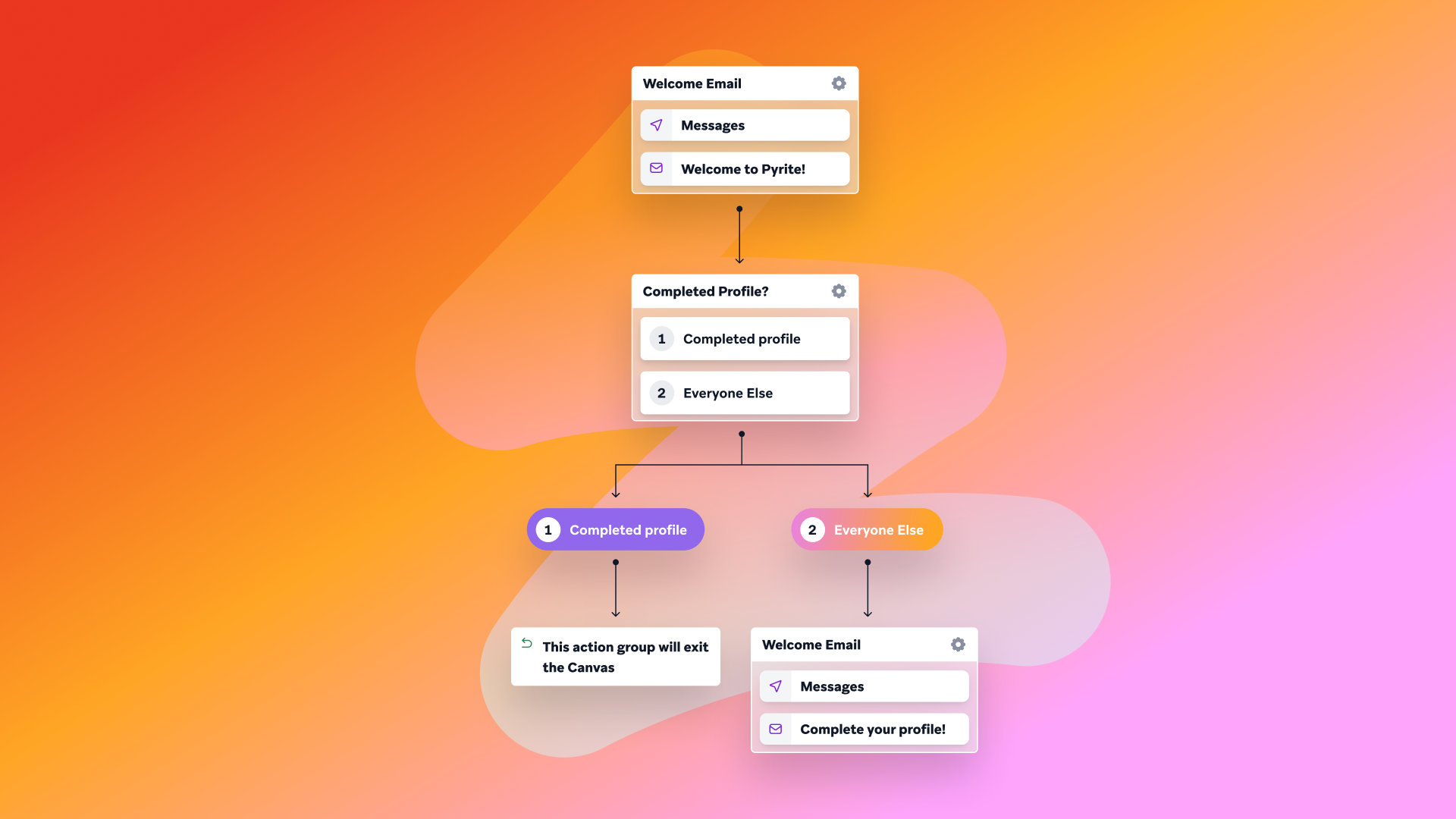
Journey optimization: Instead of locking customers into predefined paths, agentic AI adapts and personalizes the journey based on individual customer profiles. If someone’s behaviors, motivations, or buying patterns shift, agentic AI can help personalize the experience based on unique customer actions.
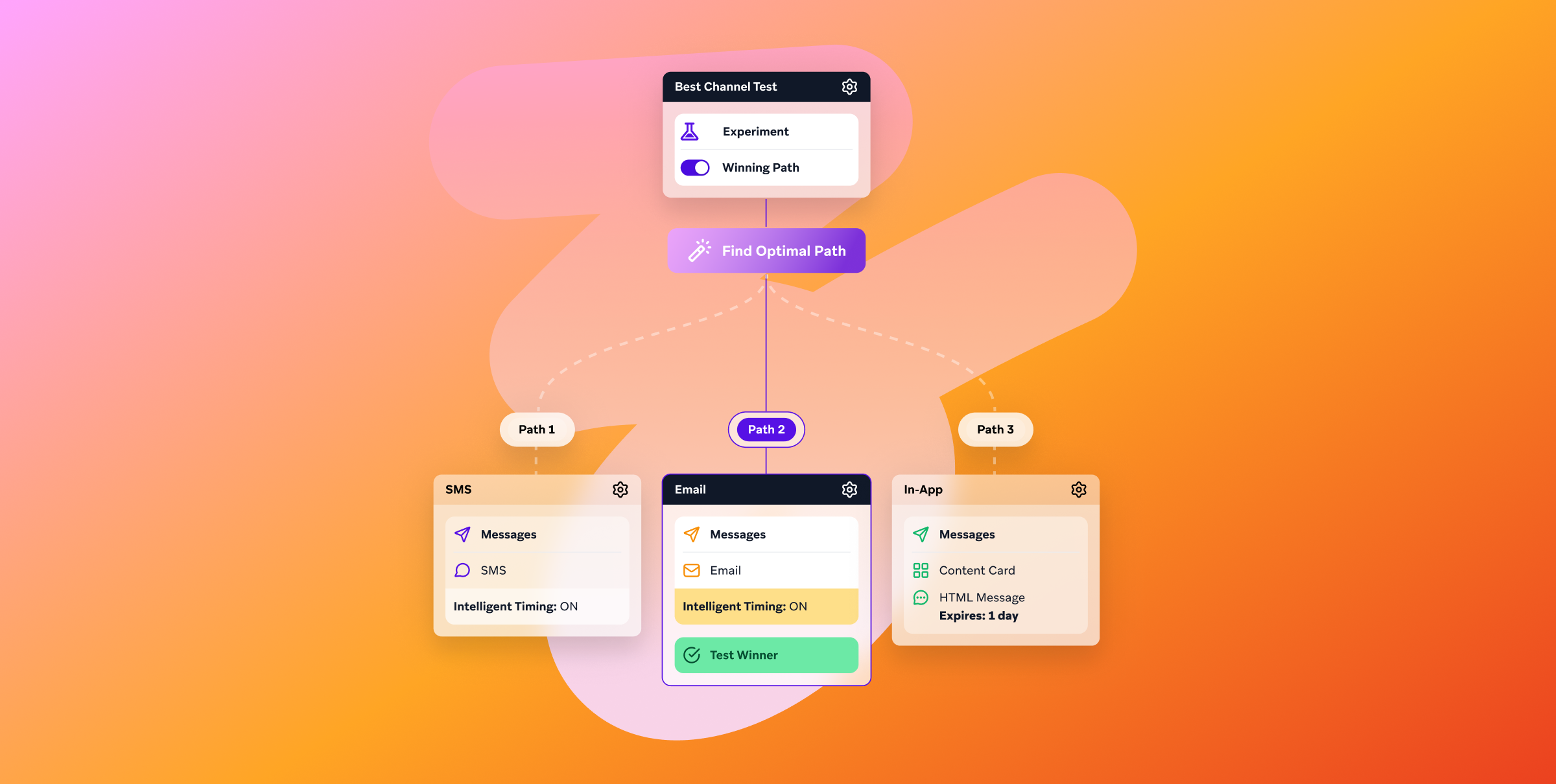
Reinforcement learning: Rather than manually launching tests and waiting for results, agentic AI can automatically test multiple variations, learn from outcomes, and push the top-performing version for each individual.
How brands can prepare for agentic AI
Adopting agentic AI marketing takes planning, cross-functional input, and a strong foundation. Brands that prepare early will be better positioned to turn this shift into a competitive advantage, especially as the technology evolves.
Here’s how to get started:
1. Spot early opportunities
Define the critical business use cases where deeper relevance and personalization can have a huge impact for your brand.
2. Run small pilots with cross-functional teams
Bring together stakeholders across every relevant team to test use cases and build familiarity with agentic workflows. Additionally, test against your existing strategies to help review where the biggest value lies.
3. Strengthen your data foundation
Agentic systems should have access to streaming relevant datasets. Invest in tools that centralize customer insights and support clean, consistent data flows. Platforms like Braze already offer many of these capabilities out of the box.
4. Refine marketing roles
As AI handles more of the execution, marketers will shift toward setting goals, exploring creative approaches, and driving strategy—elevating marketers to be the strategic conductors of their business. Expect a growing need for orchestration, oversight, and strategic thinking.
5. Put safeguards in place
Agentic AI can act fast—so brands need smart boundaries. Build in human checkpoints, define fallback paths, and establish data privacy protocols.
With these foundations in place, agentic AI can become a trusted partner in helping you meet your goals at scale.
How real brands use agentic AI in marketing
How Luxury Escapes deploys better segmentation with BrazeAI Agent Console™
Problem
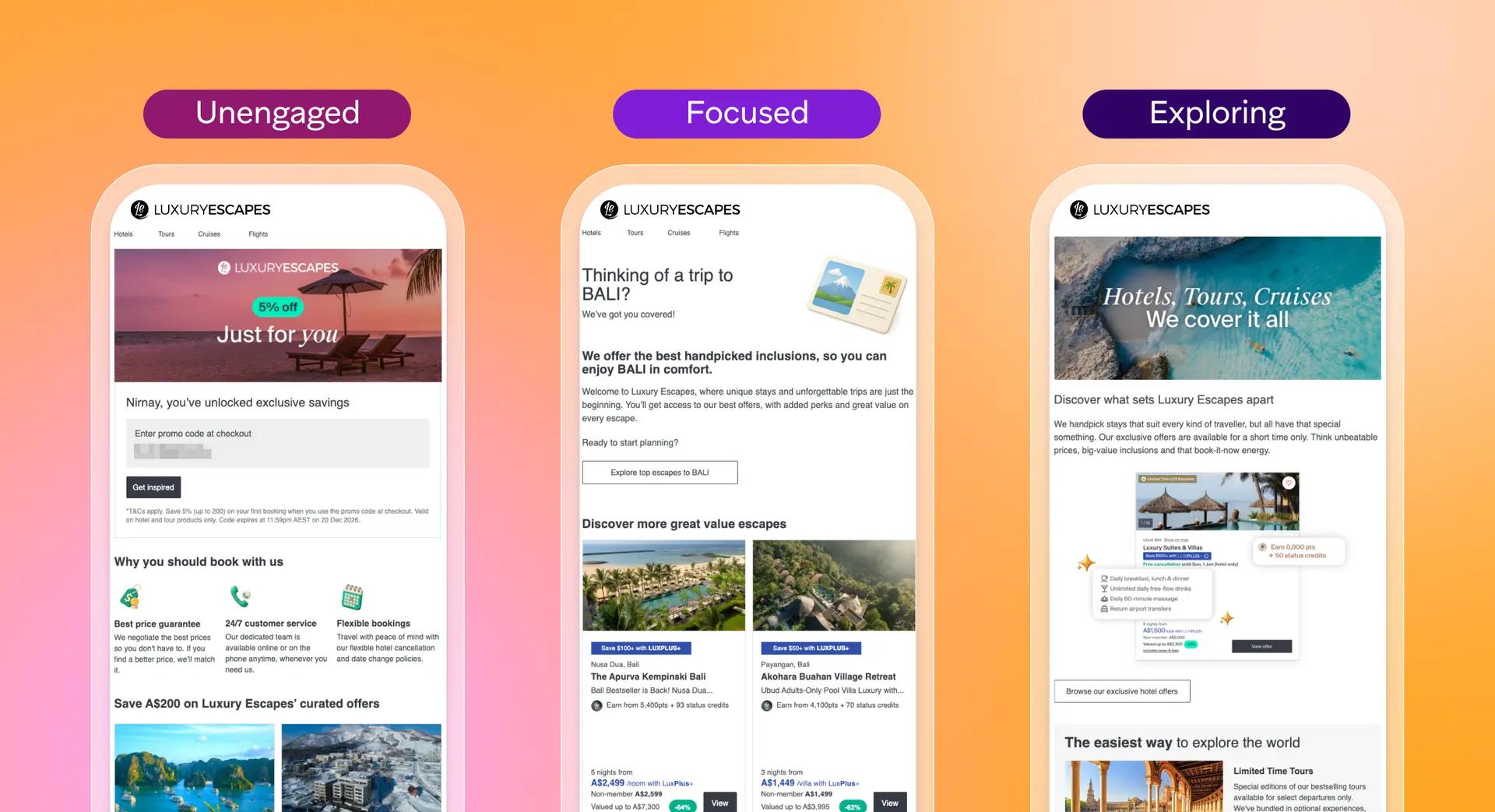
Luxury Escapes’ email segmentation used a rules-based approach that divided new users into three cohorts based on low, medium, and high engagement after signup to test the effectiveness of three different welcome emails. They saw good results, but wanted to push personalization further.
Strategy
The team decided to deploy BrazeAI Agent Console™, replacing segmentation based solely on session count with a BrazeAI™ Agent that evaluated ten distinct website event signals to assign each new user to the right cohort.
Results
The agent-based segmentation produced a 10% lift in revenue per user compared to the rule-based control group, driven entirely by conversion rate. It also drove a 7% increase in total transaction value and 6% increase in purchase volume.
How Cleo rebuilt its welcome series to be as personal as the care it delivers
Problem
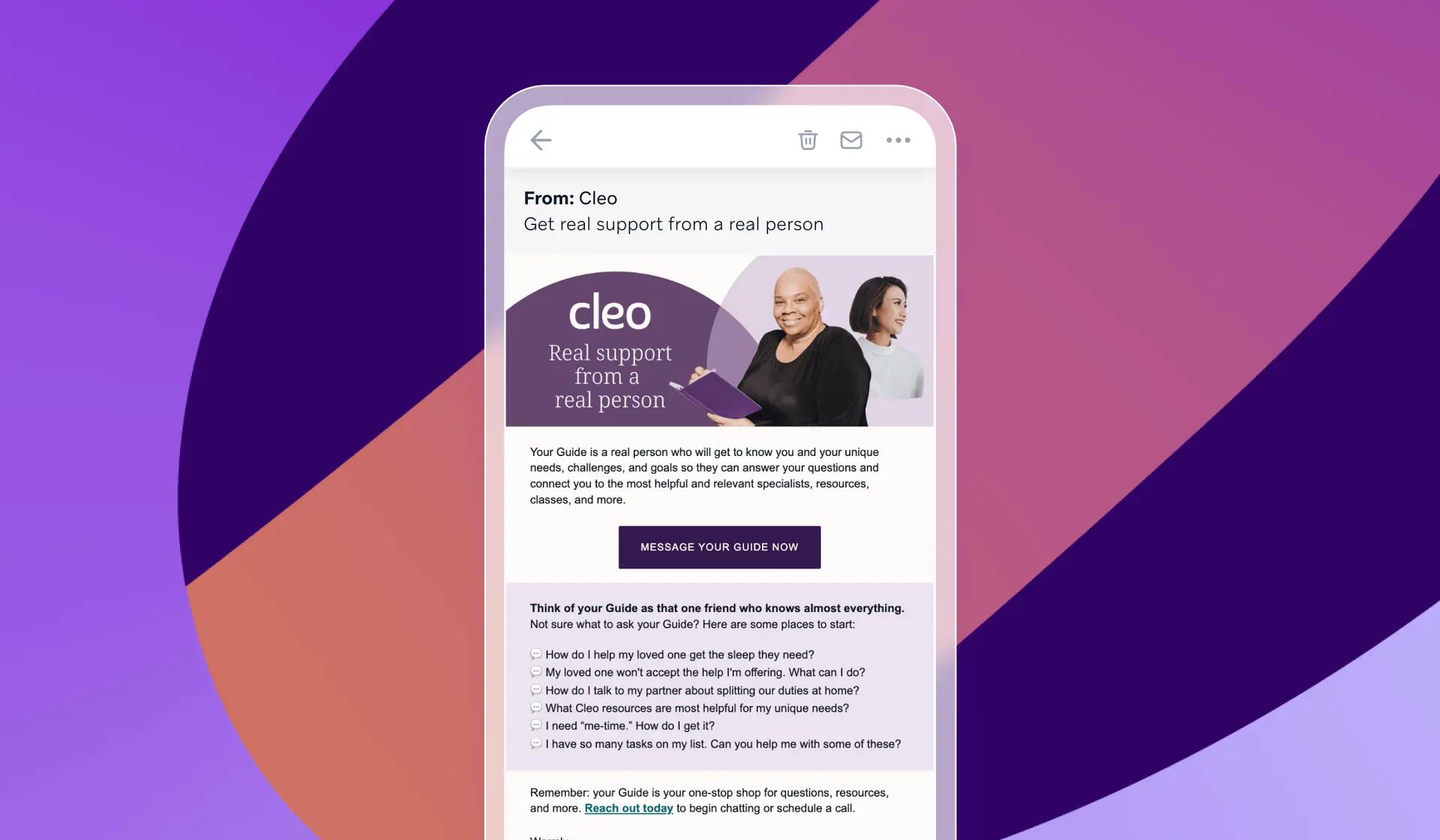
Cleo wanted to reimagine its welcome series to reflect the complexity of each member's needs and benefits. They needed a way to translate rich member data into precise, personalized content without straining the team’s resources.
Strategy
Cleo's lifecycle marketing manager used BrazeAI Operator™ to write and debug the Liquid code to power a new personalized welcome experience that adapts to each member's care recipients, package type, and life stage.
Results
The enhanced personalization drove an 81% reduction in unsubscribes, a 97% drop in opt-outs on the first email, a 284% increase in app opens, and a 124% lift in push notification engagement—results that surprised the team, given that the old series was already far above benchmarks.
Dayuse moves from generic messaging to AI-powered personalization with BrazeAI Agent Console™
Problem
As the global leader in daytime hotel services operating across 30 countries, Dayuse’s priority is to proactively optimize customer lifetime value. To prevent any potential softening of repeat booking rates, the team sought to move beyond standard re-engagement and deliver a more sophisticated, individualized experience. However, managing high-level personalization and local nuances across dozens of markets and languages required a more scalable, AI-driven approach to maintain their competitive edge.
Strategy
Dayuse adopted BrazeAI Agent Console™ to generate individualized campaign content at scale—drawing on user data like wish-listed hotels, last-booked property type, booking history, and preferred language. Agent Console embeds autonomous AI agents directly as steps within the Braze customer journey builder, replacing their previous external LLM provider with a more reliable, integrated solution that puts personalization within reach of a small CRM team.
Results
The brand doubled the incremental revenue for their “favorite campaign” compared to the control group. After migrating to BrazeAI Agent Console™ from their prior webhook setup, Dayuse saw an additional 23% uplift in their “repeat campaign.”

Agentic AI: What marketers should takeaway
Agentic AI represents a shift from predefined logic to dynamic, personalized and deeply relevant 1:1 customer experiences. It gives marketers the power to set high-level goals, then lets intelligent systems handle the complexity of execution—adapting in real time to customer behavior and optimizing for outcomes at scale.
This doesn’t mean giving up control. With Braze, marketers define the strategy, guardrails, and success metrics. Agentic AI simply helps accelerate results by making thousands of micro-decisions faster than any team could manage manually.
For brands ready to extend pre-defined campaigns, agentic AI offers a smarter, more responsive way to engage and helps brands move from pre-set campaigns to continuously self-optimizing customer experiences.
Agentic AI marketing FAQs
What is agentic AI in marketing?
Agentic AI in marketing refers to artificial intelligence that acts independently within set parameters to pursue specific marketing goals, such as increasing conversions or reducing churn.
How does agentic AI differ from traditional marketing automation?
Traditional automation follows predefined rules and flows. Agentic AI, learning from customer behavior and optimizing decisions dynamically in order to achieve a specified goal.
How does agentic AI optimize customer journeys in real time?
Agentic AI uses live behavioral data for personalized decisioning on content, offers, message timing, and content delivery without manual updates, making each experience more relevant and effective.
What are examples of agentic AI features in Braze?
Braze features like BrazeAI Operator™, BrazeAI Agent Console™, and BrazeAI Decisioning Studio™.
What are the benefits and risks of using agentic AI for marketing?
The benefits can include deeply relevant and personalized experiences, increased engagement, and reduced manual workload. Risks may include unclear goal-setting without proper guardrails.
Related Tags
Be Absolutely Engaging.™
Sign up for regular updates from Braze.