8 Times Push Notifications Would’ve Changed History
Published on November 30, 2016/Last edited on November 30, 2016/5 min read
Team Braze
While push notifications have only been around since 2009, they’ve become such game-changers for marketers doing the sending and customers doing the receiving and reading that we’d like to think that if they’d been around since the beginning of time that they that could have changed history. That is, of course, if the push notifications had been seen at the right time.
So sit back, relax, travel through the centuries with us, and see how we could change the course of events throughout time and across the globe with these personalized, rich, and relevant push notifications.
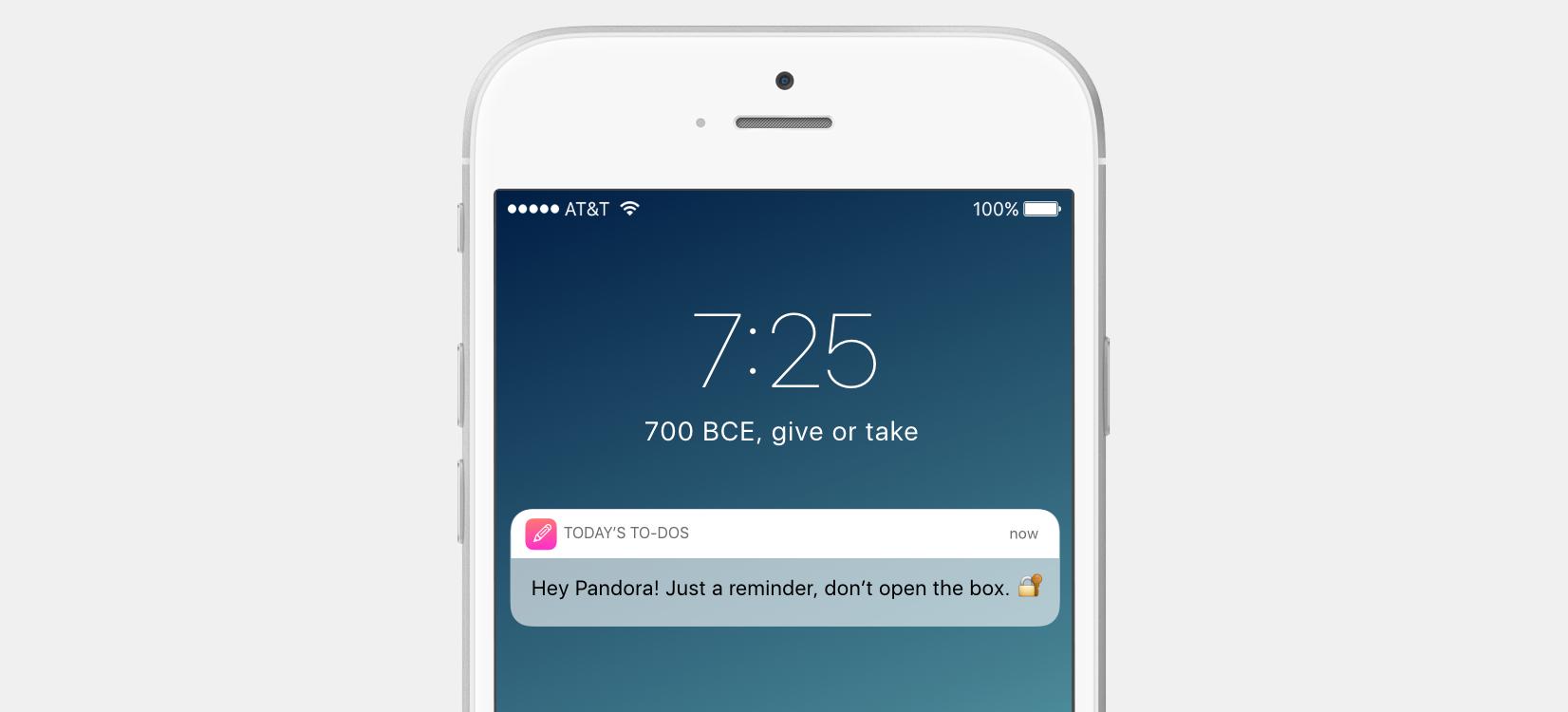
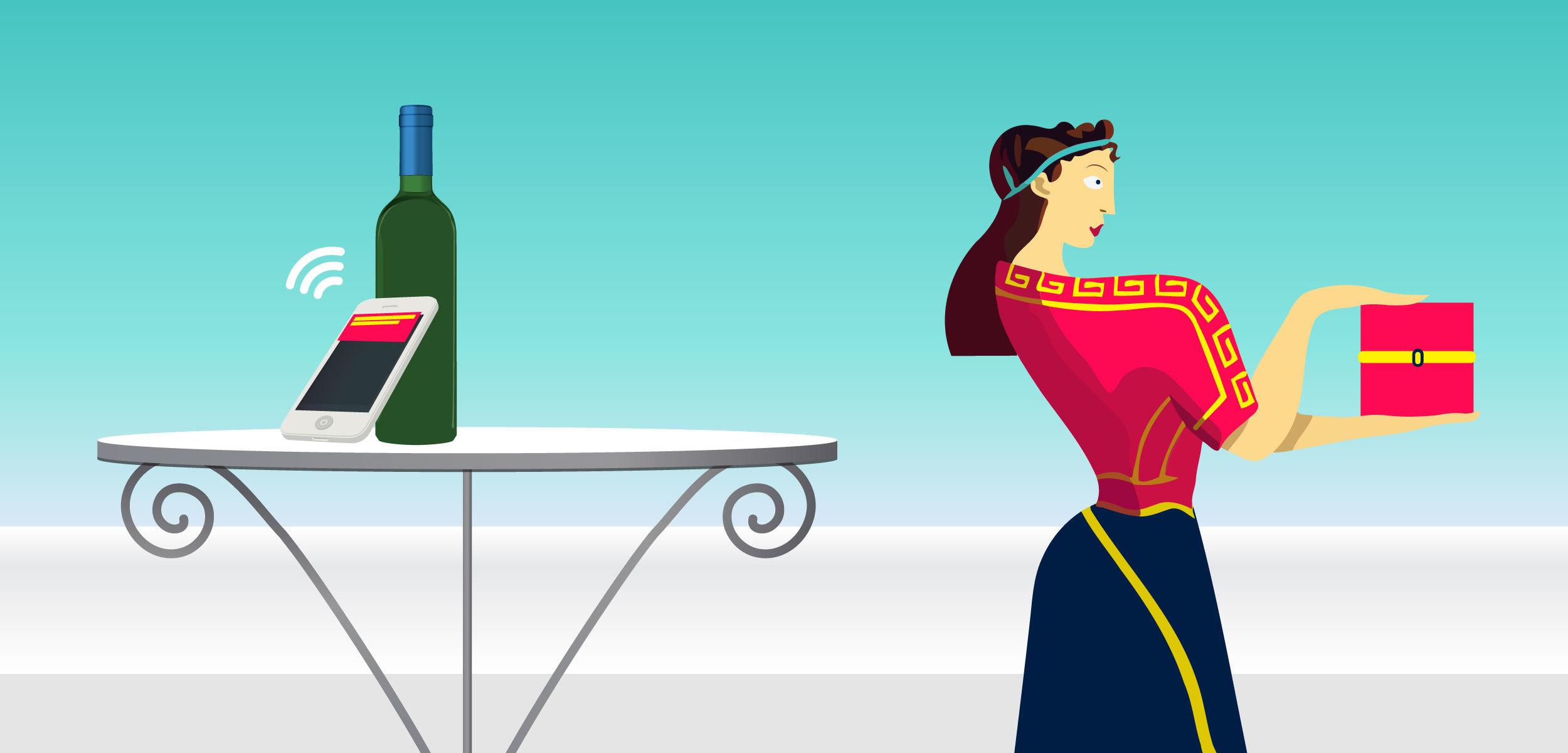
Legend has it, Pandora opened a box (actually, experts believe the original Greek story had it as a jar or container) that unleashed all the world’s problems, such as sickness and death, making this the most important push notification to ever send.
So, let’s invent a time machine, travel back to ancient times, give Pandora (if she wasn’t just a myth) a smart device of some kind, and make sure she gets the memo.
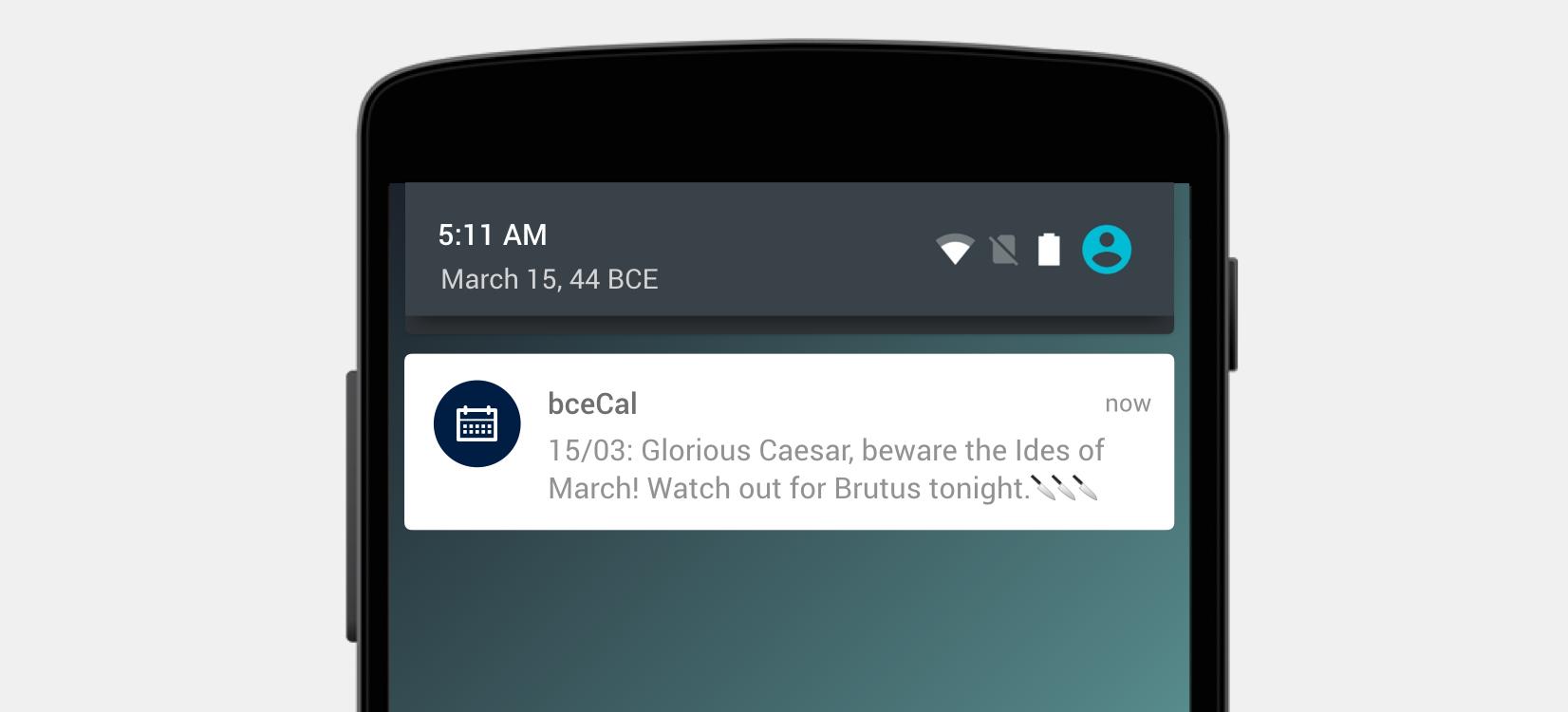
If Julius Caesar had a clue that 60 nobles, including his protege Marcus Brutus were coming for him, he might not have let his security forces leave his side, and he might not have been assassinated on that fateful Ides of March. Of course, in actuality, he is said to have received the old-fashioned kind of personalized push notification (a #throwback, hand-written note warning him of the danger), which he reportedly did not bother to read. That’s, like, the ultimate opt-out, by the way.
And if his friends had really cared, they would have tried these alternative ways to reach people who opt out of push notifications. Or at least tried to better prime for push.
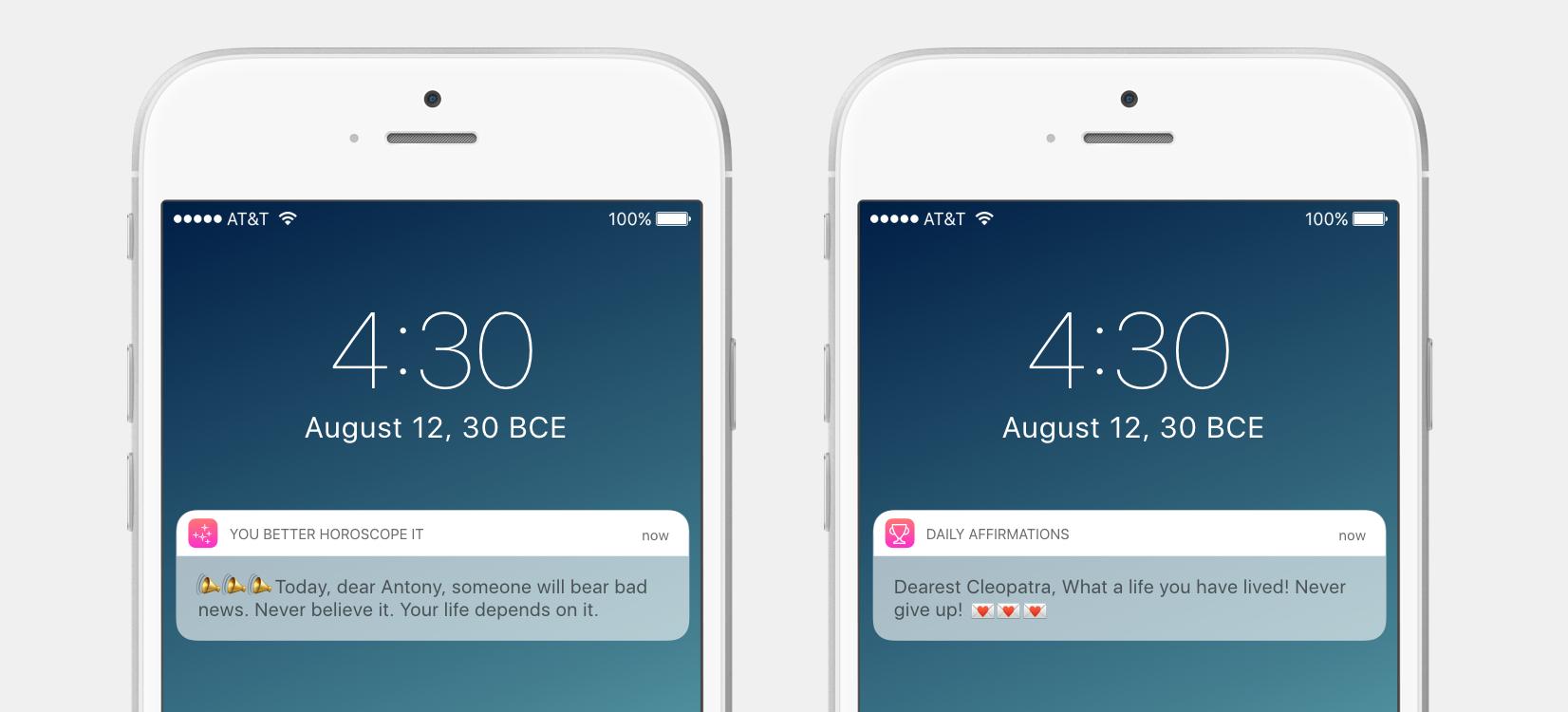
Who’s to say whether Queen Cleopatra would believe in affirmations or if her lover Marc Antony would buy into horoscopes? We’d like to hazard that if, at the least, they’d each received urgent push notifications alerting them that the other was alive and well, they might not have taken their lives on August 12 in 30 BCE, and Egypt may not have been annexed into the Roman Empire.
That’s a lot of guessing on our part, but one thing’s for sure: Push notifications are a powerful tool for communicating urgent messages that help educate people.
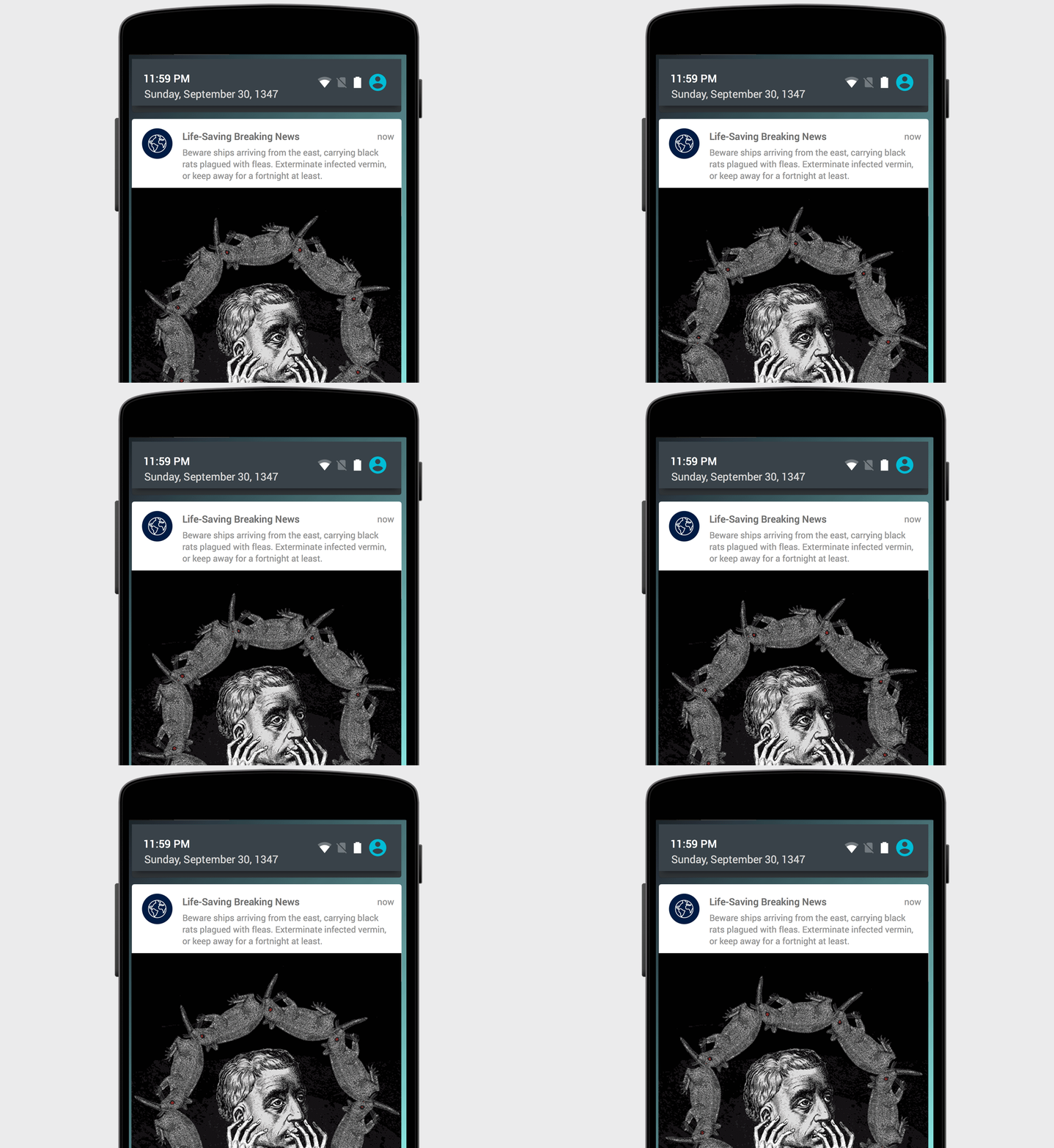
Striking in October 1347, the Black Death took the lives of 50 million Europeans, nearly 60% of the people living on the continent, by 1353. The highly contagious disease was able to spread so quickly because its cause was so mysterious. If Europeans had received a breaking news alert letting them know that the rats were, well, rats, imagine how things could have turned out.
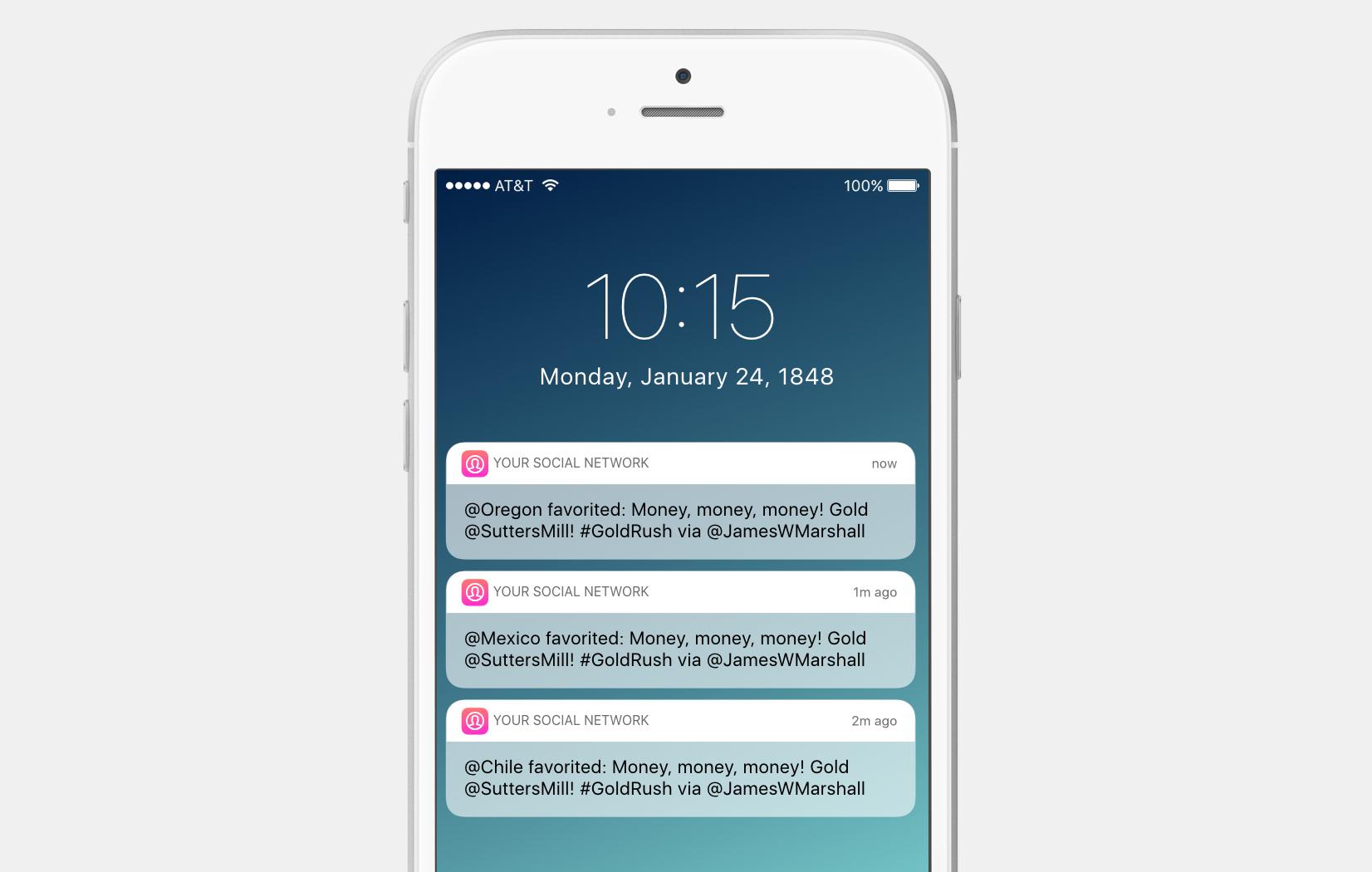
As it happened, James Wilson Marshall did find gold flakes on that fateful day, but he did not post on social media about it, not just because it didn’t exist back then, but because he didn’t want anyone else to find out just how good a deal he struck (no surprise there). When the news did leak, people in Oregon, Latin America, and the Sandwich Islands (Hawaii) were the first to hear. By March, one newspaper had the scoop, by August 4,000 miners were scouring the area, and by the end of 1849 the population had jumped from 800 in March of 1848 to 100,000.
If a viral social network had been around and was leveraging push notifications and activity messaging to help news spread, it would have made its way around the world within seconds or minutes, not months or years (that’s so mid-1840s).
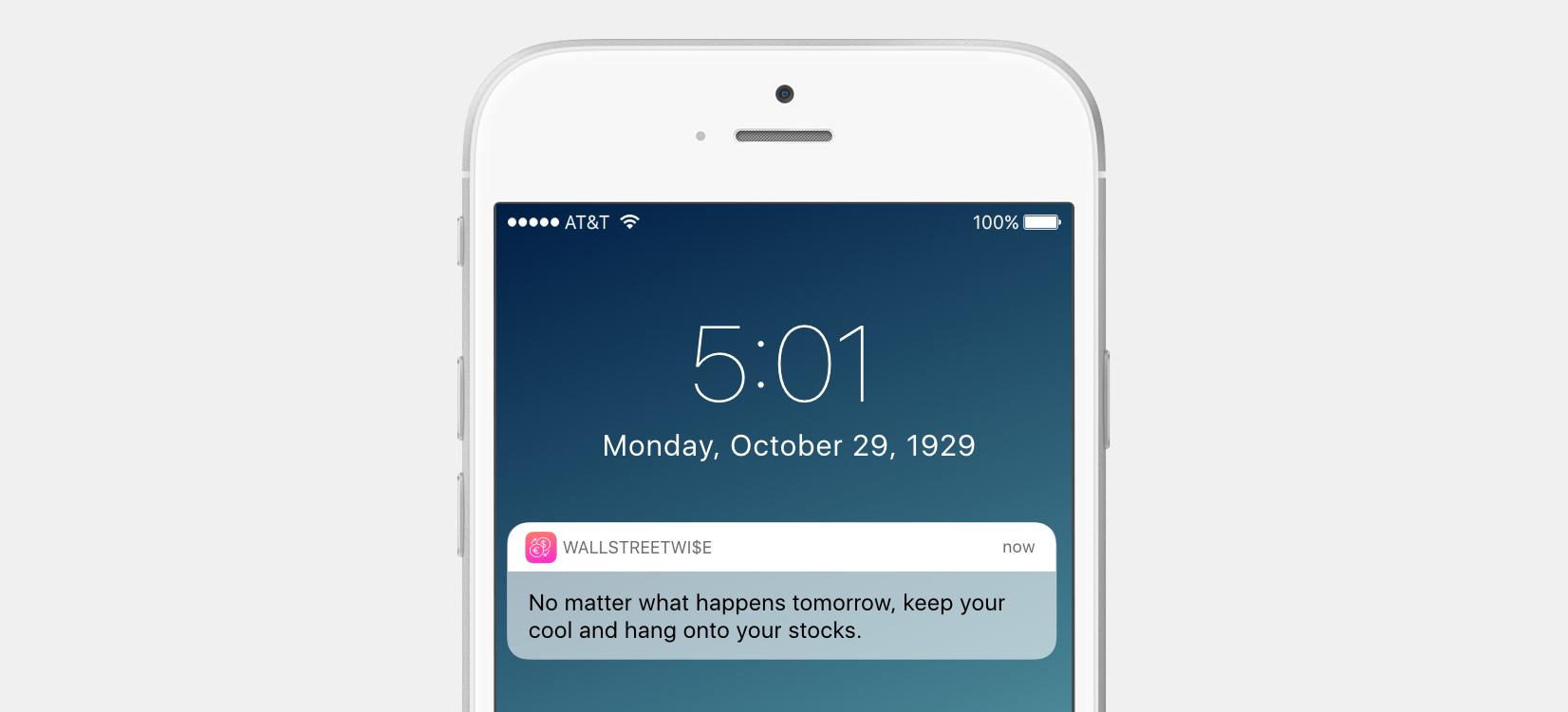
October 29, 1929. Black Tuesday. Sixteen million shares traded. Billions of dollars gone. Devastation for a decade. Could the panic that led to the Great Depression, America’s greatest economic downturn, have been avoided if investors were able to hold onto their faith and their stocks? Could a message reminding them to remain resolved have made the difference? As Investopedia puts it, in today’s day and age, “When it comes to stock trading, news and reaction time can make or break an investor,” and apps and the push notifications they send to investors play a critical role in the big moves of the day.
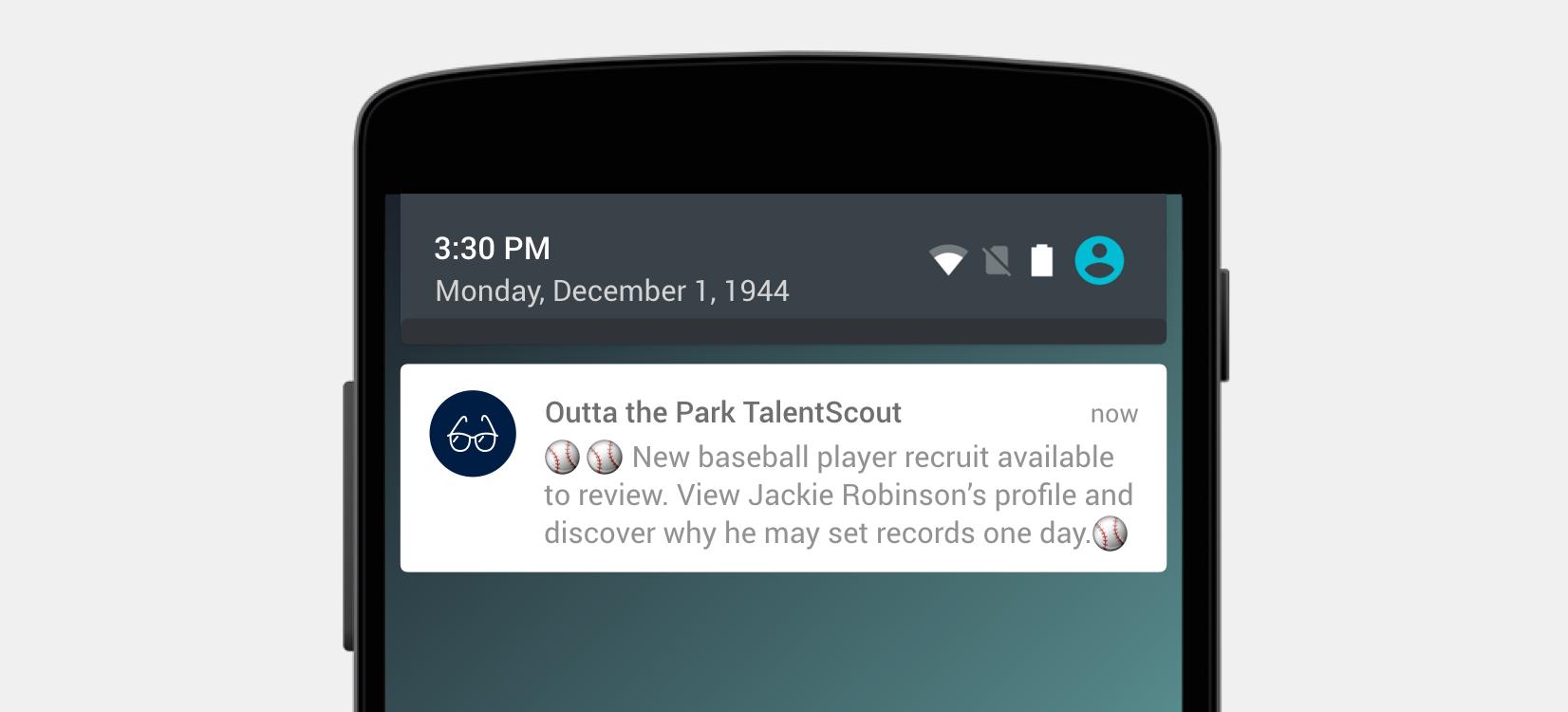
While Jackie Robinson began playing baseball professionally early in 1945, he wasn’t recruited to help integrate major league baseball until October of 1945 and didn’t play for the Brooklyn Dodgers until 1947. By the end of his career, he set records for stealing home and snagging the highest pay from the Dodgers. If Branch Rickey, president of the Brooklyn Dodgers, had received this notification at the right moment, Robinson’s record, and history, might be different today.
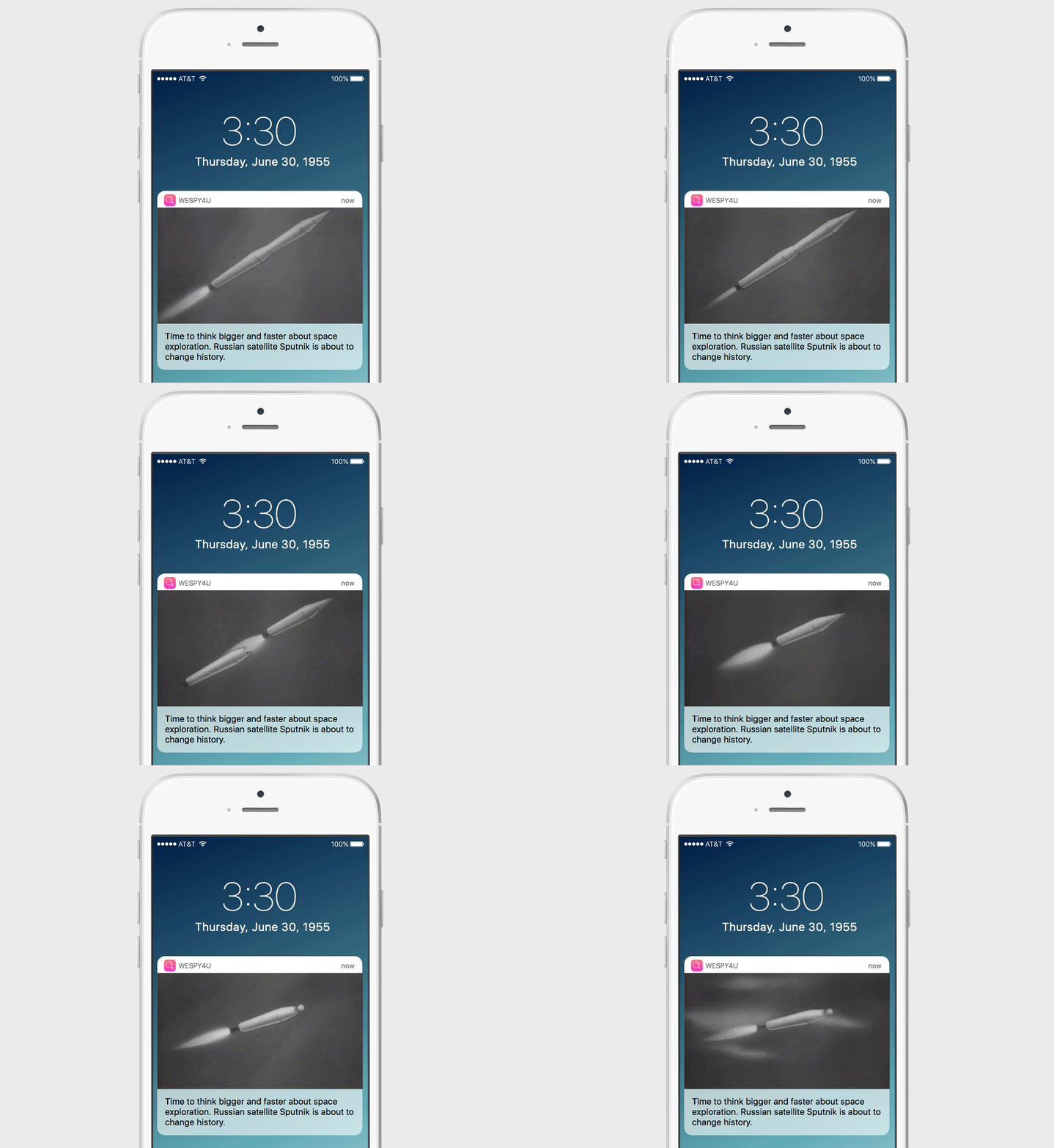
If White House staffers had seen this push notification, it would have made their 1955 announcement to launch a satellite less embarrassing. Of course, the embarrassment didn’t come until October 4, 1957, with the Soviet launch of the world’s first satellite, Sputnik I —and then again on November 3 with Sputnik II, which launched with the first space dog, Laika. That could have been the United States that started off with a leg up in the Space Race.
Could your modern-day push notifications benefit from send-time optimization?
While we have the benefit of hindsight, history books, Google, and Wikipedia to tell us the best times to have sent these fictionalized push notifications back in time, today’s marketers have a little something extra to help out with getting the timing right, too. Available with tools like Appboy’s Intelligent Delivery, send-time optimizationtakes the guesswork out of determining when to send updates to customers. Using data specific to each individual, messages are sent at times when app users are most likely to engage, and marketers who use this feature see a sizable 25% increase in engagement.
Be Absolutely Engaging.™
Sign up for regular updates from Braze.
Related Content
 Article5 min read
Message Prioritization: Make your most important messages win
October 20, 2026 Article37 min read
SMS marketing examples: Use cases for B2C brands, by industry
October 19, 2026 Article11 min read
BrazeAI Operator™ Use Cases: How Marketers Launch Campaigns, Build Segments, And QA In Minutes
October 19, 2026