Omnichannel retail strategy: Definition, examples, and how to build one
Published on June 19, 2026/Last edited on June 19, 2026/14 min read


Meredith Mitchell
Industry Marketing Lead, Retail & eCommerce, Braze, BrazeContents
Look inside most retailers' channel strategies and you'll find a familiar problem. Plenty of channels, not much connection between them. The email team sees one version of the customer. The app team sees another. The store associate, meanwhile, often has no idea the person in front of them has been browsing the website for a week.
An omnichannel retail strategy connects all of those channels around the customer rather than operating them independently, synchronizing data, messaging, and transactions so shoppers can move between them without starting over.
Real-time AI decisioning has changed what's achievable here. The same unified customer data can now power personalization across every channel, at a scale that manual segmentation alone can't match.
In this article, we cover how to build an omnichannel retail strategy, what it looks like when it's working, and where the most forward-thinking retail brands are taking it.
TL;DR
- Omnichannel retail connects every channel around one shared customer profile. Multichannel uses many channels; omnichannel makes them share data.
- Connected channels produce better revenue outcomes, including higher customer lifetime value, stronger retention, more accurate attribution, and reduced operational costs.
- Building one follows eight steps, starting with data unification and ending with holistic measurement across the full strategy.
- Five trends, including AI decisioning and agentic commerce, are already reshaping how omnichannel retail engagement works in 2026.
Key takeaways
- Start with customer data, not channels. A unified customer profile is the foundation everything else in the strategy depends on.
- Omnichannel shoppers buy more often, spend more per transaction, and maintain longer brand relationships than single-channel customers.
- AI decisioning makes genuine 1:1 real-time personalization achievable at scale across every channel, without a manual rule for every scenario.
- Physical and digital environments must share data in both directions. Clienteling, BOPIS, and location-triggered messaging are where omnichannel becomes most tangible for customers.
- First-party data is the only signal a retailer fully owns. Building a strategy around it now creates a competitive advantage that compounds as third-party data signals diminish.
What is an omnichannel retail strategy?
An omnichannel retail strategy is a unified approach to customer engagement that connects the customer experience across every shopping channel—online store, mobile app, email, SMS, social media, and physical locations—into a single, seamless experience. Unlike multichannel retail, where channels operate independently, an omnichannel strategy synchronizes customer data, messaging, and transactions across all touchpoints so shoppers can move between them without friction, receiving personalized, consistent interactions at every step.
Shoppers now move between a phone, a browser, a social feed, and a store in a single purchase decision. Ten years ago, that wasn't typical. Today it is, and according to Braze and VML research, 61% of consumers expect seamless communication across all channels.
Run separate teams on separate data and you end up with a different version of the same customer on each platform. That customer expectation becomes very hard to meet, but an omnichannel strategy shifts everything from a channel-centric to a customer-centric approach. Their history, preferences, and context remain consistent wherever and however they shop.
Omnichannel vs. multichannel retail
Omnichannel and multichannel often get confused. Here's the difference between them.
Multichannel retail
- Each channel (such as email, app, store, social) operates independently, with its own team, its own data, and its own understanding of who the customer is
- Campaigns are planned and measured within each platform, with little visibility into what other channels are doing simultaneously
- Customers can interact with the brand across multiple touchpoints, but those touchpoints don't share context
- The goal is presence on many channels; what happens between them isn't the priority
Omnichannel retailing
- Every channel draws from the same customer data, updated in real time, regardless of where the last interaction happened
- A browsed product, an opened email, an in-store visit: all of it is visible across the entire channel set
- Campaigns are designed as connected sequences, not isolated messages sent from different teams
- The measure of success is the customer relationship over time, not the performance of individual channels
Aspect | Multichannel retail | Omnichannel retail |
|---|---|---|
Channel integration | Each channel has its own tech stack, team, and goals. Launches and campaigns happen independently, often without awareness of what other channels are doing | Channels share a common data infrastructure. Real-time behavior in one channel is immediately available across all others, enabling coordinated campaigns that respond to the customer's actual activity |
Customer experience | Varies by channel. Customers frequently encounter inconsistent offers, are asked for information they've already provided, or receive messages that contradict what they've seen on a different platform | Continuous and consistent across every touchpoint. The customer is always recognized, and messaging reflects their full history with the brand, not just their last action on a single channel |
Data synchronization | Data stays within each platform. An in-store purchase may not be reflected in the email platform for days. A cart abandoned on mobile doesn't suppress a promotional push sent that same evening | Customer data synchronizes in real time. A purchase anywhere updates the profile everywhere. Behavioral triggers fire across channels based on what the customer actually did, not what a send schedule says |
Personalization depth | Limited to data each channel holds. Email personalizes by email behavior, app by app behavior. Without cross-channel context, personalization defaults to segments and static rules | Draws on the full cross-channel history: purchases, browsing, loyalty activity, channel preferences. AI decisioning can determine the right message, channel, timing, and offer for each individual in real time |
Journey continuity | Journeys restart at each channel. A customer who browses on mobile, adds to cart on desktop, and visits a store will often feel like a different customer to each of those teams | The journey carries across every channel. What a customer does on mobile informs email, which informs what a store associate sees. There's no reset. Only continuation |
Measurement and attribution | Attribution is channel-specific. Every channel claims credit for the same conversions, metrics inflate, and budget decisions are made on data that doesn't reflect the real customer journey | Multi-channel attribution follows the customer, not the channel. Success is measured by customer lifetime value and cross-channel revenue contribution, not send volume or clicks within a single platform |
The multichannel model creates data silos almost by design. The email team sees email behavior. The app team sees app behavior. The store associate, in most setups, sees nothing. Decisions get made on incomplete information, customers receive messages disconnected from where they actually are in their journey, and attribution tells every channel it's responsible for the conversion.
Omnichannel retail replaces those partial views with a single customer view. Purchases, browsing behavior, loyalty activity, in-store visits: every interaction feeds into one profile. Building cross-channel engagement on that complete picture is the difference between real-time personalization that lands and messaging that keeps missing.
Benefits of an omnichannel retail strategy
Most conversations about omnichannel focus on the customer experience. The business results are just as strong
Omnichannel retail marketing and customer lifetime value
Omnichannel shoppers are more valuable than single-channel customers by almost every measure. They buy more often, spend more when they do, and maintain brand relationships for longer. According to the 2026 Global Customer Engagement Review, 60% of marketers connect AI use directly to higher customer lifetime value.
Retention and loyalty built on consistency
Consistency builds trust, and that trust is the foundation loyalty programs run on. Braze research shows cross-channel customer engagement drives 58% higher retention than single-channel approaches. Customers who feel recognized at every touchpoint have far less reason to leave.
Personalization that reflects the individual
A unified customer profile enables real-time, cross-channel personalization based on what someone did this week, not the segment they were placed in last quarter. AI decisioning runs this across the full channel set without needing a separate rule for every scenario.
The omnichannel customer experience in retail: online, offline, and back
BOPIS, buy online, pick-up in-store , ship-from-store, and clienteling are where in-store and online integration stops being theoretical. A store associate who can pull up a customer's app data before saying hello. A purchase made online, collected in ten minutes. Mobile commerce makes it practical, and customer journey orchestration keeps each touchpoint aware of the last, including the physical ones feeding back into the digital experience.
Attribution that reflects the full customer journey
Every channel claims the conversion, every channel looks good, and budgets get set based on numbers that don't reflect what actually happened. A unified customer profile shows the full journey before the conversion. Instead of rewarding the last click, you can see which channel combinations produce the most valuable customers and allocate from there.
Less redundancy across the marketing operation
Shared data means shared work. When campaigns are built on a common customer profile, they span email, push, SMS, and in-app without each team rebuilding the same audience from scratch. First-party data collected on one channel becomes available across all of them, and the operation scales without the headcount having to scale with it.
How to build an omnichannel retail strategy
These eight steps give you a practical framework for building connected retail engagement, from getting the data foundations right through to measuring what's actually working.
Step 1: Unify your customer data
Build a single customer profile by pulling from all the sources that touch the customer, such as POS (point of sale) systems, ecommerce platforms, mobile apps, email, and loyalty programs. The more complete that profile, the more effectively every step that follows can work.
Step 2: Map the retail customer journey
Map the key moments customers move through, from discovery and consideration through to purchase, post-purchase, and loyalty or advocacy. Each stage shapes which channels, messages, and triggers make sense.
Step 3: Select and prioritize channels
Prioritize the channels where your customers actually engage, including email, SMS, push notifications, in-app messaging, web, social, paid media, and in-store.
Step 4: Build cross-channel journeys
Build journeys that flow between channels based on what customers actually do. Connected journey orchestration triggers the right message at the right moment, on the right channel.
Step 5: Personalize at every touchpoint
Use behavioral data, purchase history, and individual preferences to tailor every message, recommendation, and offer. Personalization grounded in a customer's actual behavior produces experiences that feel genuinely individual rather than broadly targeted.
Step 6: Bridge digital and physical
Connect your in-store and digital environments by setting up QR-to-app flows, location-triggered messaging, clienteling powered by app data, and ship-from-store coordination. This is how a customer's digital behavior becomes visible in the physical environment, and vice versa.
Step 7: Deploy AI decisioning
BrazeAI Decisioning Studio determines the optimal channel, timing, content, and offer for each individual customer at the moment of engagement, in real time. The result is genuine 1:1 personalization at scale, across every customer and every channel simultaneously.
Step 8: Measure holistically
Measure what reflects the full strategy. Customer lifetime value, retention rate, cross-channel attribution, and omnichannel revenue contribution together give you a clear picture of what's working and where to improve.
What are examples of omnichannel retail?
The Braze customer base spans virtually every retail category. These three examples show what a connected channel strategy produces when it's built around real customer data.
1. Styli stitches together a 50% ROI boost
Styli is a fashion ecommerce platform that launched in 2019, originally serving shoppers in Saudi Arabia and the UAE before expanding across the Middle East. With a young, mobile-forward customer base, the brand competes on both product and the relevance of how it communicates.
The challenge
Styli had access to rich customer data but was running single-channel campaigns in isolation. The team wanted to deliver more relevant, personalized experiences across the full customer lifecycle, from activation through to retention, while keeping campaign execution manageable for a lean team.
The strategy
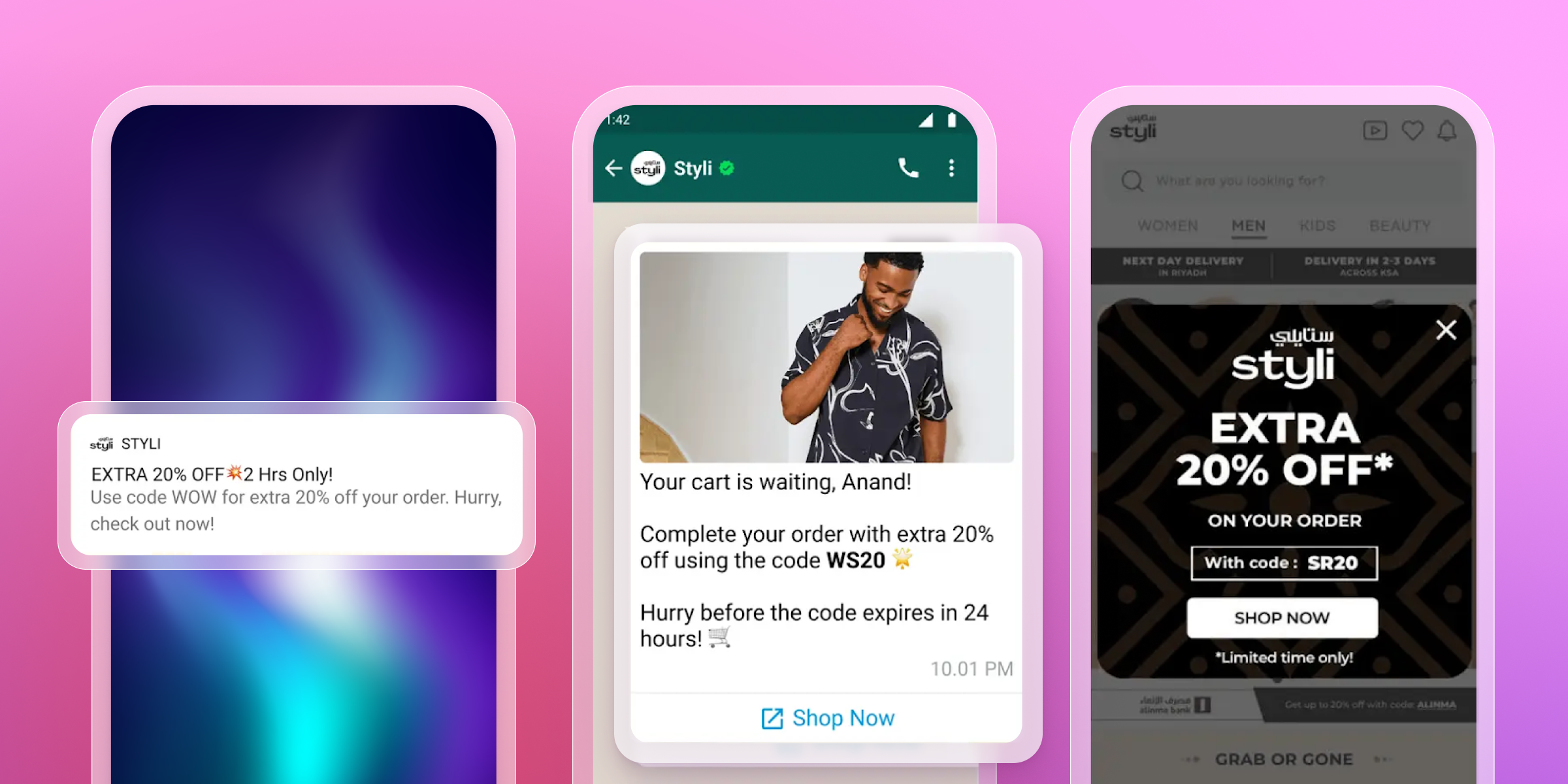
Using Braze Canvas, Styli built cross-channel journeys connecting push notifications, SMS, in-app messages, Content Cards, and WhatsApp into a single coordinated flow. Braze Catalogs pulled in dynamic product content personalized by country, gender, language, and individual user behavior, enabling micro-segment targeting at scale. Each channel played a specific role, with follow-up messages triggered based on whether a user had engaged with the previous touchpoint.
The wins
- 50% boost in average ROI
- 15% lift in user activation
- 21% increase in sign-ups
- 40% reduction in campaign creation time
2. Crumbl transforms collaboration into a viral experience
Crumbl is on a mission to bring friends and family together over a box of the best desserts in the world. The company was founded in 2017 and rapidly evolved from a single storefront in Utah into a dessert phenomenon, with over 1,000 locations across the United States, Puerto Rico, and Canada. The brand is defined by its iconic pink box and a unique menu of over 200 recipes, featuring four specialty flavors that rotate weekly and six classic flavors that remain the same week over week.
The challenge
As one of the fastest-growing franchises in the food industry, Crumbl wanted to drive excitement and conversions for their limited-edition Martha Stewart dessert collaboration. The challenge was creating an engaging experience that would cut through the noise of traditional product announcements to quickly drive app traffic and purchases.
The strategy
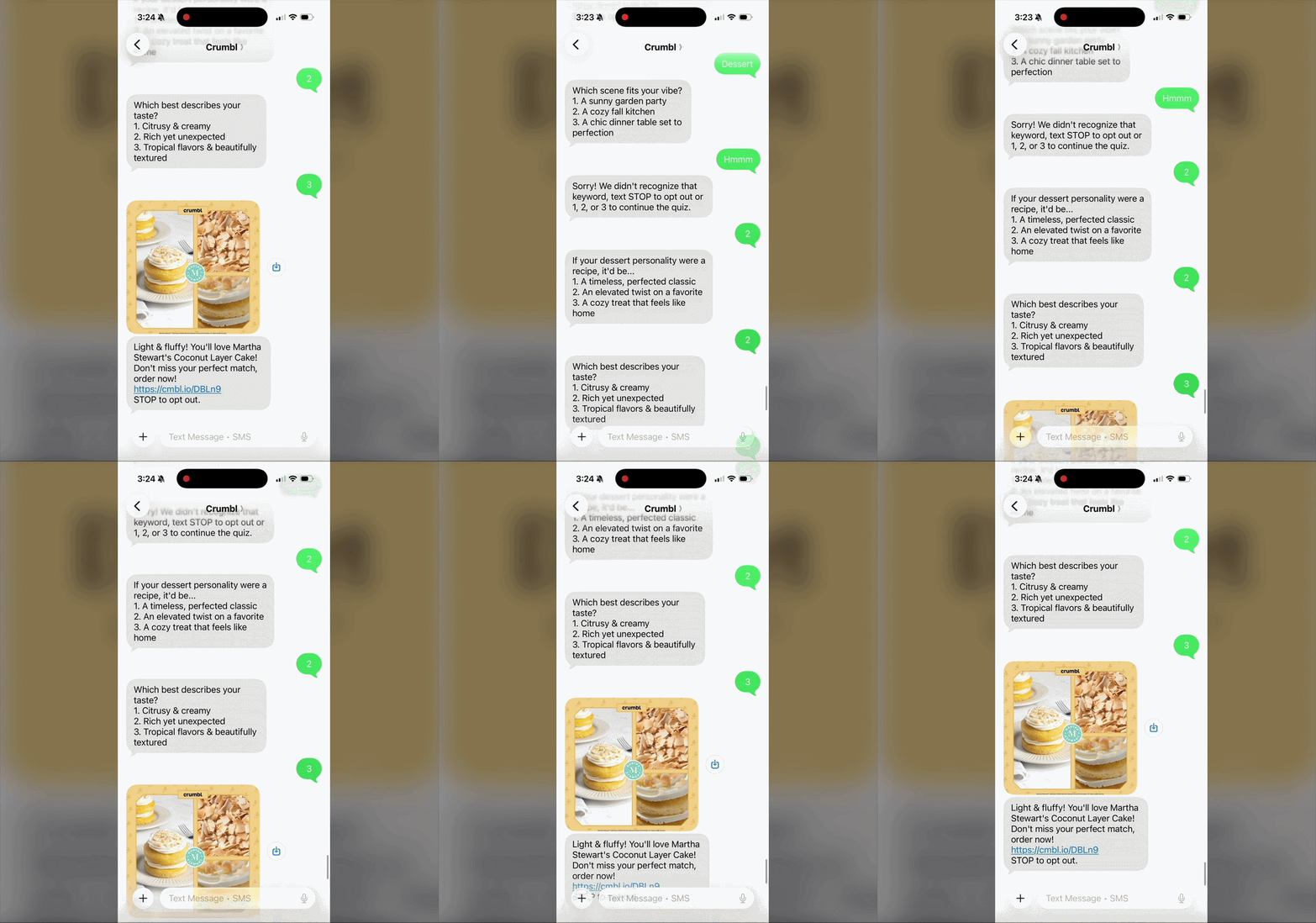
Crumbl launched an interactive SMS "vibe check" quiz that transformed a standard product announcement into a personalized dessert matchmaking experience. Using two-way SMS, customers answered three questions about their preferences to discover which of the available options was their perfect Martha Stewart x Crumbl dessert match.
The wins
- 373% higher conversion rate than average
- 249% higher click rate than average
- 82% opened app within 2 days
3. e.l.f. Improves loyalty with a better digital experience
e.l.f. Beauty has experienced remarkable business success in recent years. In March 2024, the company achieved a major milestone: Generating over $1 billion in annual net sales. Their growth hasn’t slowed since, with a 40% increase in quarterly net sales noted in their November 2024 earnings report and 23 consecutive quarters of net sales growth.
The challenge
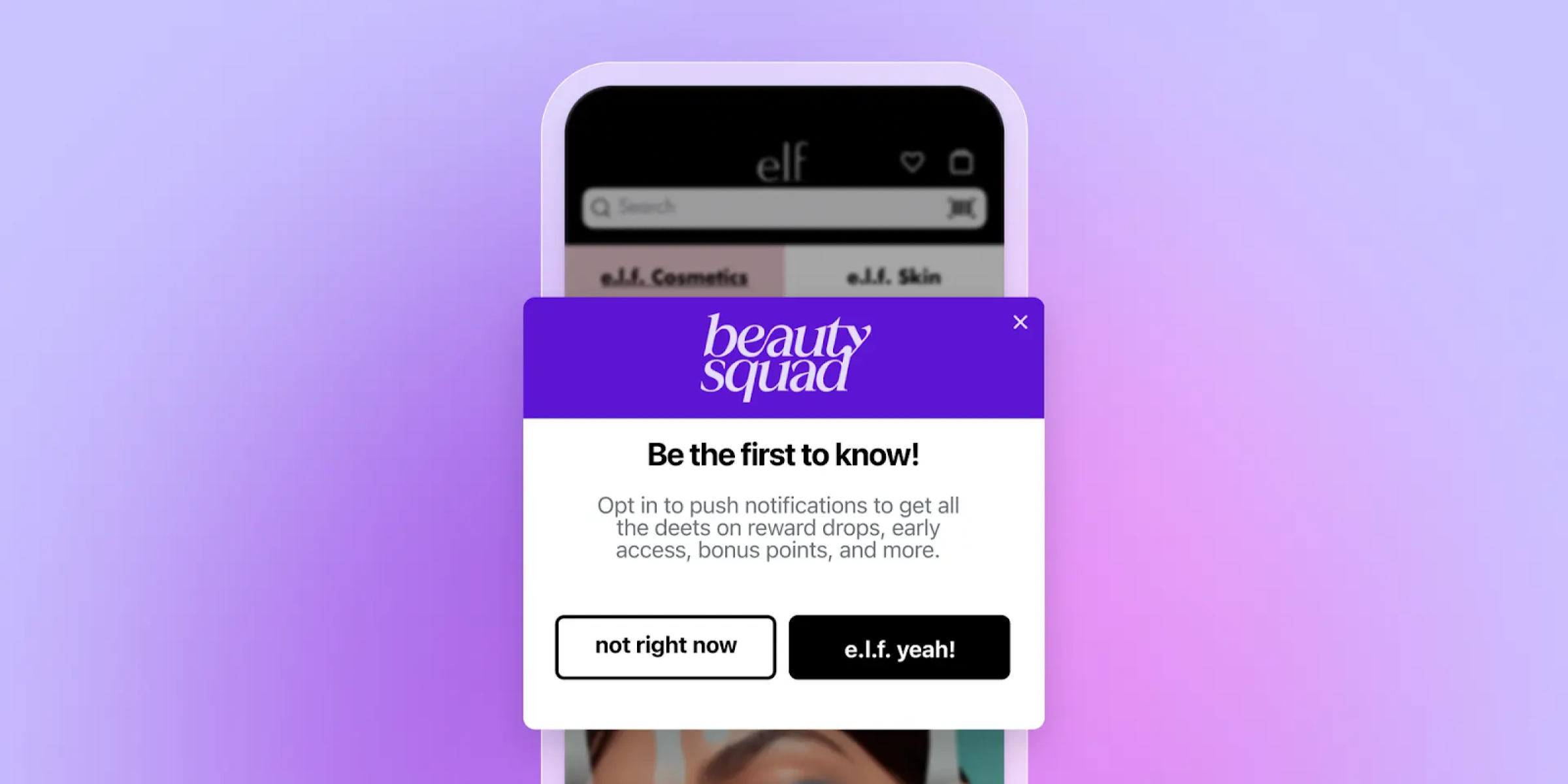
Always looking to push the boundaries, e.l.f. wanted to improve its digital customer experience and drive higher adoption of its loyalty program. They also wanted to expand to new mobile channels like SMS and push.
The strategy
e.l.f. turned to Braze and Stitch to launch more effective, more creative campaigns that engaged customers across multiple channels and points in the customer lifecycle.
The wins
- 125% increase in monthly app usage over six months (from March to September 2023)
- 58% increase in loyalty offer redemptions (YoY 2024 calendar year compared to 2023 calendar year)
Omnichannel retail trends shaping 2026 and beyond
Understanding what's coming helps you build for it. These five trends are already shaping how omnichannel retail engagement works in 2026.
AI-powered personalization at scale: reach every customer as an individual
The move from segment-level targeting to individual-level decisioning is the most significant development in retail personalization right now. AI uses live behavioral signals to determine the optimal message, channel, and timing for each customer. What used to require manual campaign logic now runs automatically, updating in real time.
Agentic commerce: stay relevant when AI does the shopping
AI agents that browse, compare, and complete purchases on behalf of consumers are changing the landscape faster than most omnichannel strategies have planned for. Brands need strategies that can engage both the human shopper and the agent acting on their behalf. Understanding how agentic commerce is reshaping retail engagement is one of the more pressing questions for retail marketers for 2026.
Unified commerce: one version of every customer, across every team
Unified commerce merges commerce, marketing, and service data into a single operational platform so that inventory, pricing, promotions, and customer history all run from one source of truth. This looks like loyalty points that update after an in-store purchase or product recommendations that reflect current stock.
First-party data as competitive moat: customer relationships you own outright
As third-party data signals continue to diminish, first-party data collected through app interactions, loyalty programs, email engagement, and in-store behavior is the only signal a retailer fully owns. Customers share data when there's a visible reason to. Strategies built on strong first-party data produce better personalization and build a direct customer relationship that no external platform policy can disrupt.
Real-time in-store personalization: digital precision, in-store
The physical store is being rebuilt as a data environment. App-powered clienteling gives associates visibility into purchase history before the conversation starts. Location-aware messaging reaches customers near or inside a store with offers calibrated to what they've been browsing. Dynamic signage can reflect inventory, time of day, or local behavior.
For omnichannel retailers, this is where the unified customer profile reaches its fullest expression, powering personalization in the physical environment with the same data that drives it online.
Common omnichannel retail challenges and how to address them
Most retailers building an omnichannel strategy run into the same obstacles. Here's what they are and how to address them.
Data silos between platforms
Problem: eCommerce, POS, and marketing platforms often hold separate versions of the same customer.
Solution: A unified customer data platform consolidates these into one profile that every channel and team can work from.
Channel fatigue and over-messaging
Problem: More channels create more opportunities for messaging to overlap.
Solution: AI-powered frequency optimization and channel selection coordinate timing and volume across teams, so the customer's overall experience stays coherent and relevant.
Online-to-offline attribution
Problem: Connecting digital activity to in-store purchases is one of the harder measurement challenges in retail.
Solution: Integrated loyalty programs and app-based in-store tracking, where the app is scanned at the point of sale, make that connection and produce a more accurate picture of what's driving store visits and sales.
Organizational silos
Problem: Digital and store teams often operate to different KPIs, creating competing priorities around the same customer.
Solution: Shared KPIs tied to customer lifetime value and cross-channel revenue, supported by a unified customer view, give both teams a common goal to work from.
Privacy and compliance
Problem: Collecting and activating customer data across channels means working within increasingly complex regulatory frameworks.
Solution: A consent-based first-party data strategy, built on a transparent value exchange, keeps the approach legally sound and gives customers a genuine reason to share their data.
Omnichannel retail strategy FAQs
What is an omnichannel retail strategy?
An omnichannel retail strategy is a unified approach to retail customer engagement that connects every shopping channel, including online store, mobile app, email, SMS, social media, and physical locations, into a single, seamless experience. Unlike multichannel retail, it synchronizes customer data across all touchpoints so shoppers receive consistent, personalized interactions wherever they engage.
What is the difference between omnichannel and multichannel retail?
The difference between omnichannel and multichannel retail is integration. Multichannel retail means operating across multiple platforms that each work independently, often producing fragmented customer experiences. Omnichannel retail connects those channels through shared data and synchronized messaging, so customer context, including purchase history, preferences, and behavior, carries across every touchpoint.
What are examples of omnichannel retail?
Examples of omnichannel retail include buying online and picking up in-store (BOPIS), receiving a push notification about a product browsed but not purchased, and having a store associate access your preferences through an app before helping you.
How do you build an omnichannel retail strategy?
Building an omnichannel retail strategy starts with unifying customer data from every channel into a single profile. From there, map the customer journey, prioritize channels based on where your customers engage, build cross-channel journeys triggered by real-time behavior, and measure holistically using customer lifetime value and cross-channel attribution rather than single-channel metrics.
What are the benefits of an omnichannel retail strategy?
The benefits of an omnichannel retail strategy include higher customer lifetime value, stronger retention, more accurate attribution, and better personalization at scale. Omnichannel shoppers purchase more frequently and spend more per transaction than single-channel customers. Coordinated cross-channel engagement also reduces operational redundancy and gives marketing teams a clearer picture of what's driving revenue.
Related Tags
Be Absolutely Engaging.™
Sign up for regular updates from Braze.