Omnichannel customer engagement: How to coordinate experiences across all touchpoints
Published on April 24, 2026/Last edited on April 24, 2026/13 min read

Madison Tiemtoré
Content Marketing Lead, BrazeContents
Internet users now average 6 hours and 38 minutes a day online and over half of that is via mobile devices. They're checking email on the commute, browsing apps at lunch, opening push notifications between meetings, and revisiting a brand's website later in the evening, often as part of the same purchase decision.
More channels create more chances to reach people. They also create more ways for touchpoints to contradict each other, repeat the same message, or arrive at the wrong moment. Customers expect the experience to feel like one interaction, and omnichannel customer engagement helps brands build it that way.
This guide covers the strategy, the orchestration, the metrics, and the tools that make it work, including real examples from brands that have already built programs around it.
TL;DR
- Omnichannel customer engagement means channels share data and context. What a customer does in one place shapes what they see in the next. More channels on their own don't create that.
- Data centralization is the foundation. Without a unified customer profile, coordinated messaging isn't possible at scale, regardless of how many channels are active.
- AI personalization and journey orchestration replace static campaign logic with real-time decisioning, adapting message, channel, and timing to each individual based on current behavior.
Key takeaways
- More channels don't improve the customer experience on their own. Coordination does — through shared data, suppression logic, and sequencing rules applied across every channel simultaneously.
- Journey mapping reveals where customers are actually moving and where fragmented channels are creating friction. Starting with three or four high-volume journeys gives teams focus before expanding the channel mix.
- Proactive retention outperforms reactive win-back. Tracking behavioral signals before disengagement happens is more effective, and less costly, than campaigns triggered after it already has.
- Omnichannel automation through Canvas, Intelligent Timing, and AI decisioning lets complex multi-channel journeys run in real time without constant manual intervention at every stage.
- Measurement should track long-term outcomes.
What is omnichannel customer engagement?
Omnichannel customer engagement is the practice of coordinating every customer interaction across channels, devices, and locations so that each touchpoint reflects what's happened before and shapes what comes next.
When those interactions aren't connected, the customer notices and accumulated signals of disconnection erode trust over time.
Omnichannel customer engagement is important because it creates more personalized experiences, which improves trust, increases customer loyalty and builds stronger retention.
Cross-channel engagement vs. omnichannel: what's the difference?
Cross-channel engagement means your chosen channels are connected, so behavior on one triggers or informs what happens on another. For example, a customer downloads a guide on a website and that action updates the email sequence they're in, or a purchase on mobile suppresses the retargeting ad. The channels are talking to each other.
Omnichannel customer engagement is a level above cross-channel, and includes all channels and both online and offline events. It represents the most complete approach to customer experience, with a fully unified view of the customer where every interaction is tailored to the individual, not the channel. They could browse via a website, then buy in store and receive post-purchase emails and push notifications. Each event and behavior signal informs the next message.
Key challenges in omnichannel engagement
When teams are building omnichannel programs, several common challenges can arise, and being aware of them makes planning easier.
Breaking through data silos
Customer data typically spreads across multiple systems — CRM records, in-app behavior, purchase history, and point-of-sale interactions each sitting separately. Data centralization brings all of it into one unified customer profile, so every channel is working from the same picture. Without it, messages reflect fragments of the customer relationship rather than the full one.
Identity resolution is important too. A customer using a mobile app, a desktop browser, and an in-store loyalty card may generate separate data trails across each. Connecting those into one profile underpins everything else in an omnichannel program.
Unified messaging across every channel
Without shared rules across channels, customers receive messages that contradict each other or ignore what's just happened. Suppression logic, frequency caps, and sequencing that responds to prior interactions keep the experience coherent. The customer profile needs to be the single source of truth that every channel draws from.
Coordinating online and offline touchpoints
Digital channels are relatively straightforward to connect. Bringing in offline interactions such as in-store purchases, event attendance, loyalty redemptions, and physical touchpoints, requires those events to update the same customer profile in real time. A customer mid-journey in a physical location is still mid-journey when they open their phone. Social media integration adds another layer for brands too.
Aligning teams and resources
Different teams managing different channels without visibility into each other's activity is one of the most common sources of a disjointed customer experience. Platform consolidation creates a shared view of what's being sent, to whom, and when, making genuine coordination across channels achievable.
Building an effective omnichannel strategy
A strategy built around the customer journey, rather than the available channels, produces programs that stay coherent as they grow.
Map the customer journey to identify touchpoints
Customer journey mapping shows which interactions carry the most weight and where coordinated messaging will have the greatest impact.
Start by tracing the paths customers actually take. Where do they first encounter the brand? What actions lead to conversion? Where do they drop off? What happens when they move from a digital touchpoint to a physical one?
Starting with three or four high-volume journeys, such as onboarding, first purchase, loyalty re-engagement, and churn risk, gives teams a focused scope before expanding further. It also reveals which channels do which jobs best, like push notifications for timely nudges, or email for post-purchase depth.
AI personalization: moving beyond static segments
AI-powered tools like predictive churn modeling, send-time optimization, and channel selection already help teams achieve personalization at scale, by identifying which customers are at risk, when to reach them, and where. These capabilities are essential for true 1:1 personalization.
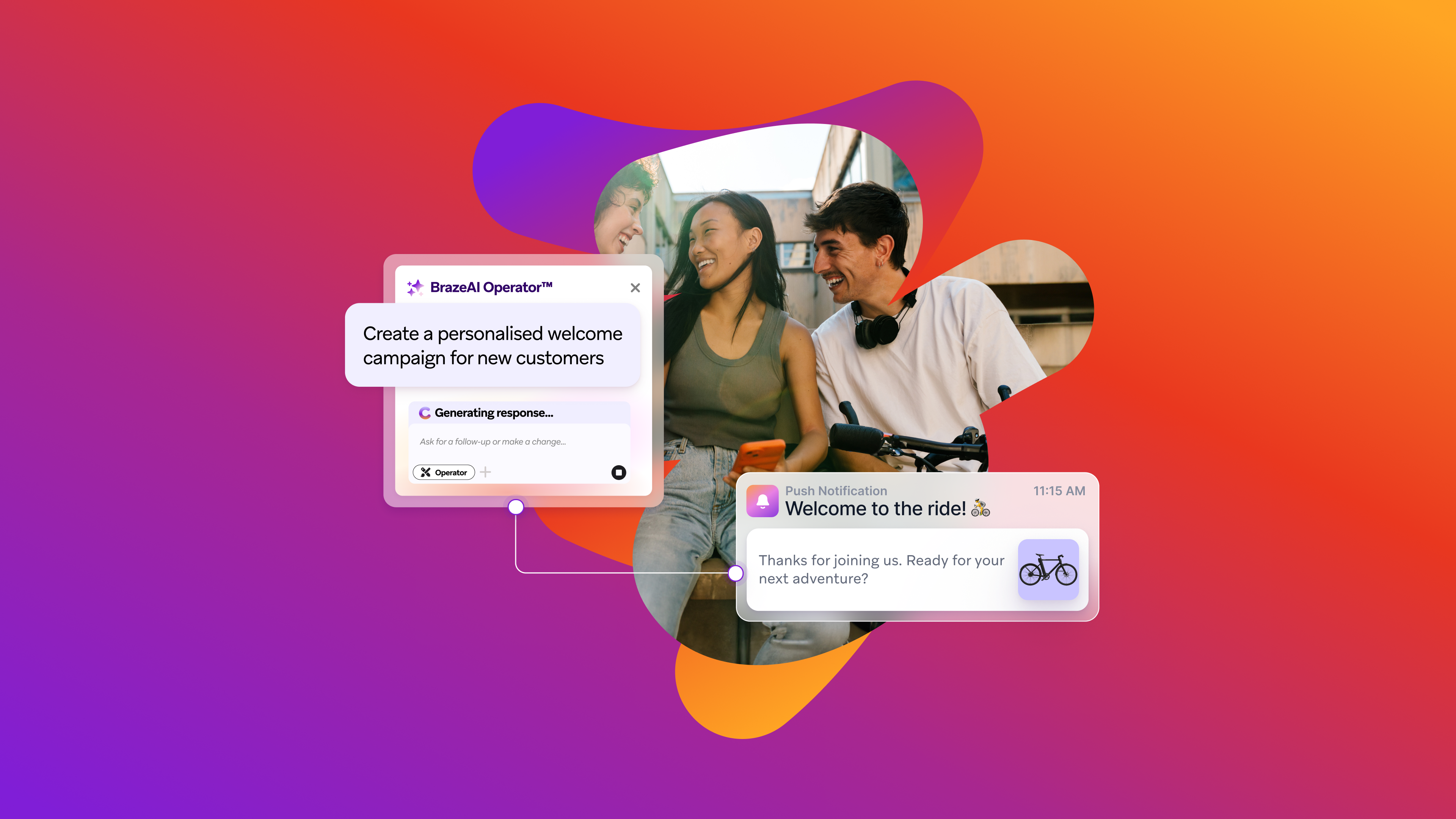
AI decisioning goes further. BrazeAI Decisioning Studio™ uses reinforcement learning agents that actively experiment across message, offer, channel, timing, frequency, and creative simultaneously, going beyond behavioral segmentation to make truly individual decisions.
Rather than predicting what someone is likely to do and applying a rule, the agents observe what actually drives the right outcome and keep updating their approach as behavior changes. Marketers set the objective, define the available options, and put guardrails in place. The 1:1 decisions happen continuously from there, without manual intervention each time conditions change.
Customer retention and loyalty strategy built into the journey
Customers who are about to disengage usually show signs before they actually leave. Fewer sessions, less email engagement, a drop in activity that was previously consistent. Catching those patterns early and responding to them is far more effective than trying to win someone back after they've already gone.
Loyalty offers, milestone recognitions, and rewards sent through the channel where a customer is most active work harder than batch campaigns with no channel logic. When loyalty data and engagement messaging share the same platform, the two programs reinforce each other naturally.
Omnichannel automation: Connecting the moving parts
Omnichannel automation uses triggers based on customer behavior to send messages automatically, without a manual decision at each step.
For omnichannel strategies specifically, automation delivers several advantages at once:
- Speed: real-time triggers fire messages at the moment a customer takes action, not when a team gets to it
- Consistency: the same rules apply across every customer and every channel, every time
- Responsiveness: journeys adapt to what customers actually do rather than following a fixed schedule
- Efficiency: teams focus on strategy and creative rather than manual execution
- Scalability: coordinated messaging across millions of customers without adding operational overhead
Customer journey orchestration across channels
Good strategy and clean data only produce results when the execution layer keeps up. Orchestration coordinates every message, across every channel, in direct response to what customers are actually doing.
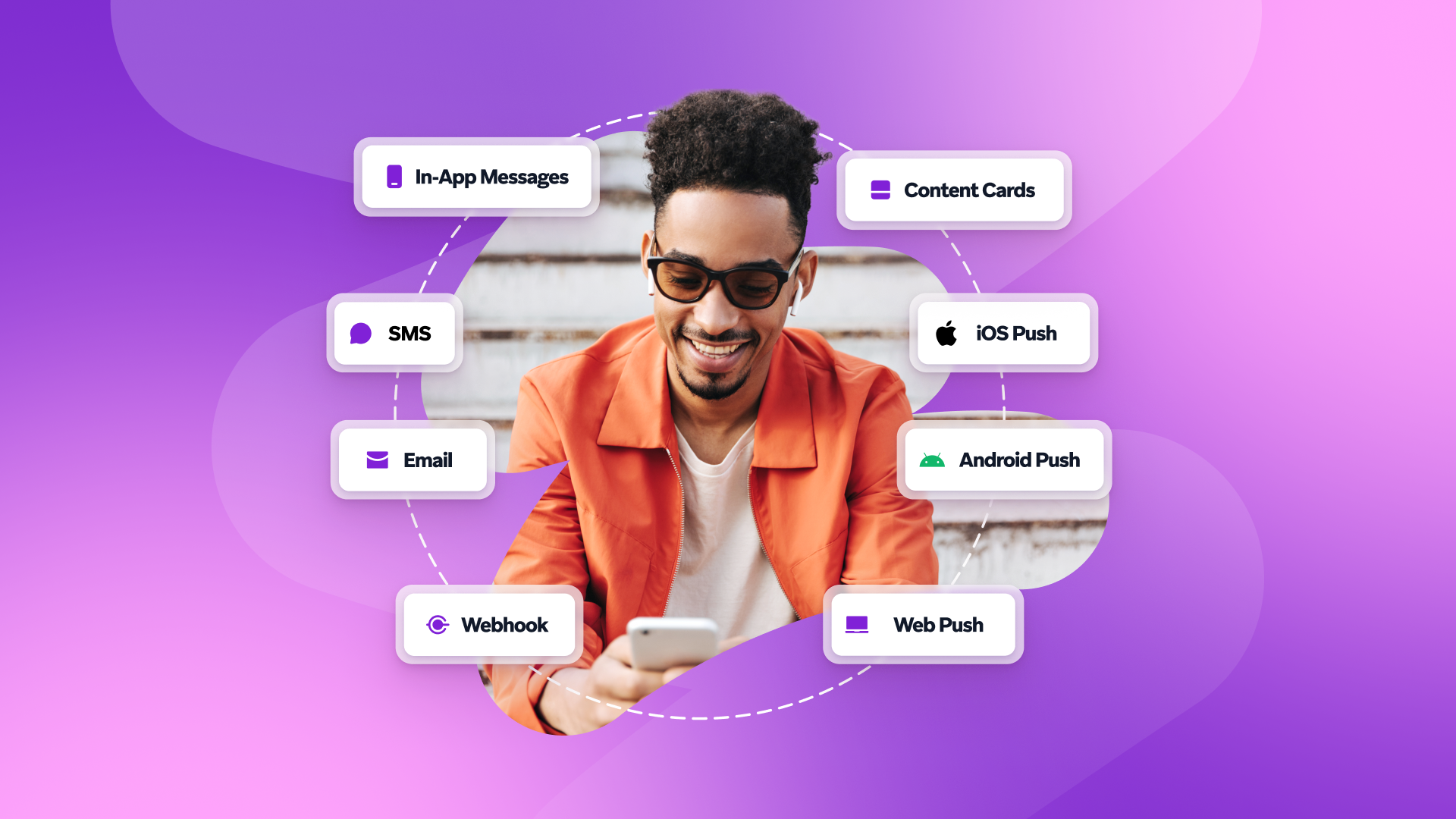
Customer engagement platforms bring email, push notifications, in-app messaging, web, and social messaging together in one place, so campaigns can be triggered by real-time behavioral signals and context rather than a fixed schedule.
Lifecycle engagement
Lifecycle engagement means matching the message to the stage of the customer relationship, from first activation through to loyalty and expansion.
Each stage has different goals. Early engagement gets new customers to value quickly. Retention catches disengagement before it compounds. Upsell identifies readiness through usage patterns and introduces the right offer at the right moment.
Problems arise when these run as separate programs with no shared data. For example, an upsell sequence fires at someone already showing churn signals, or a re-engagement campaign runs alongside an active loyalty journey. With a shared customer profile and a single orchestration layer, customer insights gathered at every stage are available across the full journey, and the messaging reflects it.
Measuring omnichannel engagement performance
Measurement in an omnichannel program is more complex than tracking individual message performance. What matters is how customers move through connected journeys and what those journeys produce over time.
Engagement metrics that actually tell you something
- Cross-channel engagement rate: are customers engaging across more than one channel? This includes open rates, CTR, in-app actions, and session activity across the full channel mix. Multi-channel engagement consistently correlates with higher retention and lifetime value.
- Journey completion rate: what percentage of customers reach the key action a journey is designed to drive, such as a second purchase, a feature adoption, or a loyalty redemption?
- 90-day retention by channel combination: which channel combinations produce durable engagement versus short-term spikes?
- Time to conversion and journey efficiency: how quickly do customers reach a key milestone, and where do they slow down or drop off? These signals show where journeys need attention.
- Churn rate by lifecycle stage: where are customers disengaging? Knowing the stage directs attention to the journeys that need work.
- Revenue attribution across touchpoints: multi-touch attribution shows how channels contribute to conversion, not just which one fired last.
Engagement optimization through AI insights
AI tools can predict when each customer is most likely to respond and select the channel most likely to drive action, based on behavioral history. AI decisioning goes further, applying reinforcement learning across message, offer, timing, and frequency simultaneously. Engagement optimization through this approach is continuous — the program keeps improving with every interaction rather than waiting for a manual review cycle.
Case studies and examples
Every omnichannel program is shaped by the business behind it. These three examples show what coordinated, cross-channel engagement looks like across different industries and use cases.
1. No breakage here: Wellhub's personalized journeys triple sign-up volume
Wellhub (formerly Gympass) is a corporate wellness platform connecting more than 10,000 employers with a global network of over 50,000 gyms, studios, trainers, and wellbeing apps. Unlike traditional gym memberships, Wellhub's value to clients depends on employees actually engaging with the platform. Behavior change, not just subscription, is the product.
The challenge
Wellhub's previous engagement platform couldn't handle the volume of simultaneous campaigns the team needed to run. Experimentation was limited, new campaign launches were blocked, and the growth team's ability to execute wasn't keeping pace with their ideas. They needed a platform that supported sophisticated personalization without the operational overhead.
The strategy
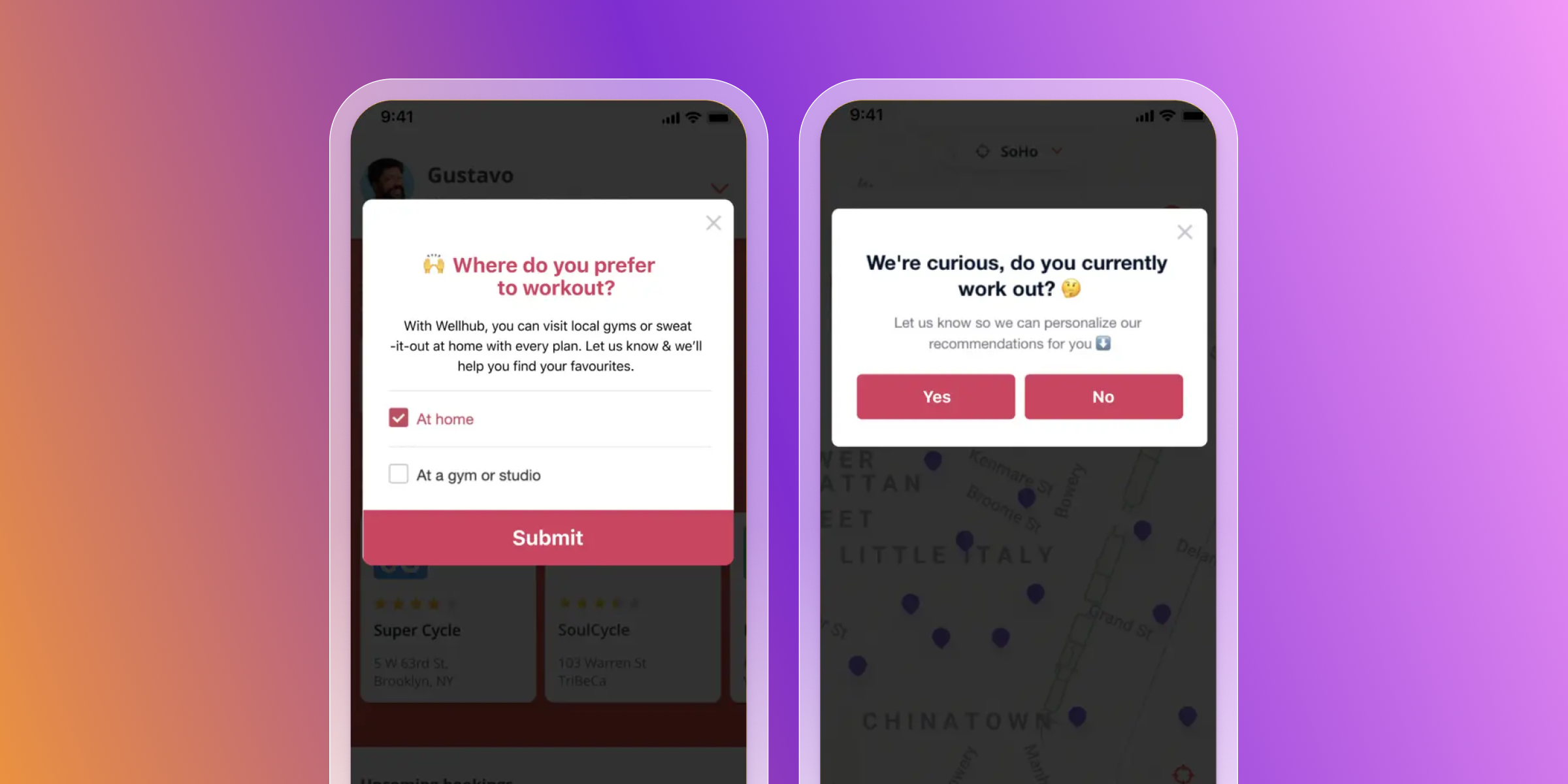
Using Braze Canvas, Wellhub built multi-stage journeys across email, push notifications, and in-app messaging, each triggered by actions taken within the product. Flows ranged from one to 120 days depending on how customers engaged, with in-app surveys capturing fitness preferences, activity types, and wellness goals to build individualized profiles that drove personalized recommendations across every channel.
The wins
- 3X increase in sign-up volume
- Up to 70% click rates
- 25% of net-new revenue from the new subscriber stream attributed to these campaigns
- Up to 5% increase in conversion rates through survey implementation and customized flows
2. e.l.f. Beauty squads up: 125% app usage growth and 58% more loyalty redemptions
e.l.f. Beauty crossed $1 billion in annual net sales in March 2024 and has posted 23 consecutive quarters of net sales growth. Their loyalty program, Beauty Squad, has more than 5.3 million members and sits at the center of their digital engagement strategy.
The challenge
e.l.f. wanted to deepen digital engagement and drive higher adoption of Beauty Squad, particularly through mobile channels they hadn't yet fully activated. The team also needed to manage a growing volume of loyalty data without adding manual complexity to an already stretched CRM operation.
The strategy
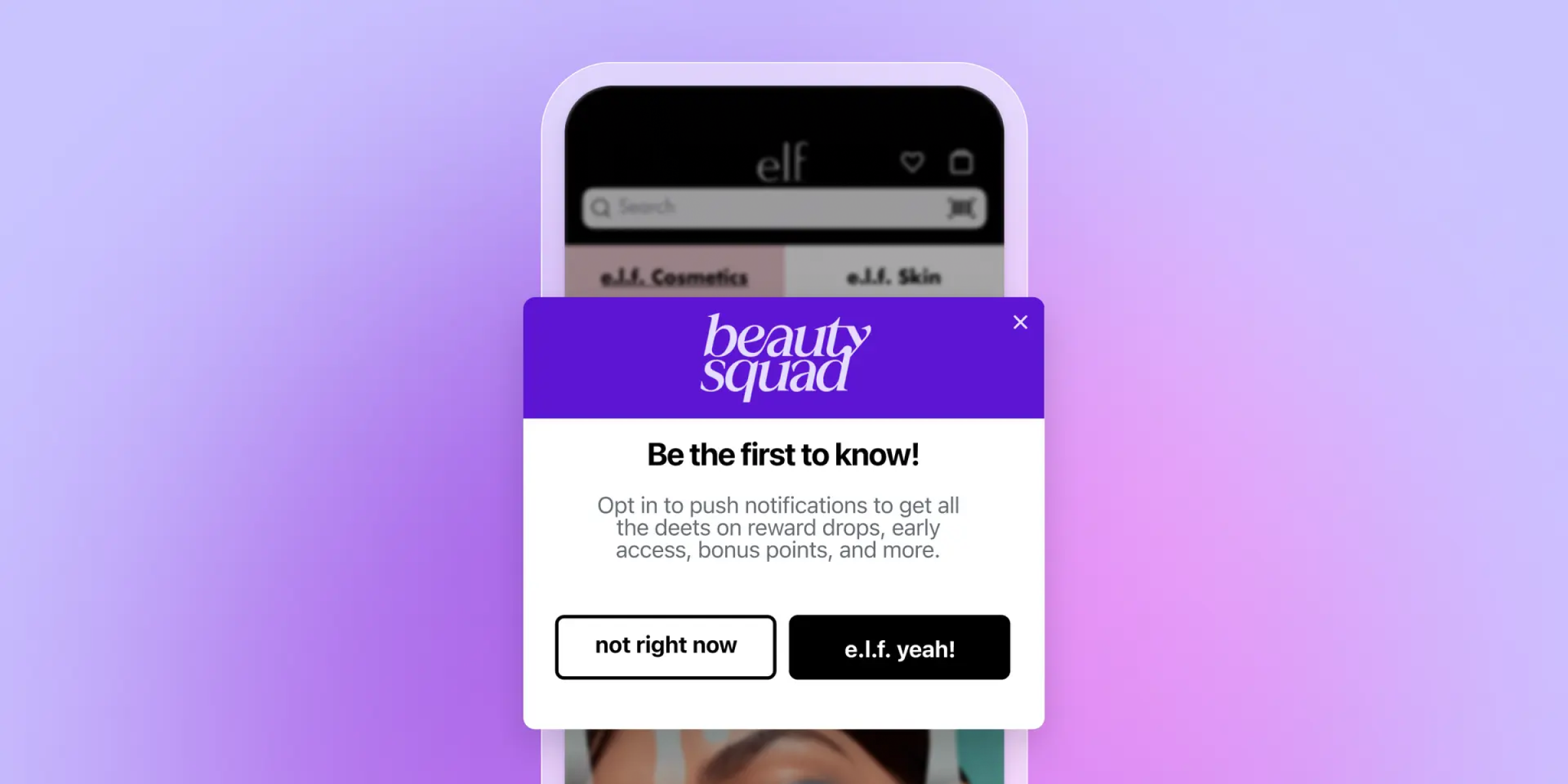
Working with Braze and solutions partner Stitch, e.l.f. launched a push primer campaign explaining the value of push notifications before requesting opt-in, achieving a 23% conversion rate—with opted-in users averaging 500% more sessions per day. Their monthly loyalty email became a cross-channel journey with a follow-up push to drive redemption of time-sensitive rewards.
A post-purchase email series was rebuilt using Braze Catalogs and Liquid to support far more product lines with a fraction of the templates. Birthday campaigns ran across email, SMS, in-app messages, and Content Cards across web and mobile. The year-end Beauty Squad Replay was a 28-screen in-app experience backed by Content Cards, with social sharing built in for members to celebrate their year with e.l.f.
The wins
- 125% increase in monthly app usage over six months
- 58% increase in loyalty offer redemptions year-over-year
- Post-purchase campaign scaled from 4 to 16 product lines using 6 templates instead of nearly 100
- 25% social share rate on the Beauty Squad Replay campaign
3. PureGym sweats the small stuff and lifts conversions by 206%
PureGym is the UK's largest gym chain, with almost 300 locations. As many as 20% of people who join in any given month are former members rejoining, making re-engagement a central part of the business model, not a secondary initiative.
The challenge
High membership churn meant PureGym needed to re-engage former members at scale with personalized rejoin offers. Limited in-house engineering resource made it difficult to run and optimize complex multi-channel campaigns independently. Daily email sends to lapsed members had already damaged deliverability rates, and out-of-date contact details meant email alone was unlikely to reach enough of the target audience.
The strategy
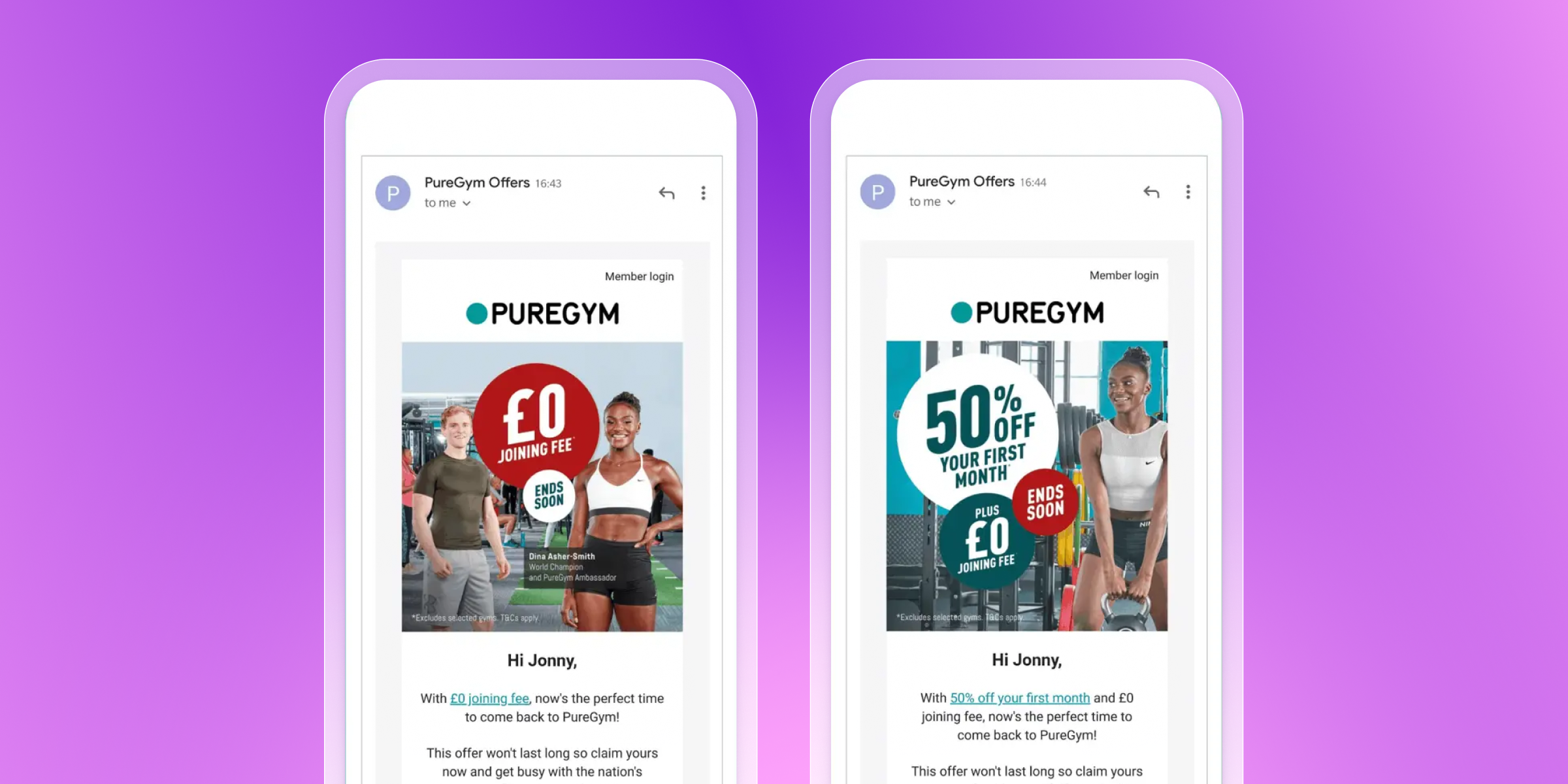
PureGym partnered with Braze and solutions partner ConsultMyApp to build a cross-channel re-engagement campaign in Canvas. Email frequency was reduced, messages were refreshed with personalization and countdown timer GIFs, and retargeting emails were added for users who'd opened but hadn't converted. SMS was introduced alongside email to reach members with out-of-date email addresses, and running both channels through a single platform removed the need to split sends and analyze results across separate tools.
The wins
- 206% higher conversion rate among retargeted users versus all-user emails
- 69% higher email open rates
- 89% CTR
Final thoughts and takeaways
Omnichannel engagement is a coordination problem before it's a technology one. Consistent messaging across channels comes from shared data and a strategy built around how customers actually move. AI personalization adapts to behavior as it changes, making decisions about message, timing, and channel at a scale no team could manage manually.
Looking at retention, journey completion, and how different channels contribute to conversion reveals whether campaigns are actually driving outcomes or just generating activity. Without that visibility, it's difficult to know what's working and where to improve.
Bringing every customer interaction, online and offline, into one shared profile gives every channel the same starting point. That shared view turns a collection of well-run campaigns into a genuinely connected customer experience.
Omnichannel customer engagement FAQs
What is omnichannel customer engagement, and why is it important for businesses?
Omnichannel customer engagement is the coordination of every customer interaction across channels, devices, and touchpoints so that context and behavior carry from one to the next. It matters because customers move between email, apps, physical locations, and social media without thinking in channels. Experiences that don't reflect that continuity erode trust, reduce retention, and accelerate churn.
How can companies unify messaging across online and offline touchpoints?
Companies can unify messaging across online and offline touchpoints by centralizing customer data into a single, real-time profile drawing from all sources—in-app behavior, email engagement, purchase history, and point-of-sale interactions. With that unified view in place, suppression logic, frequency caps, and sequencing rules apply consistently across every channel, so customers receive coherent experiences instead of conflicting signals.
How does AI-driven personalization improve omnichannel engagement?
AI-driven personalization improves omnichannel engagement by replacing static segmentation with real-time decisioning, using behavioral signals to determine the right message, channel, and timing for each individual customer, continuously. Tools like BrazeAI Decisioning Studio™ apply reinforcement learning across all variables simultaneously, adapting as customer behavior changes instead of waiting for rules to be manually updated.
What tools or platforms help orchestrate customer journeys across multiple channels?
The tools that help orchestrate customer journeys across multiple channels bring email, push notifications, in-app messaging, SMS, and web together in one place, so journeys can branch based on actual customer behavior and messages are coordinated across every channel from a single environment rather than managed across disconnected tools.
How can marketers measure the effectiveness of omnichannel customer engagement strategies?
Marketers can measure the effectiveness of omnichannel customer engagement strategies by tracking metrics that connect channel activity to long-term outcomes: 90-day retention by channel combination, journey completion rates, time to conversion, churn rate by lifecycle stage, and multi-touch revenue attribution. Opens and CTR are useful diagnostics but tell only part of the story.
Related Tags
Be Absolutely Engaging.™
Sign up for regular updates from Braze.