How behavioral marketing turns data into personalized experiences
Published on December 02, 2025/Last edited on December 02, 2025/13 min read

Team Braze
The fastest-growing brands have something in common—40% more of their revenue comes from personalization and behavioral marketing is how they get there. Customers leave a trail of intent with every click, search, and purchase. Behavioral marketing turns those signals into action, with a message triggered by a product view, or perhaps a personalized offer that appears just as interest peaks.
Behind the scenes, behavioral marketing uses data, segmentation, and automation to adapt messages in real time across every channel. Brands can reach consumers in a way that feels personal at scale and build responsive journeys for stronger retention, higher conversion rates, and a measurable return on more meaningful experiences.
Contents
What is behavioral marketing (also called behavior-based marketing)?
How does behavioral marketing work?
Why is behavioral marketing important for customer engagement?
What are the main types of behavioral marketing?
What are examples of behavioral marketing in action?
What are the best practices for behavioral marketing?
How leading brands use behavioral marketing to drive results
How Braze turns behavioral data into smarter engagement
Final thoughts on behavioral marketing
FAQs about behavioral marketing
What is behavioral marketing (also called behavior-based marketing)?
Behavioral marketing uses data from real customer actions—like browsing, search history, and purchasing—to tailor messages and experiences in real time. Rather than segmenting audiences by broad demographics, it looks at how people are interacting with your brand and what those interactions reveal about their intent.
By analyzing engagement patterns and building segments from those insights, brands can deliver 1:1 messages, recommendations, and offers that align with each customer’s interests and context.
How does behavioral marketing work?
Customer interactions inform what messages and experiences come next. Every action creates data, and that data helps brands respond in ways that feel personal and relevant. Here’s how it works:
Data collection
Brands capture behavioral data from multiple touchpoints—such as websites, apps, email, and social media channels. Each click, search, purchase, or piece of content viewed adds context about customer intent and interest.
Segmentation
That information is then grouped into audience segments based on patterns of behavior or engagement. These segments help shape who to reach and how to tailor messaging so it resonates.
Targeted delivery
With targeted marketing, messages are automatically adapted in real time. A shopper who lingers on a product page might later see a reminder about that item; someone exploring travel content could receive destination ideas; an active app user might get an in-app tip that helps them make the most of a feature.
Why is behavioral marketing important for customer engagement?
Behavioral marketing is important for customer engagement because it builds genuine, 1:1 connections between brands and their audiences. When communication reflects what people actually do—what they viewed, where they paused, what they purchased, or what they returned to—it feels natural and worth responding to.
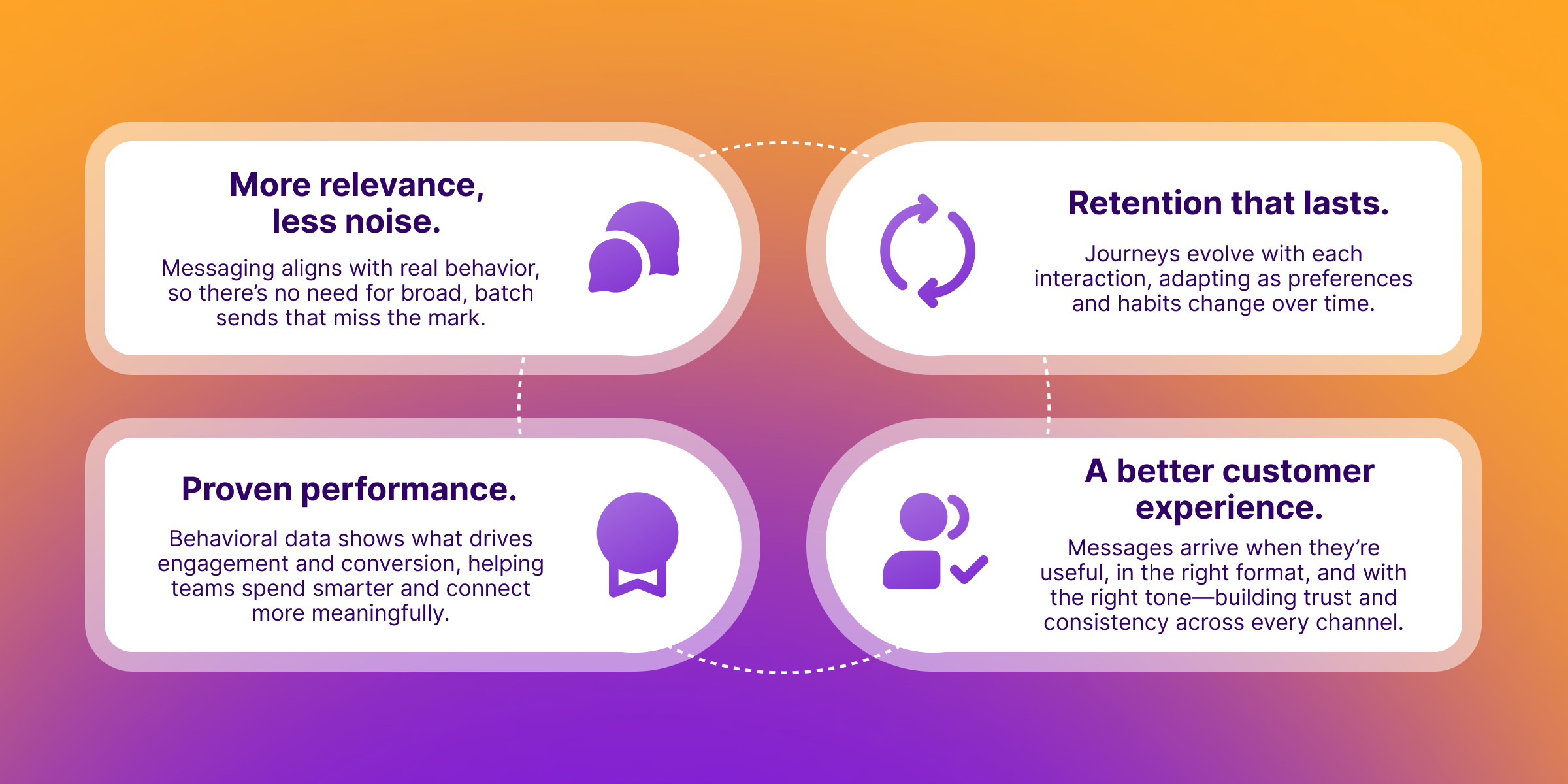
This approach directs how brands communicate:
- More relevance, less noise. Messaging aligns with real behavior, so there’s no need for broad, batch sends that miss the mark.
- Retention that lasts. Journeys evolve with each interaction, adapting as preferences and habits change over time.
- A better customer experience. Messages arrive when they’re useful, in the right format, and with the right tone—building trust and consistency across every channel.
- Proven performance. Behavioral data shows what drives engagement and conversion, helping teams spend smarter and connect more meaningfully.
Basing engagement in real behavior helps brands communicate with more relevance and lead customers—and potential customers— into experiences that truly fit their needs.
What are the main types of behavioral marketing?
A behavioral marketing strategy can look different depending on how brands use data to understand and respond to customer actions. Each type applies behavioral insight in its own way, helping shape communication that feels specific, and genuinely useful.
Product recommendations and dynamic suggestions
This approach uses behavioral data to suggest what a customer might want to see next. It combines browsing history, purchase behavior, or content engagement to automatically personalize what appears on a webpage, in an app, or in an email. Dynamic content adapts in real time, showing different products or services, messages, or visuals depending on each person’s actions.
Remarketing and retargeting campaigns
These tactics focus on reconnecting with people who’ve already shown interest. Behavioral cues—like items left in a cart, unfinished forms, or repeated visits—help brands identify intent and follow up with relevant marketing messages. The aim is to bring people back into the journey, not start the conversation again from scratch.
Behavioral email marketing and triggered messages
Here, communication via email or other messaging happens in direct response to customer activity. Signing up for a service, exploring a feature, or going inactive can all trigger tailored outreach. It’s a practical way to keep engagement flowing, using behavior as the prompt for when and how to reach out.
Demographic and contextual targeting
Contextual targeting combines behavioral insight with situational data—like the time of day, device, or even where a purchase took place. For example, a customer’s last order and location can shape what they see next, creating messages that feel timely and relevant to their current context.
Predictive behavioral targeting with AI
This type uses machine learning to anticipate what customers might do next. By analyzing past behaviors, AI models can predict future actions and automate decisions around timing, channel, and content. Predictive targeting supports next best action strategies, helping brands move from reacting to behavior to staying a step ahead of it.
Behavioral marketing efforts can be applied across many different industries, leveraging the right type and mix to drive real results.
What are examples of behavioral marketing in action?
Behavioral marketing can take many forms depending on the challenge a brand is trying to solve. Below are a few examples of how different industries apply behavioral insight to connect with customers and drive results.
Retail personalization
Opportunity
Customers are browsing but not converting, and static site experiences don’t reflect individual preferences or intent.
Type: Product recommendations and dynamic content
Behavioral data informs what a customer sees next—whether that’s suggested products, relevant categories, or offers tied to past purchases. Dynamic content adapts automatically, aligning recommendations with real-time behavior.
Strategy
Use browsing and purchase data to personalize content across your website, app, and email. Combine this with triggered follow-ups—such as reminders or tailored offers—to create a connected experience that moves customers toward purchase.
Outcome
Boosts product discovery, increases conversion rates, and encourages repeat purchases by keeping content aligned with customer intent.
Travel re-engagement
Opportunity
Travelers research destinations and offers but often abandon bookings before completion.
Type: Remarketing and retargeting
Behavioral signals—like flight searches, saved trips, or destination views—help brands reconnect with high-intent customers.
Strategy
Retarget audiences based on recent browsing behavior, sending personalized follow-ups through email, push notifications, or ads. Messaging can highlight updated prices, new packages, or limited-time deals to reignite interest.
Outcome
Reclaims lost bookings, improves conversion rates, and keeps the brand visible through timely, relevant outreach.
Subscription renewal
Opportunity
Subscribers risk churning because renewal reminders arrive too late—or not at all.
Type: Behavioral email and triggered messaging
Behavior-based automation allows communication to respond to usage, milestones, or renewal timelines.
Strategy
Use engagement data to trigger personalized messages before subscriptions expire. Include renewal incentives, highlight new features, and follow up with gentle nudges for those yet to act.
Outcome
Improves retention, lifts renewal rates, and keeps communication flowing naturally throughout the subscription lifecycle.
Food delivery reactivation
Opportunity
Lapsed users disengage when outreach doesn’t match their timing, location, or habits.
Type: Contextual targeting
Combines behavioral signals (order frequency, favorites) with contextual data like time of day or location to make outreach feel relevant to the moment.
Strategy
Identify when and where users typically order, then send targeted push messages or in-app offers that reflect those patterns—like a dinner reminder featuring their last meal choice.
Outcome
Revives dormant users, drives repeat orders, and builds habitual engagement through timely, familiar experiences.
Financial services retention
Opportunity
Customers show early signs of disengagement—fewer logins, reduced balance checks, or missed payments—before officially churning.
Type: Predictive behavioral targeting with AI
Predictive modeling identifies customers at risk and determines the next best action to keep them engaged.
Strategy
Use AI-powered insights to trigger personalized retention messages, such as incentives, education, or tailored recommendations. Adjust journeys dynamically based on response to maintain relevance.
Outcome
Reduces churn, increases lifetime value, and helps teams act before disengagement occurs.
What are the best practices for behavioral marketing?
Strong behavioral marketing is built on transparency, relevance, and respect for the customer relationship. These principles help teams create marketing campaigns that perform well and build trust over time.
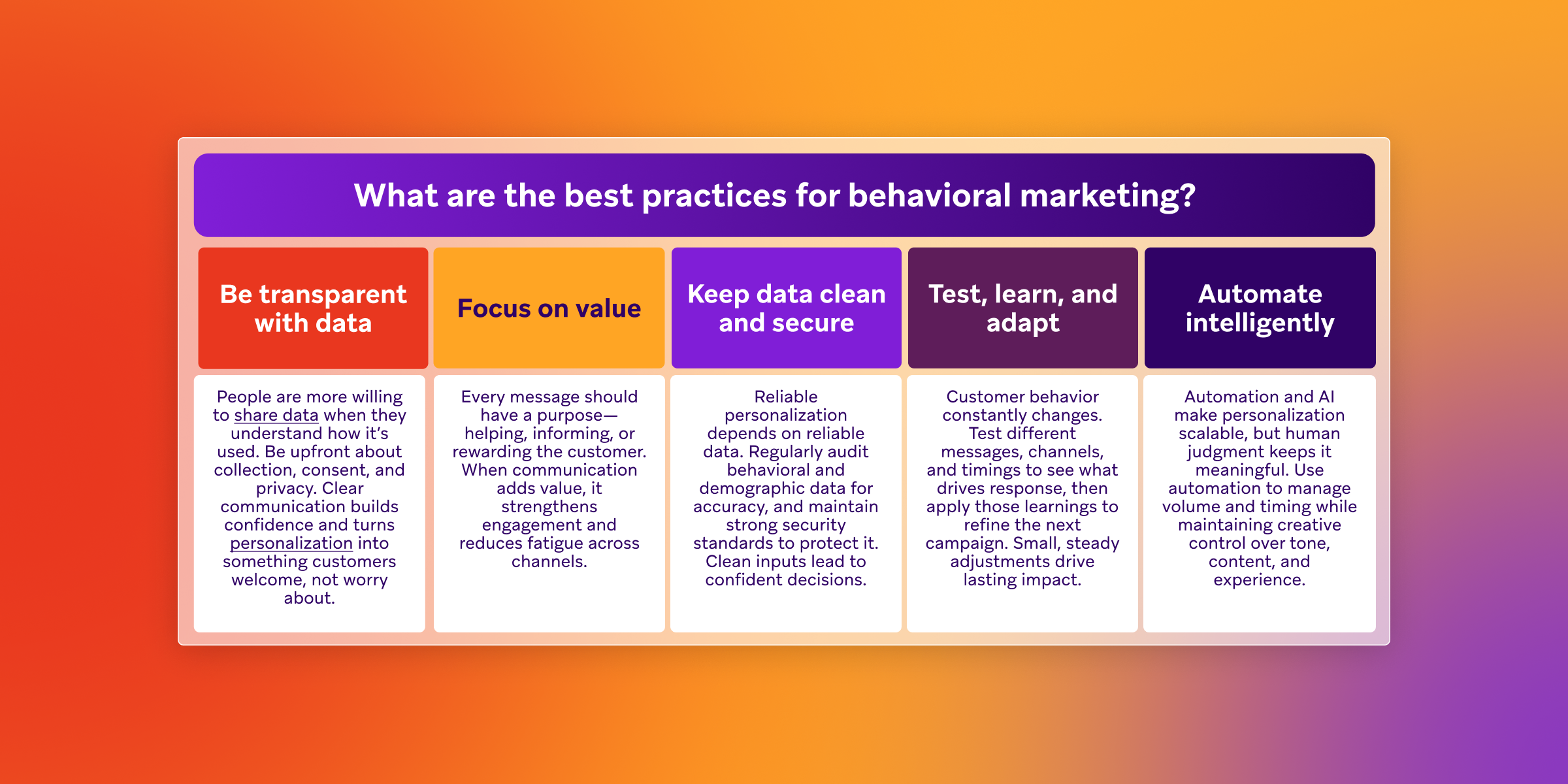
Be transparent with data
People are more willing to share data when they understand how it’s used. Be upfront about collection, consent, and privacy. Clear communication builds confidence and turns personalization into something customers welcome, not worry about.
Focus on value
Every message should have a purpose—helping, informing, or rewarding the customer. When communication adds value, it strengthens engagement and reduces fatigue across channels.
Keep data clean and secure
Reliable personalization depends on reliable data. Regularly audit behavioral and demographic data for accuracy, and maintain strong security standards to protect it. Clean inputs lead to confident decisions.
Test, learn, and adapt
Customer behavior constantly changes. Test different messages, channels, and timings to see what drives response, then apply those learnings to refine the next campaign. Small, steady adjustments drive lasting impact.
Automate intelligently
Automation and AI make personalization scalable, but human judgment keeps it meaningful. Use automation to manage volume and timing while maintaining creative control over tone, content, and experience.
How leading brands use behavioral marketing to drive results
Across industries, brands are using data, automation, and predictive insight to build stronger relationships and measurable business results. From predictive personalization to smarter retention and timing that feels human, these brands show how insight and automation can turn behavioral signals into smarter personalization, higher engagement, and sustained growth.
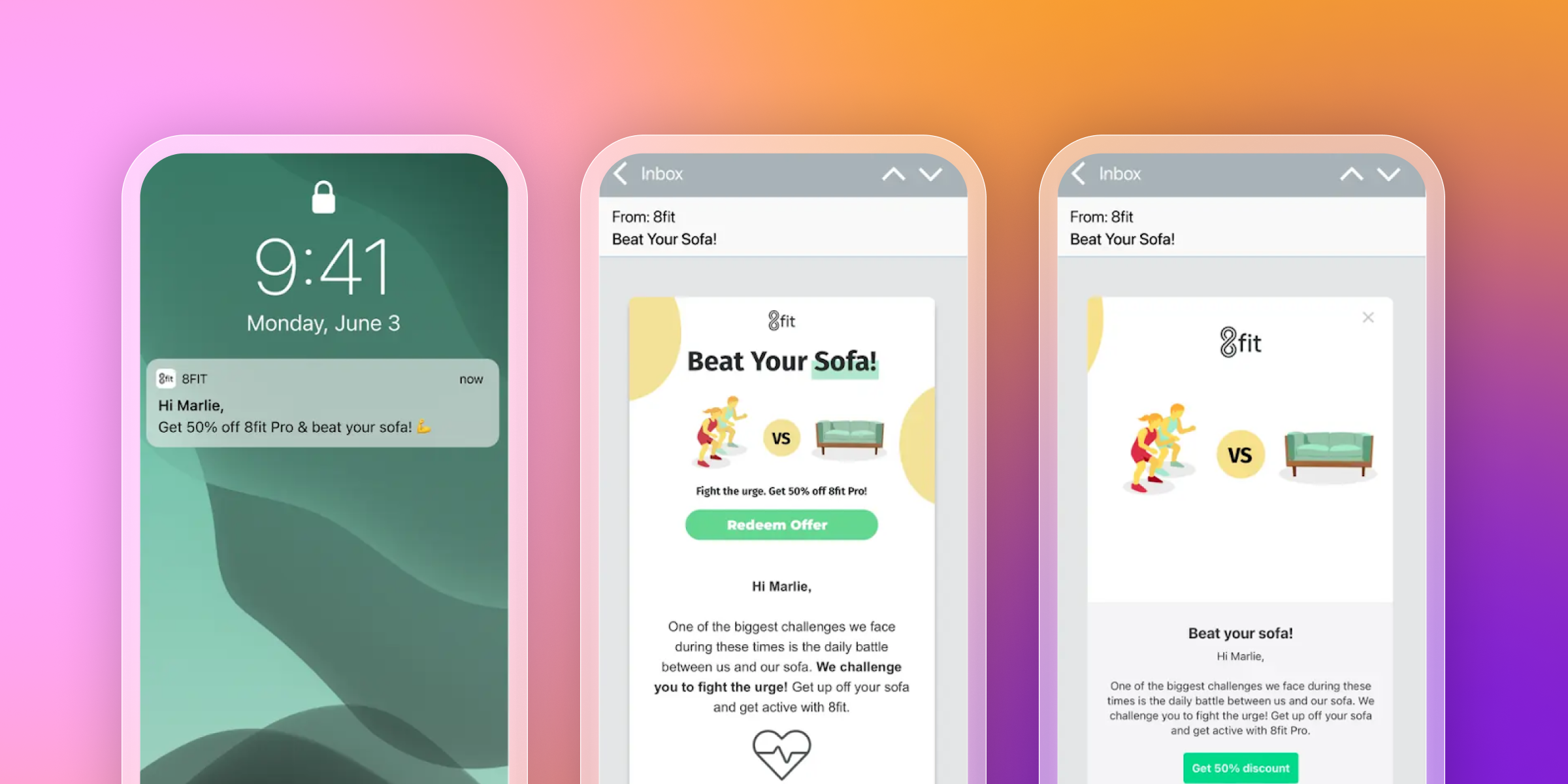
8fit uses predictive tools to personalize every journey
8fit is a global fitness and nutrition app offering personalized workouts, meal plans, and meditations to more than 40 million users. With so many options available to customers, 8fit needed a smarter way to engage users, convert them into paying subscribers, and strengthen long-term retention.
The challenge
The team wanted to increase paid subscriptions without relying on blanket discounts or mass offers. They needed a way to predict which users were most likely to convert—and to tailor incentives accordingly for higher ROI and less message fatigue.
The strategy
Using the Braze Predictive Purchases feature, part of the Predictive Suite, 8fit assigned every user a Purchase Likelihood Score (from 0 to 100). Campaigns were then designed to target users based on that score: lower discounts for users with medium to high likelihood, and higher-value offers for those less likely to subscribe.
Messages were delivered across email, push, and in-app channels, with continuous testing of content, timing, and channel mix. By excluding low-likelihood users entirely, the team reduced unnecessary sends while improving the quality of each interaction.
The results
- 3.75x higher conversion rate among high-likelihood users compared with a random cohort
- 100,000 fewer emails sent weekly with no loss in conversions
- Stronger ROI and more efficient campaign performance through predictive targeting
Rappi turns behavioral insight into retention wins
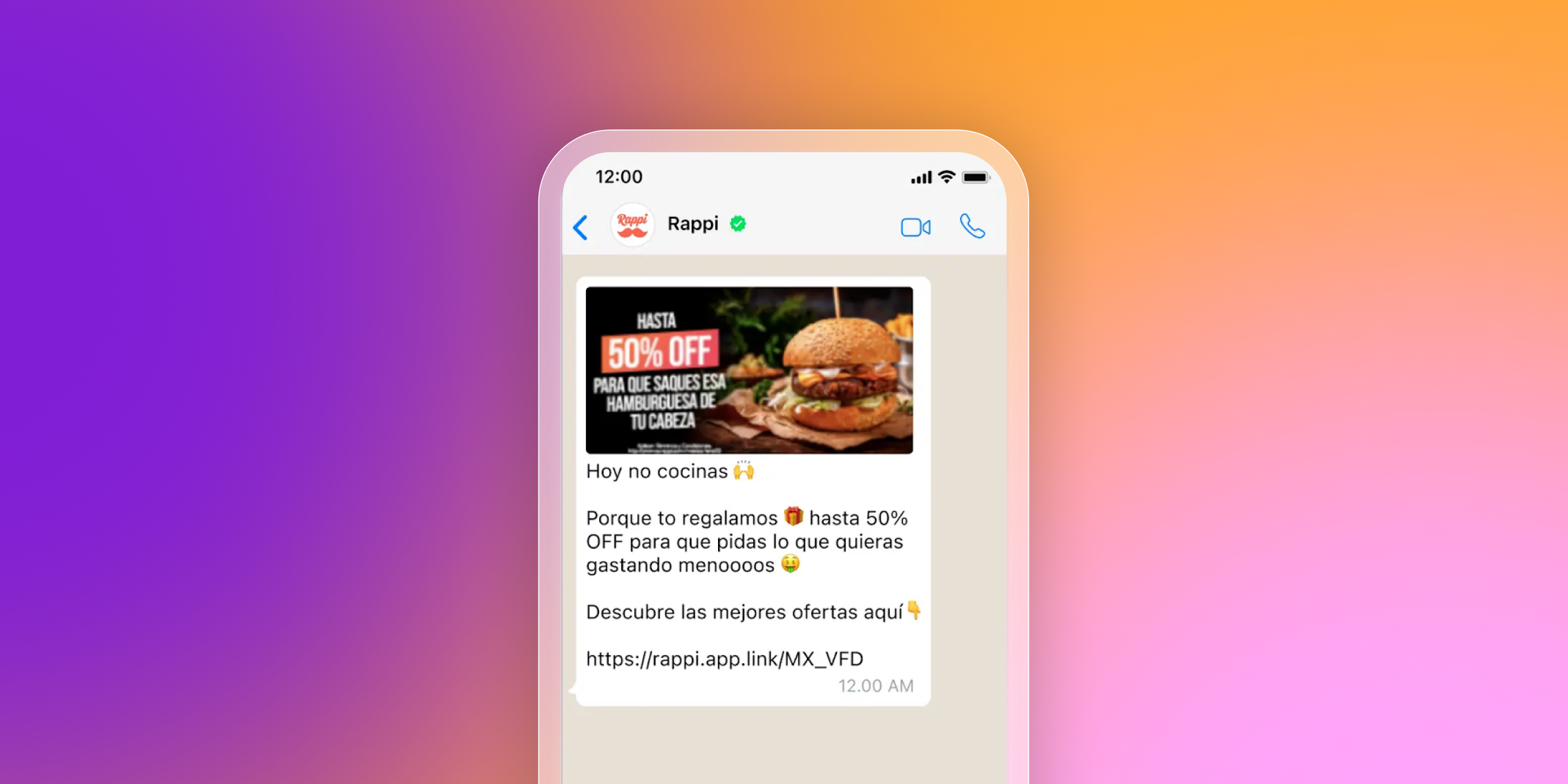
Founded in 2015 in Bogotá, Rappi is Latin America’s first “Superapp,” connecting users across nine countries to on-demand services ranging from food delivery to prescription pickup. To maintain loyalty in a crowded market, Rappi needed to reach customers on the channels they use most—at the exact moment they’re ready to act.
The challenge
Rappi wanted to expand its retention and win-back strategy to keep both new and lapsed users engaged. The team aimed to deliver personalized offers across channels while using real-time data to make every interaction relevant and efficient.
The strategy
Using Braze Canvas, Rappi automated complex customer journeys that combined push, in-app messages, email, and WhatsApp—a channel newly integrated into their engagement mix. They created two key audience segments: Momentum (active users) and Reactivation (lapsed users). Each journey was tailored with dynamic templates built in Braze, allowing for personalized, data-driven messaging at scale.
The results
- 71% read rate for active users
- 28% lift in users who reactivated and made 1 purchase within 30 days
- 43% lift in users who reactivated and made 2 or more purchases within 30 days
- 67% read rate for lapsed users
- 80% increase in purchases among lapsed users who received WhatsApp messages compared to the control group
Foodora delivers higher engagement with smarter targeting
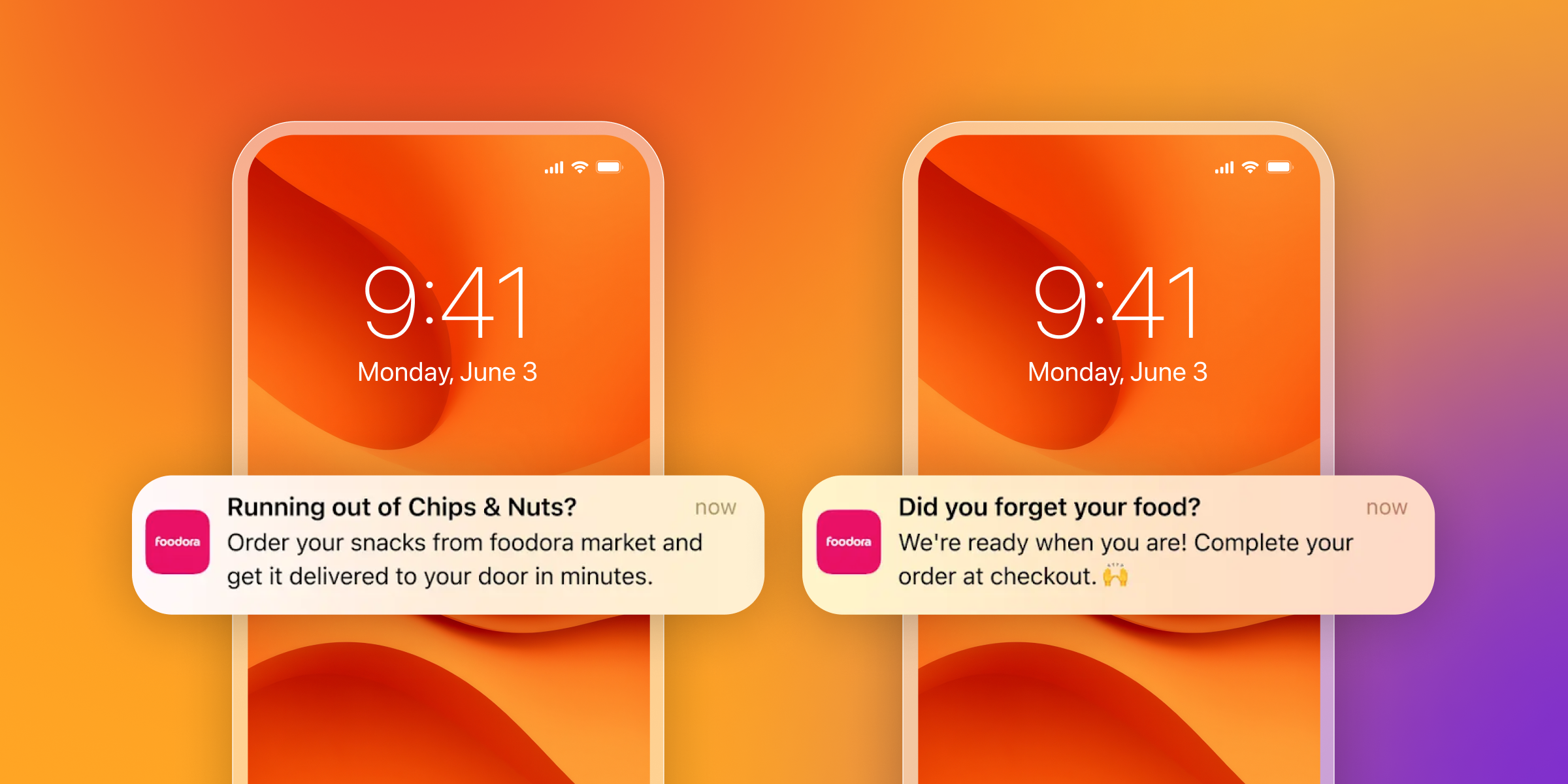
Operating in over 700 cities across Europe, Foodora’s mission is to deliver freedom—helping people order what they want, when they want it. The team set out to build customer relationships that feel like friendships: personal, consistent, and built on trust.
The challenge
Foodora wanted to move beyond scheduled campaigns toward messaging that adapted to each customer’s behavior and timing. The goal was to improve engagement, reduce unsubscribe rates, and increase overall satisfaction.
The strategy
Using Braze Intelligent Timing, Foodora replaced fixed campaign send times with AI-powered delivery that optimized messages based on when each customer was most likely to engage. This approach, supported by predictive analytics and cross-channel messaging through email, push, and in-app notifications, created a unified and non-intrusive customer experience.
The results
- 41% conversion rate from messages sent
- 26% reduction in unsubscribe rates
- 6% increase in push direct opens
- Expanded rollout of Intelligent Timing to new markets and channels
- Stronger engagement and measurable gains in customer satisfaction
How Braze turns behavioral data into smarter engagement
Braze helps brands turn behavioral insight into real-time, meaningful engagement. The platform brings customer data together across channels, interprets it instantly, and uses those insights to deliver personalized messages that meet people where they are.
Features like Braze AI Decisioning Studio™, Canvas, and Intelligent Timing make it possible to predict needs, automate next best actions, and adapt journeys as behavior changes. Each interaction becomes part of a connected system that responds to customers in the moment.
Braze gives teams the flexibility to move faster and communicate smarter—using automation and AI to turn behavioral data into experiences that build trust, drive loyalty, and strengthen every customer relationship.
Final thoughts on behavioral marketing
Behavioral marketing connects data with intent to create experiences that feel genuinely personal. It turns every interaction—every search, click, or purchase—into insight that helps brands communicate with more context, empathy, and precision.
As customer expectations rise, this approach gives brands the agility to adapt in real time and the intelligence to anticipate what comes next. Paired with the right technology, behavioral marketing becomes the foundation for meaningful, measurable engagement.
With platforms like Braze, brands can use automation and AI to act on behavioral data safely, creatively, and at scale—transforming everyday communication into lasting connections.
FAQs about behavioral marketing
What is behavioral marketing?
Behavioral marketing uses data from customer actions to create more relevant and personalized messages across channels.
What are examples of behavioral marketing?
Examples of behavioral marketing include personalized recommendations, retargeting ads, and automated email campaigns triggered by user behavior.
Why is behavioral marketing effective?
Behavioral marketing is effective because it responds to real customer behavior, making communication more timely and meaningful—which leads to higher engagement and conversion.
How does AI enhance behavioral marketing?
AI enhances behavioral marketing because it predicts future actions and automates decision-making, helping marketers personalize experiences in real time.
What’s the difference between behavioral and demographic targeting?
The difference between behavioral and demographic targeting is that behavioral targeting focuses on what people do, while demographic targeting looks at who they are, such as age or location.
Related Tags
Be Absolutely Engaging.™
Sign up for regular updates from Braze.