Marketing channel strategy: How to select, prioritize, and optimize channels
Published on April 23, 2026/Last edited on April 23, 2026/16 min read


Team Braze
Contents
Read any marketing book and you'll find the same advice. Be where your customers are. But customers are everywhere now, with 24 hour access to online outlets, and most teams don't have the budget to show up fully on every channel.
The 2026 Global Customer Engagement Review found that 48% of marketers say they lack the tools to orchestrate coordinated cross-channel experiences. Without a clear strategy for which channels deserve investment, knowing where to allocate budget gets harder.
A marketing channel strategy is the framework for deciding which channels deserve investment based on audience fit, cost, scalability, and where a brand has a genuine advantage, then connecting those channels with AI decisioning and automation to drive ROI and engagement across the full customer journey.
Here, you'll find how to evaluate and select channels, the frameworks that help with prioritization, and how AI marketing automation fits into a channel mix built for measurable growth.
Contents
TL;DR
- A marketing channel strategy is a focused plan for which channels to invest in, how to distribute resources across them, and how to measure performance against business goals
- Channel selection should start with audience fit and product-channel fit before weighing cost, scalability, and competitive positioning
- Frameworks like the bullseye framework, barbell strategy, and channel portfolio approach help teams prioritize channels without spreading resources too thin
- AI marketing automation extends what a well-built strategy can deliver, from real-time decisioning to lifecycle engagement at scale
Key takeaways
- Strategy is about choosing what not to do. Fewer channels, executed with focus, outperform a broad presence stretched across every available platform
- Cross-channel marketing and omnichannel strategy are distinct approaches. Knowing the difference shapes how you build your channel mix and measure its performance
- Audience fit is the first and most important filter in channel evaluation. If your customers don't use a channel, no level of execution quality compensates for that
- Data centralization is the infrastructure that makes cross-channel engagement coherent. Without a unified customer view, channel optimization decisions are made on incomplete information
- The strongest marketing ROI comes from tracking channel combinations and full customer journeys. Individual channel reporting only tells part of the story
What is a marketing channel strategy?
A marketing channel strategy is a plan for which channels a business will use to reach its audience, how resources will be allocated across those channels, and how performance will be measured against specific goals. It sits within a broader marketing strategy, which covers brand positioning, product mix, pricing, and target market definition.
A marketing channel strategy lives inside that larger framework, answering the more specific question of how you reach the people you're trying to reach, and through which routes. Every channel you commit to requires budget, time, and creative attention, which is why the choices you make here are, fundamentally, resource decisions.
Cross-channel marketing and the connected customer experience
A marketing channel strategy often includes cross-channel marketing. That’s the coordination of messaging across multiple channels using shared customer data. Rather than treating each channel independently, a cross-channel approach connects them, so that what a customer does on one channel shapes what they receive on the next. For many teams, building a coherent cross-channel experience is the practical output of having a well-defined channel strategy in the first place.
Omnichannel strategy and the full brand experience
An omnichannel strategy extends channel coordination beyond digital messaging to every touchpoint a customer has with a brand, including physical retail, customer service, and in-person interactions.
Where cross-channel marketing connects digital channels through shared data, omnichannel takes into account every offline experience too. A customer who browses online but shops in a physical store, gets their item delivered to their home and post-purchase messages to their mobile phone, should feel like they're dealing with the same brand throughout.
Lifecycle engagement and the full customer journey
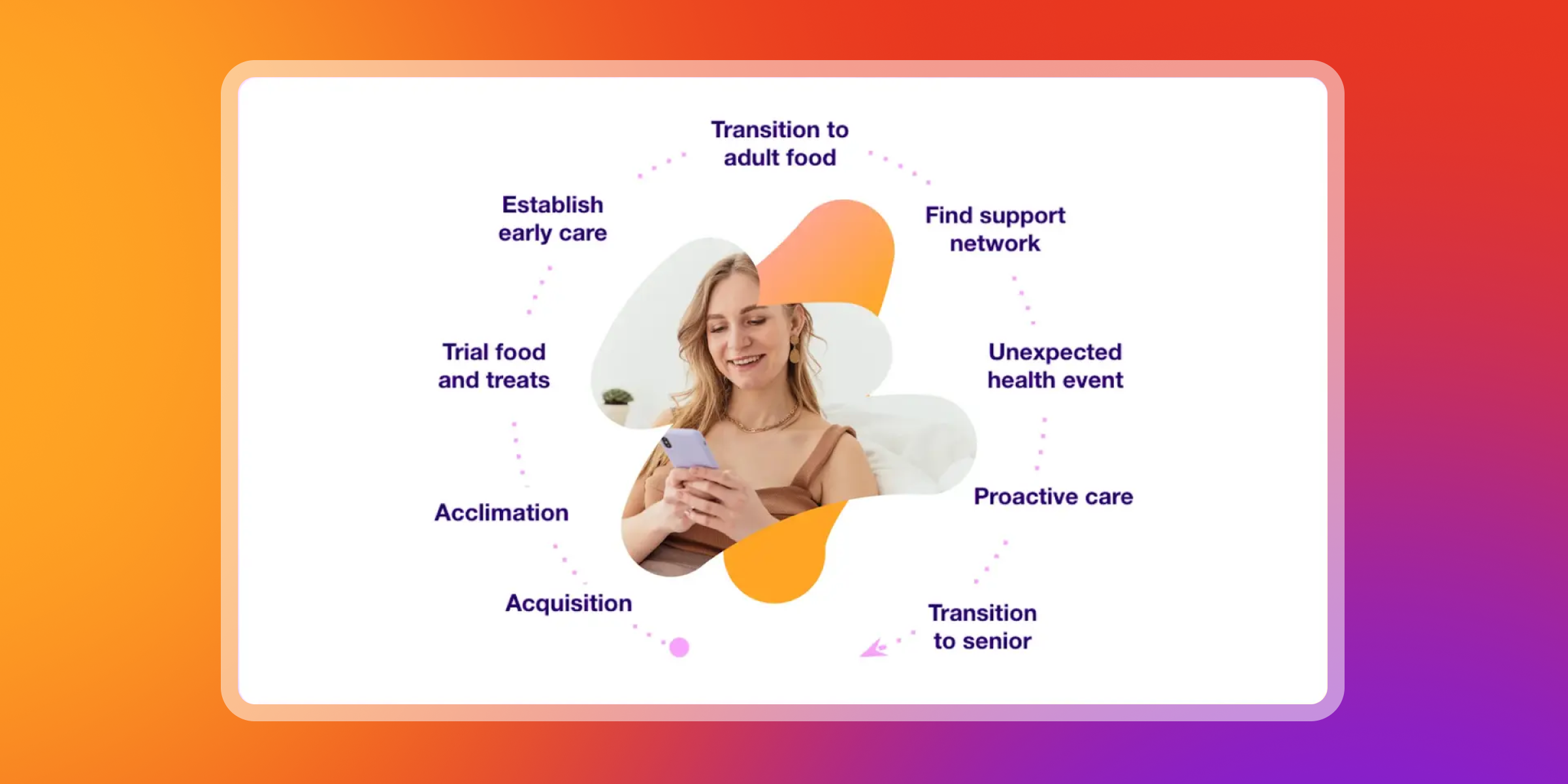
A channel strategy also sits inside a bigger picture of lifecycle engagement. This is the overarching view of the entire customer journey and relationship, not as a funnel with a finish line, but as a continuous loop. A customer who converts isn't done. They need to be retained, deepened, and re-engaged over time. With the big picture of marketing orchestration, brands can map channel decisions to the full arc of the customer journey rather than optimising for a single moment in it.
Deciding which channels belong at each stage of that journey is where the strategic work begins.
Channel evaluation and channel selection
Channel evaluation starts with your audience, your product, and an honest assessment of where you have an advantage. Getting those three things right before weighing cost or scalability keeps resources concentrated where they're most likely to produce results.
Audience fit: Understanding where your customers are
Audience fit is the first filter in any channel evaluation. You need to ask whether your target audience is actually present and active on a given platform.
First-party behavioral data is the most reliable way to understand where and how your customers are spending their time. If it shows that 90% of your customers can be reached through a single platform, that platform should command the majority of your attention.
Unique advantages and competitive positioning
After establishing where your audience is, the next question is where your team has a genuine edge. A content team that consistently produces high-ranking organic work has a different natural channel strength than a team whose expertise sits in paid acquisition or community building.
Looking at where competitors are underinvested is equally useful. A platform where well-funded rivals are absent or weak can represent a stronger opportunity than one where they dominate, regardless of how attractive that platform looks in isolation.
Cost, scalability, urgency, and measurability
Once audience fit and competitive positioning are clear, four things help rank and sequence the remaining options.
- Cost: Both upfront investment and expected payback period. A high cost-per-acquisition can still be justified by strong lifetime value, but you need the data to make that case.
- Urgency: Organic search takes months to build momentum, while paid acquisition can produce results within days. Your channel mix needs to reflect the timeline you're working to.
- Scalability: Whether a platform can absorb more investment as the business grows, or whether returns flatten quickly.
- Measurability: How confidently performance can be attributed to a given channel, which in turn affects how easy it is to defend at budget time.
Channel strategy frameworks
Several frameworks exist to help marketers choose and prioritize channels. Each one approaches the problem from a slightly different angle, and the most useful one depends on where your business is and what decision you're trying to make.
1. Channel model fit
Channel model fit asks whether your channel choices match your revenue model. The key relationship is between average revenue per user (ARPU) and customer acquisition cost (CAC).
If what you earn per customer is relatively low, you need channels where acquiring customers is also low cost. Spending heavily on outbound sales or paid advertising rarely makes sense when the numbers don't stack up. If what you earn per customer is high, more expensive channels become viable.
2. Product-channel fit
Product-channel fit asks whether the channel you're using actually suits your product.
A simple, self-serve product with a free tier tends to work well on organic or viral channels, because ease of adoption creates less of a barrier. A complex product that needs explaining however, tends to suit content or inbound channels, where customers can learn before they buy. A high-value product sold to large organizations tends to suit outbound sales. A useful question to ask of any channel, is does it naturally show what your product does, or does the customer need to already understand it before the channel can work?
3. The traction framework (bullseye)
The bullseye framework, developed by Gabriel Weinberg, helps teams identify which single channel has the most potential at a given point in time.
It works in three stages. First, brainstorm across every possible channel. Second, run small, low-cost experiments on the most promising options. Third, double down on whichever one shows the strongest results. As a business grows, the answer often changes, so it's worth revisiting rather than treating it as a one-time exercise.
4. Channel portfolio strategy
The channel portfolio approach treats your channel mix the way an investor treats a portfolio. Different channels carry different levels of risk and return, and the mix should reflect that.
Some channels are core and reliable. Others are growing and showing promise. And then some are early bets that might not work. Keeping those categories explicit helps teams allocate budget with more discipline, and makes it easier to have honest conversations about what's working and what isn't.
5. The barbell strategy
The barbell strategy splits channel investment between two extremes: proven, stable channels on one end and experimental, high-risk ones on the other.
The logic is that in the middle ground, channels are neither reliable nor genuinely exciting, and absorb budget without delivering much. Low-touch automated channels like retargeting or always-on paid ads sit at the stable end and new formats and emerging platforms sit at the experimental end, with a small budget and a clear timeframe for evaluation.
Allocating resources across channels
Once channels have been chosen it’s time to look at the budget and decide how much time, money and other resource is allocated to each one.
Marketing resource allocation
Marketing resource allocation is the process of deciding how to distribute budget, time, and team capacity across your chosen channels.
The 70-20-10 rule is a good place to start. Put 70% of your budget behind channels that are already working and have a track record. Allocate 20% to channels that are showing promise but haven't fully proven themselves yet. Keep 10% for genuinely experimental channels where the potential is high but the outcome is unknown. These percentages aren't fixed rules and the right split depends on where the business is, how mature each channel is, and what the current goals are.
Paid, owned, and earned channels all play different roles in the mix. Owned channels like your website, app, and email list tend to build the most durable returns over time. Paid channels can move faster but at higher short-term cost. Earned channels like press coverage, reviews, and organic sharing are harder to control but can amplify everything else when they land well.
Low-touch automated channels deserve their own category in any allocation plan. Retargeting campaigns, always-on paid ads, and automated social distribution require minimal ongoing effort once set up. They won't be your primary growth driver, but they extend reach without drawing heavily on team capacity, which frees budget and attention for the channels that need active management.
Allocation decisions also need to account for what each channel is being asked to do. Some channels are better at building awareness and reach. Others drive engagement or conversions. A channel mix that only optimizes for one of those goals will tend to underperform across the others. Balancing reach, engagement, and conversion across the portfolio gives the strategy more resilience, and makes individual channel performance easier to interpret.
The allocation decisions made at the start of a planning cycle shouldn't stay fixed until the next one. Performance data should feed back into budget decisions regularly, with improving channels that are gaining more investment.
Integrating AI and marketing automation
A channel strategy sets out where to compete. AI and automation determine how precisely you can execute once you're there.
AI marketing automation and real-time decisioning
AI marketing automation is the use of machine learning and AI-powered tools to automate decisions about what to send, to whom, through which channel, and when, based on real-time behavioral data.
The 2026 Global Customer Engagement Review found that 60% of marketers are already using AI to support personalization across channels. Where a manually managed channel strategy can deliver a message to a segment, AI-driven personalization can adapt that message to the individual, based on their behavior, preferences, and stage in the customer journey. Automated triggers tied to behavioral events, such as an abandoned cart, a lapsed session, or a completed onboarding step, mean messages reach customers at the moments they're most likely to act.
Channel optimization with predictive analytics
Channel optimization is the ongoing process of using performance data to improve how and where campaigns run across the channel mix.
Predictive models identify which customers are most likely to convert, churn, or respond to a specific message, so channel decisions can be made ahead of the event rather than in response to it. Testing across channel combinations produces more useful insight than testing within individual channels in isolation, and feeds directly back into how resources are allocated across the strategy. If a customer only opens emails after 5pm, or rarely opens them at all but always opens a push notification, you can serve them with more tailored messages on their preferred channels and cut down on messages that never get opened or read.
Marketing ROI and measuring channel performance
The marketing ROI of your channel strategy looks at how much revenue, engagement, or retention each channel contributes relative to the resources invested in running it.
A thorough reporting view comes from measuring the full customer journey, like which combinations of channels drive conversions, where customers disengage, and which sequences produce the strongest lifetime value. Data centralization is essential for the reliability of cross-channel attribution.
Consistent indicators to track include cost per acquisition by channel, conversion rate, engagement metrics such as open and click rates, retention rate among customers reached across multiple channels, and lifetime value segmented by acquisition source.
Real-life case studies: Channel strategy in action
The examples below show three brands that made deliberate choices for their channel strategy, and what happened when the channel mix matched the audience, the product, and the goal.
1. For Stash, the right channel at the right moment is money in the bank
Stash is a personal finance app built to make investing accessible to everyday Americans, starting from as little as $5. Its mission is to build long-term wealth habits for millions of people who have historically been locked out of investing.
The challenge
Onboarding in financial services is high-stakes. Users drop off at specific, predictable points in the journey, and each drop-off point has a different reason behind it. Stash needed a channel strategy that could respond to those individual moments of hesitation, not broadcast the same message to everyone who hadn't yet completed a step.
The strategy
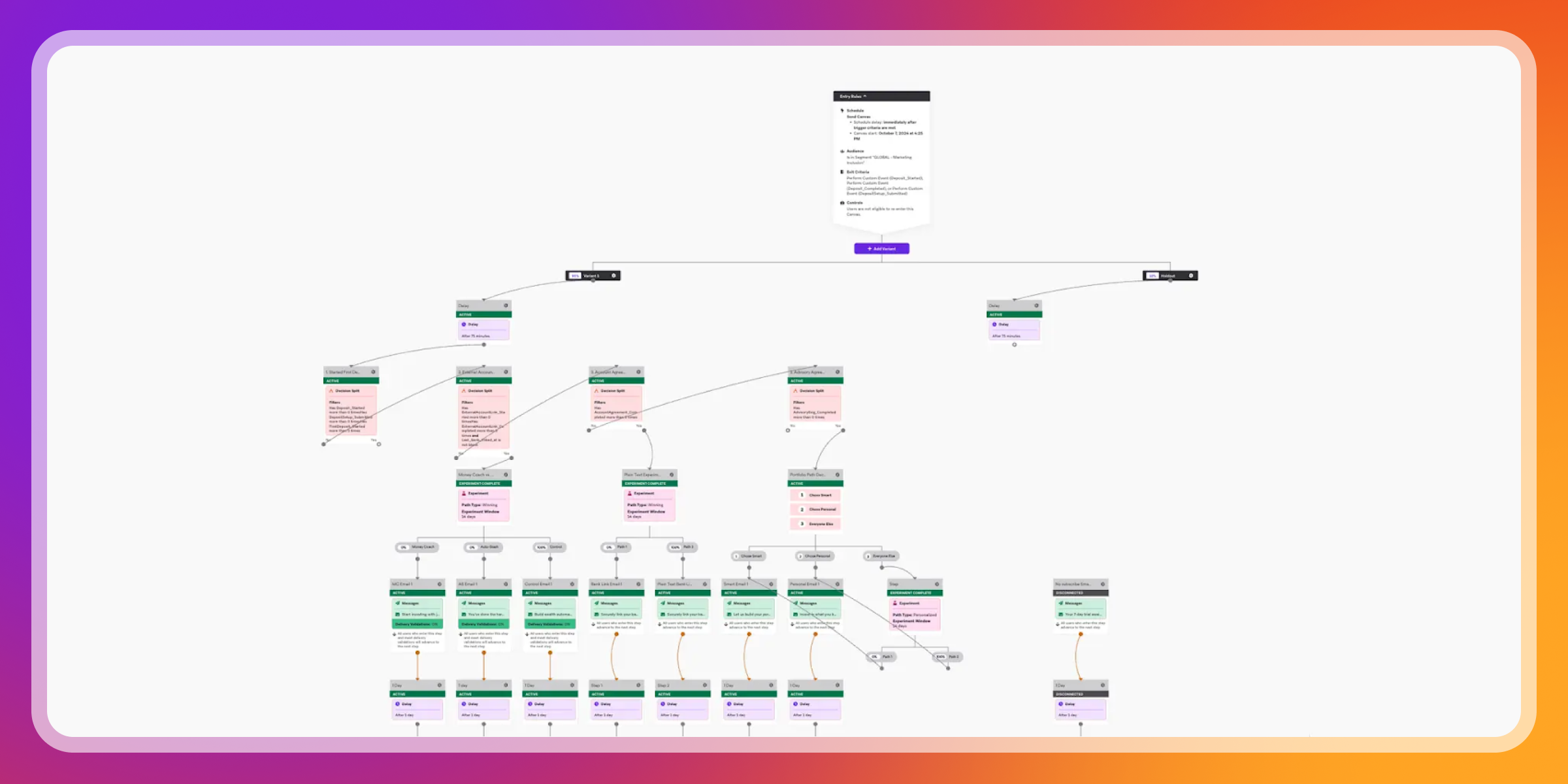
Stash built a multi-Canvas onboarding campaign that routed users into different messaging flows based on exactly where they stopped in the journey.
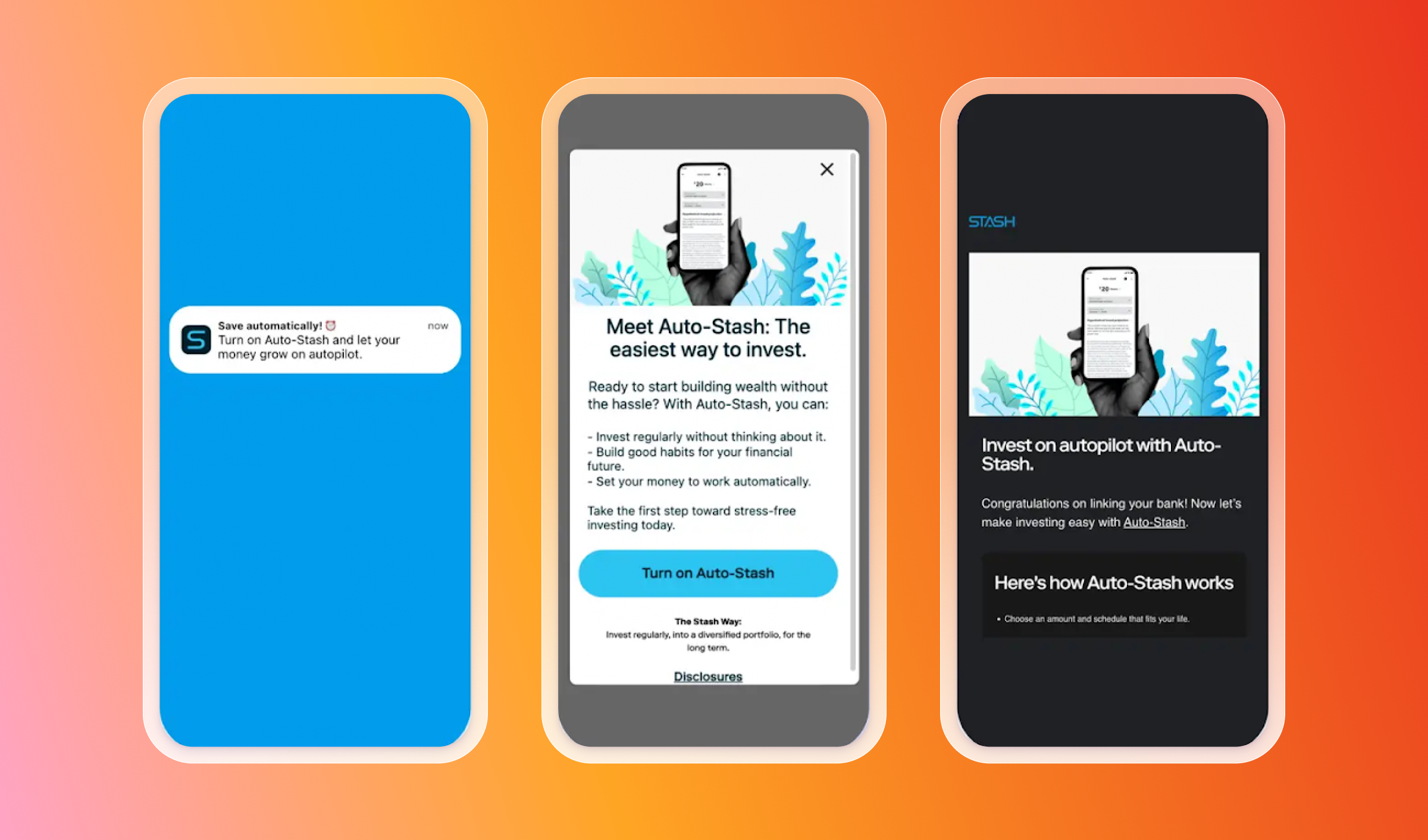
Four channels, email, push notifications, in-app messages, and SMS, were deployed at different points, each chosen for where it would land most effectively in that stage of the funnel.
Real-time behavioral data flowed into Braze via a Segment integration, allowing segmentation and triggering to respond to what users actually did rather than what they were assumed to need.
The wins
- 72% increase in email open rate
- 64% increase in email click-through rate
- 20.34% FirstDeposit_Started conversion rate
- 18.71% DepositSetup_Submitted conversion rate
- 19.75% Deposit_Completed conversion rate
2. Panera's cross-channel recipe keeps guests coming back for more
Panera Bread is a leading fast-casual restaurant chain with more than 2,200 locations across North America, built on a reputation for food quality and guest loyalty.
The challenge
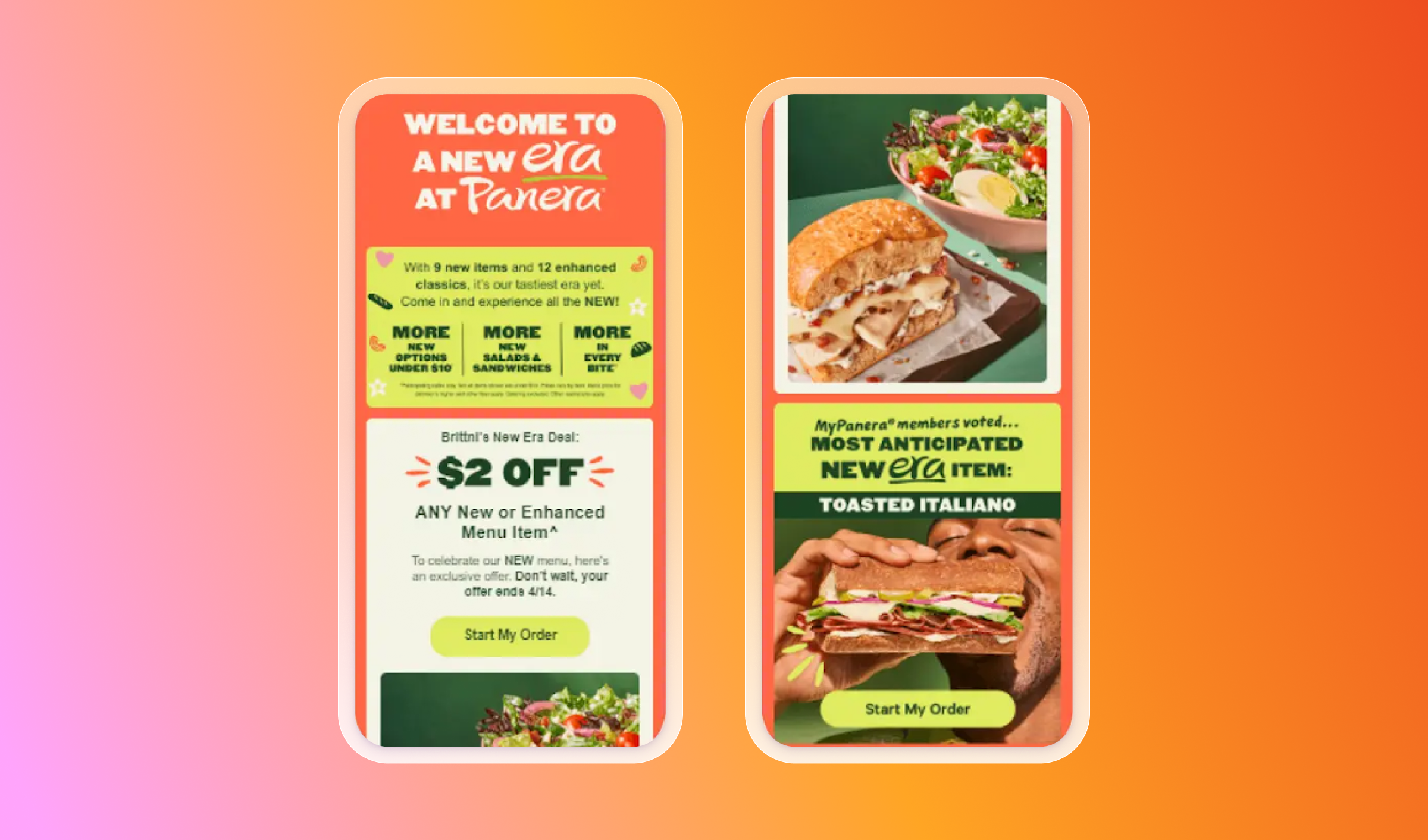
In April 2024, Panera launched the largest menu transformation in its history, with more than 20 updates and nine new items. There was a risk that loyal guests whose favorites were changing might not return, and lapsed guests had no obvious reason to come back. Panera needed a channel strategy that could hold both audiences at the same time, using different messages through the right channels to reach each one.
The strategy
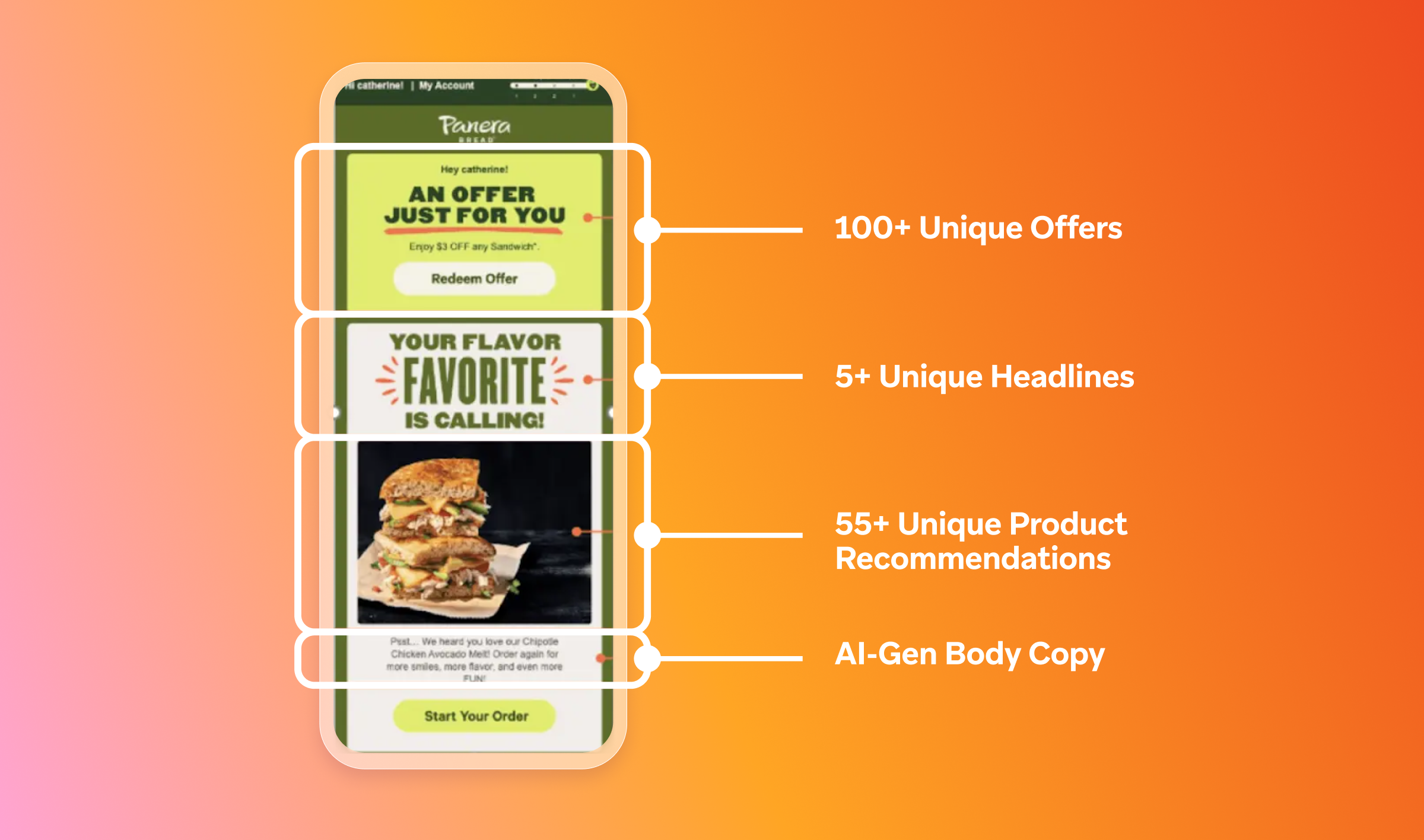
Panera coordinated email, push notifications, in-app messages, and Content Cards across a single campaign architecture, with each channel assigned a specific role in moving guests from awareness to action.
AI-powered segmentation identified guests most likely to lapse as a result of the changes. For guests who browsed new menu items without purchasing, follow-up email and push were triggered automatically via custom events.
Over 4,000 unique combinations of personalized offers and recommendations were delivered across the channel mix, with Content Cards used to surface in-session browsing behavior and push used to re-engage guests outside the app.
The wins
- 5% retention lift among at-risk guests
- 2X loyalty offer redemptions
- 2X purchase conversions from abandoned order follow-ups
- 50+ hours of manual work saved through automated content creation
3. BandLab finds its groove with an in-app channel mix that hits the right note
BandLab is a music creation platform with more than 100 million registered users. Its mission is to shape the future of music by giving a new generation of creators the tools to make, share, and monetize their work.
The challenge
BandLab wanted to convert active free users into paid Membership subscribers. The audience was already highly engaged inside the product—the strategic question was which channels would be most effective at reaching them in those moments of active use, and which specific in-app formats would drive trial starts without feeling intrusive.
The strategy
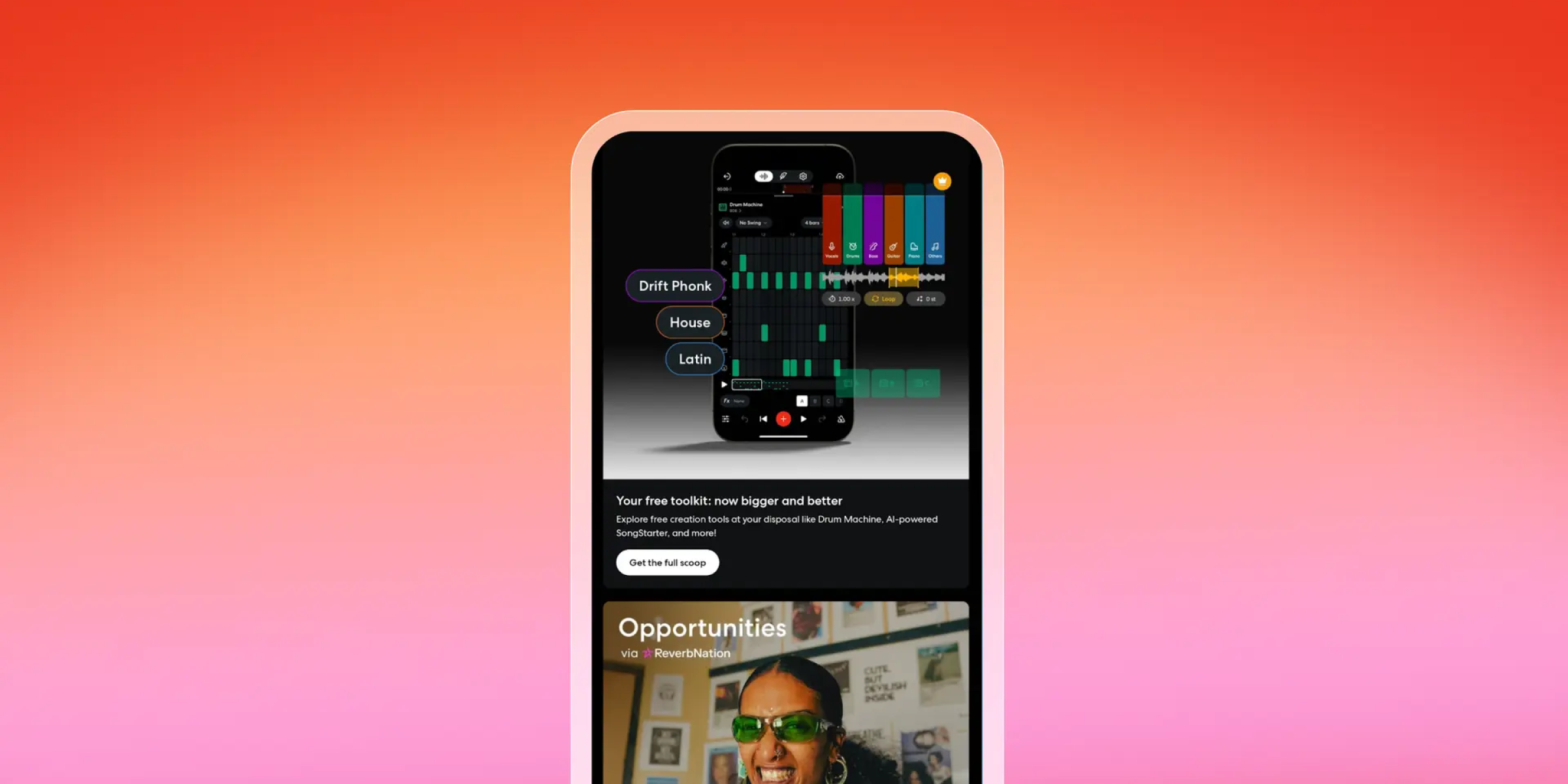
Rather than defaulting to out-of-product channels like email or SMS, BandLab focused its channel mix on in-app messaging, Content Cards, and push notifications. This was a deliberate product-channel fit decision. Users were already in the app and engaged with the Studio product, so in-session channels were more likely to reach them at the moment a membership offer would be relevant.
BandLab used Amplitude to funnel user cohorts into Braze for targeting, then ran weekly messaging refreshes with tested copy variants. Personalized Paths in Canvas routed users toward the message variation they were most likely to act on. Content Cards were integrated natively within both the app inbox and the in-app social feed, making the channel feel part of the product rather than separate from it.
The wins
- 12.1% average Impressions-to-Clicks rate using Content Cards
- 6.4% conversion rate from click to Membership with power users
- 8.5% conversion rate from click to trial start for the Voice Cleaner feature via Content Cards with power users
Final thoughts and takeaways
A marketing channel strategy comes down to deliberate choices about where to compete and where to hold back. Audience fit, product alignment, and honest competitive assessment are better guides than platform availability or what competitors appear to be doing.
The frameworks covered here, from channel model fit to the barbell strategy, each offer a different way into the same decision. They work best when revisited regularly rather than applied once and forgotten, because the right channel mix at one stage of growth rarely stays right as the business changes.
AI and automation extend what a focused channel strategy can deliver. Real-time decisioning, predictive analytics, and personalization at scale all become more powerful when the underlying channel choices are sound. The technology amplifies the strategy.
Continuous evaluation is what keeps a channel strategy from going stale. Performance data should feed back into channel decisions on a regular cycle, not just at annual planning. Treat channel strategy as a living framework. Test, learn, and reallocate based on evidence, to build more durable growth.
Marketing Channel Strategy FAQs
What is a marketing channel strategy, and why is it important for marketers?
A marketing channel strategy is a plan for which channels a business will use to reach its audience, how resources will be distributed across those channels, and how performance will be measured. Without one, teams spread budget across too many channels with too little focus, producing weaker results across all of them.
How do you evaluate which channels are best for your target audience?
Evaluating channels for audience fit starts with behavioral data. Where does your audience spend time, and where do they engage most with your brand? First-party data from your own platforms is the most reliable signal. From there, factors like cost, scalability, competitive density, and measurability help you rank and sequence your channel priorities.
What frameworks can help prioritize marketing channels for ROI and engagement?
Several frameworks support channel prioritization. The bullseye framework identifies the highest-impact channel for a given stage of growth; the barbell strategy balances stable channels with experimental ones; the channel portfolio approach applies investment theory to resource allocation; and product-channel fit helps assess whether a channel aligns with your product's attributes and business model.
How can marketers integrate AI and automation into channel strategy?
AI marketing automation improves channel strategy execution by enabling real-time decisioning, triggering messages based on behavioral signals, and using predictive models to identify which customers are likely to convert or churn. Automation also supports lead nurturing, retargeting, and lifecycle engagement at scale, freeing teams to focus on strategic and creative decisions.
What metrics should marketers track to measure the effectiveness of their channel strategy?
Key metrics for measuring the effectiveness of a marketing channel strategy include; cost per acquisition by channel, conversion rate, retention rate among customers, and customer lifetime value. Tracking these across the full customer journey, not just within individual channels, gives a clearer picture of which channel combinations drive the strongest outcomes.
Related Tags
Be Absolutely Engaging.™
Sign up for regular updates from Braze.
Related Content
 Article16 min read
Congratulations to the Forge 2026 Torchie Awards winners
September 29, 2026 Article6 min read
Bring 1:1 decisioning to every marketing journey with BrazeAI Decisioning Studio™ Go
September 28, 2026 Article12 min read
Made for this: How Braze is providing new ways to build, support, and extend your campaigns
September 28, 2026