How media, gaming, and sports marketers are actually driving engagement
Published on March 16, 2026/Last edited on March 16, 2026/16 min read

Bobby Tichy
Chief Solution Officer, StitchContents
Sports, gaming, and media brands have one big advantage: people already care.
Fans want to watch the match. Players want to progress. Viewers want to see what happens next. The real challenge isn’t getting attention — it’s keeping the connection going after the final whistle through loyalty, membership, repeat viewing, and fan engagement across the full season.
The truth is — great engagement doesn’t come from sending more messages.
It comes from responding to behavior at the right moment, across the right channels, without turning every campaign into manual work.
This collection of audience engagement examples from media, gaming, and sports organizations shows how teams turn audience data into real-time personalization. The examples are anonymized, but the mechanics are real: what signals triggered the experience, how journeys were structured, and how teams scaled execution across channels.
At Stitch, we support teams using Braze by turning engagement ideas into performance-driving CRM programs — cleaner data, faster campaign launches, and systems that make personalized marketing scalable and manageable.
What audience engagement really means — and why it matters
Audience or customer engagement is how people interact with your content, product, or brand over time — and how often they come back without being reminded. In other words, engagement is habit.
You see this when viewers participate in a live event, fans check the match hub before kickoff, or gamers return to complete a challenge. Depending on the industry, different signals show engagement:
- Media: repeat viewing, watchlist adds, completion rate, duration of watch time
- Sports: participation around live moments, app activity on matchday, membership engagement, ticket and merch buys
- Gaming: session frequency, player progression, event participation, in-game purchases
Engagement matters because it shows you’re building habit, which drives retention, session frequency, and lifetime value. Plus, it fuels better data for smarter personalization.
Some signals are light — likes, quick taps. Others show true intent — votes, purchases, redemptions, subscriptions, user-generated content. Knowing how to handle each creates 1:1 personalized experiences your audience will keep coming back for.
Type of audience engagement | Media and entertainment | Sports | Gaming |
|---|---|---|---|
Likes and reactions | Like a trailer, save a title, add to watchlist, favorite a genre | Like a highlight, follow a team/player, react to match content | Like a gameplay clip, react to patch notes, favorite a mode |
Comments and replies | Comment on a release, reply to cast posts, join live chat | Reply on matchday, comment on lineup posts, join live chat | Comment on events, reply to updates, join community threads |
Shares | Share clips, repost trailers, share “what to watch” picks | Share highlights, repost goals, share ticket links | Share clips, repost event announcements, share guides |
Reviews and mentions | App store reviews, title ratings, tag the service | Venue reviews, tag the club, fan forum mentions | App store reviews, streamer/influencer mentions, forum posts |
Direct messages | Support DMs for playback, billing, account access | DMs for tickets, accessibility, membership support | Support DMs for purchases, bans, bugs, account issues |
Resource downloads | App download, offline downloads, companion app download | Club app download, save mobile tickets, download maps/guides | Game download, updates, companion apps, optional add-ons |
Subscription sign-ups | Trial or paid subscription, newsletter sign-up, alerts opt-in | Membership sign-up, season ticket interest, match alerts opt-in | Battle pass/subscription, newsletter sign-up, event alerts opt-in |
Website and app interactions | Start/finish streams, search, browse categories, create profiles | Buy tickets, check fixtures, use match hub, redeem perks | Complete onboarding, start sessions, complete quests, visit store |
Participation mechanics | Awards voting, polls, trivia, interactive watch parties | Man of the match voting, predictions, halftime polls, brackets | In-game challenges, community votes, tournaments, quests |
High-intent actions | Upgrade plan, rent/buy content, add premium add-ons | Buy merch, upgrade seats, redeem perks, renew membership | In-game purchases, offer redemption, season pass upgrades |
Advocacy and community | Fan edits, recommendations, watch party hosting | Supporter groups, fan content, community events | Guilds/clans, UGC, fan art, streamer communities |
Here’s what these customer engagement types actually look like in practice:
Likes and reactions
In media and entertainment, that might be liking a trailer, saving a title, or adding it to a watchlist. In sports, it’s reacting to highlights and following teams or players. In gaming, it can be reacting to patch notes, favoriting a mode, or liking a clip.
Comments and replies
Media brands see this around drops, cast posts, and live chat. Sports teams see matchday replies, lineup discussions, and live-game conversation. Gaming brands see it across event updates, balance discussions, and community threads.
Shares
In media, it’s clip sharing and reposting trailers. In sports, it’s highlight reposts and sharing ticket links. In gaming, it’s sharing clips, guides, and event announcements.
Reviews and mentions
Media and gaming often see this in app store reviews and title ratings, plus tags and mentions on social. Sports sees it through venue reviews, fan forum mentions, and organic community chatter.
Direct messages
These tend to be high intent. Media DMs often relate to playback, billing, or account access. Sports DMs come in around tickets, accessibility, and membership support. Gaming DMs skew toward purchases, account issues, bans, and bugs.
Resource downloads
In media, this might be app downloads or offline downloads. In sports, it’s downloading the club app, saving mobile tickets, or pulling up maps and guides. In gaming, it’s downloads, updates, companion apps, and add-ons.
Subscription sign-ups
Media and entertainment sees trials and paid subscriptions, plus alert opt-ins. Sports sees memberships, season ticket interest, and match alerts. Gaming sees battle passes, subscription services, and event notifications.
Website and app interactions
For media it’s things like starting and finishing streams, searching, browsing, and building profiles. For sports it’s buying tickets, checking fixtures, using a match hub, and redeeming perks. And for gaming, look at onboarding completion, session starts, quest completion, and store activity.
Participation mechanics
Media often uses voting, trivia, and interactive watch moments. Sports uses predictions, brackets, and “player of the match” voting. Gaming uses challenges, tournaments, quests, and community votes.
High-intent actions
For media, check upgrades, rentals, purchases, and add-ons. For sports, merch purchases, seat upgrades, perk redemptions, and renewals. And for gaming, in-game purchases, offer redemption, and season pass upgrades.
Advocacy and community
Media sees fan edits and watch party hosting. Sports sees supporter groups and fan content. Gaming sees guilds, UGC, fan art, streamer communities, and tournaments.
How do media, gaming, and sports brands use data to engage audiences in real time?
Real-time engagement starts with a simple shift: mapping moments to signals.
A moment is what’s happening in the audience’s world:
- a live match beginning
- a season premiere dropping
- a player reaching a milestone
- a user dropping off mid-session
A signal is the data confirming it:
- a stream start
- ticket scan
- session end
- milestone completion
- preference update
High-performing engagement programs connect these signals to journeys that trigger the next experience automatically.
Once the signal is captured, the next step is delivering the right message through the right channel:
- Push notifications for urgent moments
- In-app messaging during active sessions
- Email for recaps and follow-ups
When these channels work together, engagement feels coordinated instead of fragmented.
5 simple steps for effective audience engagement
Effective cross-channel, audience engagement is built around a single moment and a single decision—what should happen next for this person, right now? The channels are just the delivery.
These audience engagement strategies keep teams focused on the moment, the signal, and the next step, without overbuilding.
Here’s a simple framework teams use to turn audience data into something that runs in real time.
5 steps to building effective audience engagement
Pick the moment that matters.
A premiere starting, a match kicking off, a player completing a milestone, or a user dropping off mid-session.
Define the signal that confirms it.
Stream started, ticket scanned, session ended, content saved, offer viewed, notification opt-in updated.
Decide what happens next.
A reminder, a companion experience, a reward, a recommendation, or a recap—one clear next step.
Match the message to the channel.
Push fits urgency. In-app fits active sessions. Email fits recaps, roundups, and deeper follow-ups.
Set guardrails and measurement.
Add frequency caps, suppression windows, and cooldowns, then track retention and session frequency before you optimize for conversion and lifetime value.
Real examples from marketers in media and entertainment
Streaming teams don’t get much slack on timing. Releases, live moments, and participation campaigns create pressure to move fast across regions, languages, and channels, while still keeping reporting clean enough to act on.
The case studies below show audience engagement strategies that reduce manual work while improving timing and consistency across regions.
Example 1: Campaign tagging that makes performance easy to compare
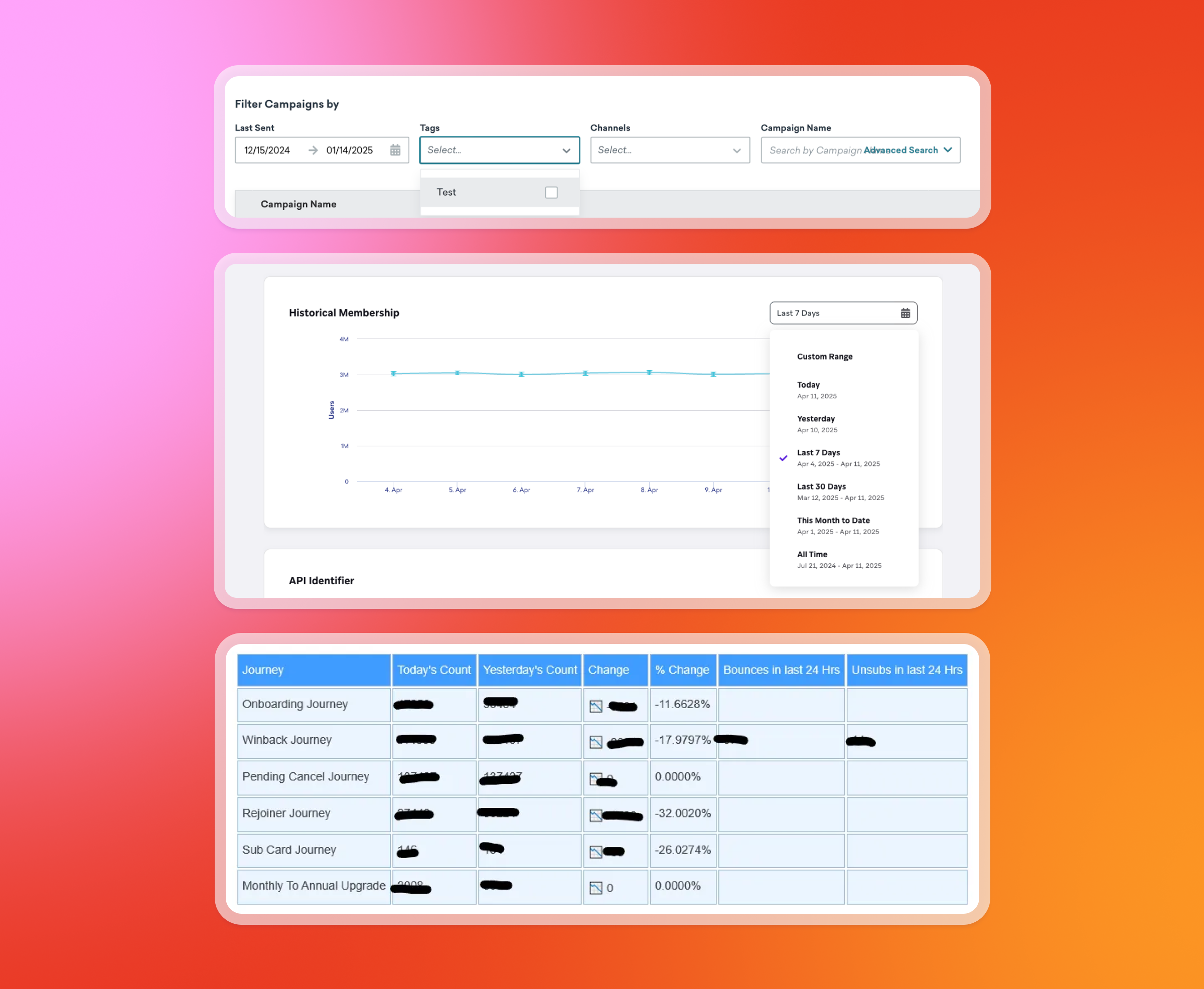
A global streaming service running campaigns across multiple publishers, regions, and content categories needed clearer performance visibility without adding more manual work.
The problem
Reporting was fragmented across publishers, regions, and campaign types. Pulling insights meant manual stitching and inconsistent rollups, which slowed decision-making.
The solution
A scalable reporting framework was built to make performance easier to track and compare over time.
- Standardized campaign tagging to support consistent rollups by campaign type and region
- Added message-level metadata to make reporting cuts easier without rebuilding dashboards
- Automated segment size tracking via APIs to monitor lifecycle audience performance over time
- Supported the reporting model with common data infrastructure patterns (for example, a warehouse setup)
The results
The team got reliable performance tracking aligned to how the business operates, with less time lost to cleanup work.
- Manual reporting work dropped significantly through automation
- Week-over-week tracking became consistent across regions and content types
- More time shifted back to campaign strategy and optimization
Example 2: Show-stealing scalability across six languages
A global streaming service running an annual, fan-driven awards experience for a highly engaged international audience.
The problem
The lifecycle team needed to beat the prior year’s participation and run a multi-phase program across continents, six languages, and multiple channels (email, push, and in-app messages). Execution was deeply manual—each message, channel, and language required its own send, and one phase alone exceeded 300 sends, creating heavy setup and quality-check overhead. The team also lacked a clean way to track voter engagement in real time or segment by daily activity, which limited optimization mid-campaign.
The solution
The program was rebuilt using Braze Canvas flows to replace fragmented builds with a scalable framework.
- Consolidated execution into centralized Canvases, instead of separate sends by language and channel
- Used one Canvas to run the six-language welcome series
- Rebuilt another phase from hundreds of sends into six Canvases, one per language
- Delivered 30+ messages dynamically based on engagement
- Added cohort-based segmentation, and refined channel mix and timing across email, push, and in-app messages
The results
The program became easier to run and easier to optimize while it was live, and performance improved materially.
- Six languages supported
- One phase previously exceeded 300 sends
- Reduced to six Canvases, one per language
- 30+ messages dynamically delivered based on engagement
- Voting and watch-time goals significantly exceeded
- Email and push became the top drivers of voter turnout, surpassing website traffic
- A reusable structure created runway for future phases, including awards viewership and post-event content
Real examples from marketers in gaming
Gaming has a built-in constraint — players are here to play, not to manage notifications. Player engagement works best when messaging matches the moment, stays relevant, and respects flow with clear timing rules, frequency controls, and suppression. In-the-moment messaging belongs at natural breaks, where it supports the experience instead of interrupting it.
Example 1: Automated workflows for faster player messaging
A global gaming brand running high-volume player messaging across regions, where timing and reliability matter for critical player touchpoints.
The problem
Manual message delivery took around four hours a day and was error-prone. A broken legacy content management system also caused rendering issues and game downtime, creating risk for a high-visibility player communications channel.
The solution
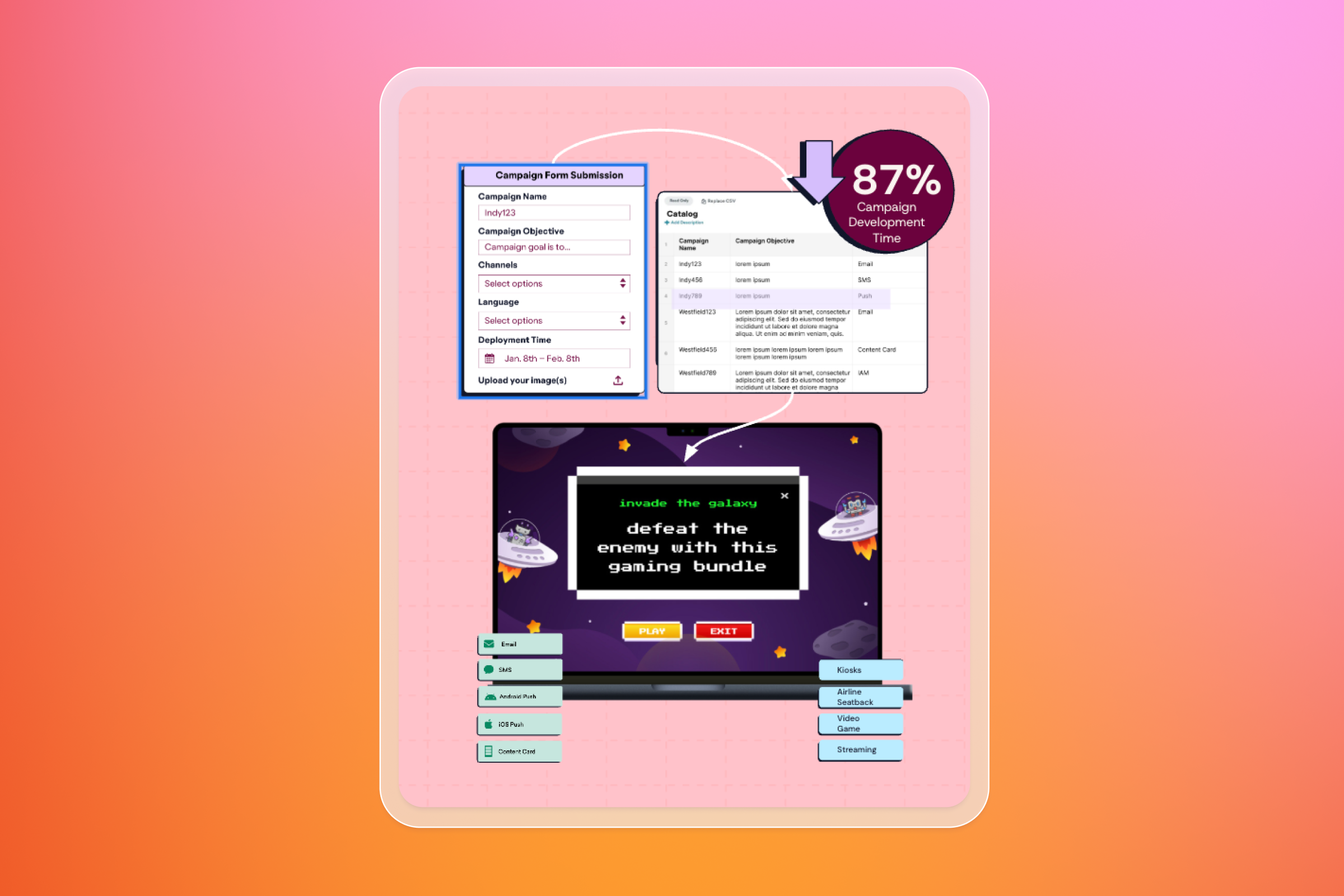
The team automated message creation by connecting its workflow tool to Braze, then built a more scalable localization and personalization process.
- Integrated Wrike with Braze to streamline builds across Canvas, Catalogs, and messages
- Connected Braze to Smartling to support translation across 13 languages
- Used content cards to support segmentation and in-product personalization
The results
Campaign setup time dropped dramatically, and the team removed fragile steps that were slowing execution.
- Campaign setup time reduced from 4 hours to 30 minutes (87% reduction)
- Translation supported across 13 languages
- Rendering issues and downtime tied to the legacy content system were removed from the process
- More team time freed up for strategy and optimization
Example 2: Real-time offers delivered to player wallets in seconds
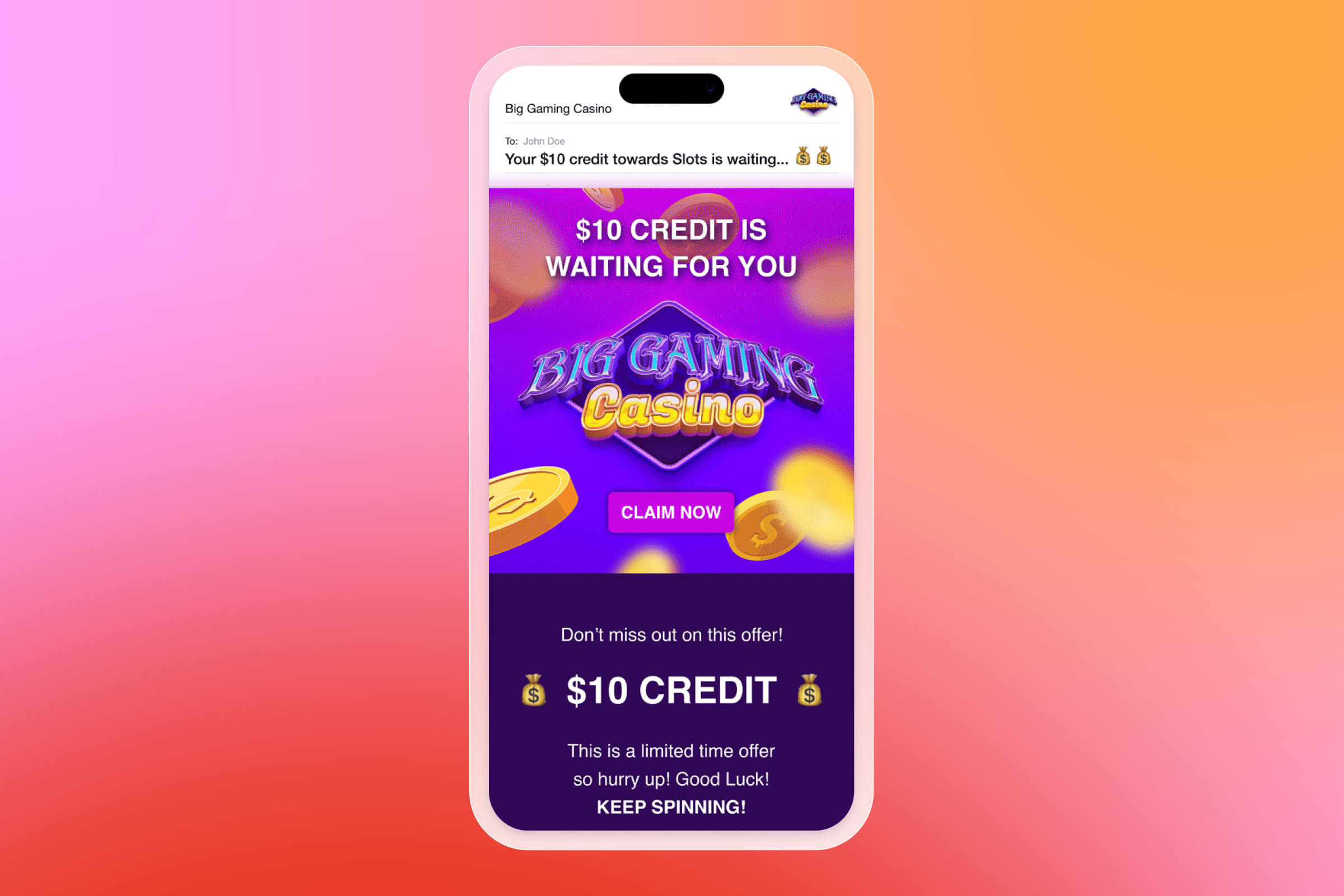
A luxury resort and casino focused on using gameplay data to deliver near real-time offers that reward and incentivize play, bridging digital and in-person experiences.
The problem
They needed fast, personalized engagement at scale, tied to live gameplay. Offers had to land quickly enough to feel connected to the moment, and they needed a way to deliver consistently across touchpoints.
The solution
They rebuilt the data flow and offer assignment process so personalization could happen quickly and reliably.
- Optimized ingestion from multiple sources into Snowflake, speeding delivery into Braze for segmentation and Canvas entry
- Used current and historical gameplay data to assign customized offers and messaging
- Connected to the casino gaming platform to deliver offers directly into player wallets and keep the experience synchronized across touchpoints
The results
Offers landed fast enough to match live gameplay, and performance with high-value players was strong.
- Personalized offers delivered in about 10 seconds
- 13% conversion rate with high-value players
- A scalable foundation created for future experience innovation
What metrics actually matter most for measuring audience engagement success?
The most useful measurement connects three things — what your messages do, what people do in the product, and what that behavior is worth over time. Stitch uses Braze to help teams get that full picture, then turn it into strategies and campaigns that are easier to run and easier to improve. Measurement is also what keeps data-driven marketing strategies honest.
Track retention and session frequency first, then tie engagement actions to downstream conversion and lifetime value.
This checklist helps you measure the right metrics across media and entertainment, sports, and gaming, so you can connect engagement back to retention and customer lifetime value.
Retention and stickiness
These metrics tell you whether engagement is turning into habit.
- Churn rate
- Returning users
- Repeat sessions
- Daily active users (DAU), weekly active users (WAU), and monthly active users (MAU)
- Stickiness, often measured as DAU divided by MAU or WAU divided by MAU
Engagement depth by sector
These metrics tell you what “good engagement” actually looks like in each business model.
- Media and entertainment metrics include watch time, completion rate, rewatch behavior, saves, and watchlist adds
- Sports metrics include matchday hub usage, live content interactions, highlight views, app opens during game windows, and membership perk engagement
- Gaming metrics include session frequency, progression milestones, feature adoption, live event participation, and store interactions
Conversion and revenue impact
These metrics show whether engagement is driving value, especially for subscriptions, memberships, ticketing, and in-game spend.
- Conversion rate, for example subscription starts, membership sign-ups, ticket purchases, or first in-game purchase
- Redemption rate for offers, perks, and rewards
- Average revenue per user (ARPU)
- Customer lifetime value (CLV)
Journey health and drop-off points
These metrics show where momentum breaks, so you can tighten targeting and timing.
- Drop-off rate between key steps such as install to sign-up, sign-up to first session, first session to second session
- Retention by lifecycle stage such as new, active, lapsing, and winback
- Segment movement during key windows such as premieres, matchdays, and live ops /in-game events
Operational speed
In media & entertainment, gaming and sports (MEGS), execution speed is part of performance. Stitch tracks this closely because it affects how quickly you can respond to live moments.
- Time to launch
- Campaign build time
- Localization throughput
- Rework rate, which can include how often builds get delayed by quality checks
If you’re building a simple dashboard, keep the top row focused on retention and session frequency, then break out engagement depth and conversion by segment, channel, and key moments such as premieres, match windows, and live ops/in-game events.
Common mistakes to avoid
If you want a quick set of guardrails, this is where we’d caution you to take extra care. They’re the same issues that slow teams down in real programs, like manual builds that balloon into hundreds of sends, messy reporting that blocks fast decisions, and messages that land at the wrong time.
Omnichannel engagement breaks down fast when channels don’t share context, timing rules, and suppression.
Messaging during the wrong moment
Fix: tie messages to schedules and natural breaks. For sports, that can mean pregame, halftime, and postgame. For media, it can mean premieres and content drops. For gaming, it’s session start, session end, and milestone moments.
Personalization built on stale or overly broad segments
Fix: refresh segments off recent behavior, layer in preferences, and add lifecycle stage so “active” doesn’t become the only bucket. Keep a clear rule for recency, and use it consistently.
No guardrails on frequency and timing
Fix: set limits, quiet hours, and cooldowns, especially around live moments. Add suppression so one person doesn’t trigger multiple journeys in the same window.
Reporting that can’t tie engagement to retention or value
Fix: standardize tagging and measurement so you can compare performance week to week, then connect engagement actions back to retention, session frequency, conversion, and customer lifetime value.
Overly manual execution that slows iteration
Fix: reduce one-off sends by consolidating into journeys, and automate repeatable build steps, especially for localization and setup checks.
Tools and stack for data-driven marketing strategies
A solid engagement stack starts with clarity. Clean event data, clear triggers, and a campaign process your team can run quickly without creating a mess. Stitch helps teams build that foundation with Braze at the center, then tighten the workflows around it so omnichannel engagement is easier to launch, measure, and improve.
For many brands, data-driven marketing strategies only work when the data layer and the campaign process are built to support real-time decisions.
Most media, sports, and gaming teams end up with three layers.
Data layer
This is where audience signals get captured and shaped into something marketing can use.
- Event streams from app and web, plus key partner sources where relevant
- Audience attributes like region, language, subscription tier, and device
- Preference capture like favorite teams, genres, content types, and alert settings
- A warehouse if it helps with historical analysis, joining sources, or reporting
Where Stitch comes in: we help define the events, attributes, and preferences that matter, then set up data flow so segmentation and measurement are reliable from day one.
Orchestration layer
This is where signals turn into journeys across channels. Braze sits here, using real-time triggers, segmentation, and messaging to drive personalization at scale.
- Real-time triggers based on events and audience changes
- Segments that stay current based on recent behavior and preferences
- Cross-channel delivery across push, in-app, and email
- Dynamic content that adapts based on what someone just did or cares about
Where Stitch comes in: we design how segments and journeys work together, then build the journeys so they’re easy to maintain as you add more use cases.
Operations layer
This is what keeps execution fast, especially across regions and languages.
- A campaign process with clear inputs, approvals, and ownership
- Localization and version control for multi-language programs
- Quality checks before launch
- Tagging standards that make reporting consistent
- Reporting pipelines that tie engagement back to retention, session frequency, and value
Where Stitch comes in: we streamline the process end to end, automate repeatable steps, and help teams reduce manual work so iteration stays fast.
How Braze and Stitch support real-time personalization and audience engagement
Braze gives you the platform for real-time, cross-channel engagement. It brings data, segmentation, journeys, and messaging together across email, push, and in-app, so teams can act on audience signals quickly.
Stitch helps marketers get the most value out of Braze. We’re all-in on the platform, and we support teams across three phases. Getting started with Braze, integrating the data and tools that power real-time use cases, and doing more with Braze through roadmaps, campaign execution, and ongoing optimization. We also build automation and AI workflows that reduce manual work, speed up iteration, and make multi-channel programs easier to run at scale.
Choose Braze for real-time orchestration, and Stitch to move from strategy to live programs faster.
See how Braze helps brands turn audience data into real-time engagement.
Frequently Asked Questions
What are the best audience engagement examples in media and gaming?
The best audience engagement examples in media and gaming are the ones tied to a clear moment and a clear signal—premieres and live events for media, and live ops / in-game events updates and progression milestones for gaming. Look for snapshots that show the trigger, the experience across channels, and what changed in retention, session frequency, or revenue.
How do media brands use data to engage audiences in real time?
Media brands use data to engage audiences in real time by acting on viewing behavior, timing, and preferences as they happen. That can mean sending a reminder when a live event starts, following up after drop-off, or updating recommendations based on what someone just watched.
What makes audience engagement effective for sports and live events?
Audience engagement is effective for sports and live events when messaging follows the schedule and reflects fan context, like attendance, team preferences, and prior engagement. Push works well for immediate updates, in-app supports game-day hubs and companion content, and email keeps the story going with recaps and perks.
How can gaming brands personalize experiences without disrupting gameplay?
Gaming brands can personalize experiences without disrupting gameplay by using the right surface and timing rules. In-app inbox and content cards work well for non-urgent updates, and push fits best around session start or time-sensitive moments, with frequency controls and suppression to avoid fatigue.
What metrics matter most for measuring audience engagement success?
The metrics that matter most for measuring audience engagement success start with retention and session frequency, then connect to conversion and lifetime value. Track churn and returning users, watch time and content interactions, conversion and ARPU, and operational metrics like time to launch and localization throughput.
How does real-time personalization improve audience retention?
Real-time personalization improves audience retention by responding while intent is high and adapting as behavior changes. Triggers like drop-off, live moments, milestones, and winback windows help deliver timely experiences that bring people back for another session.
Be Absolutely Engaging.™
Sign up for regular updates from Braze.