6 min read
How ConsumerAffairs used BrazeAI Agent Console™ to reach its least engaged audience
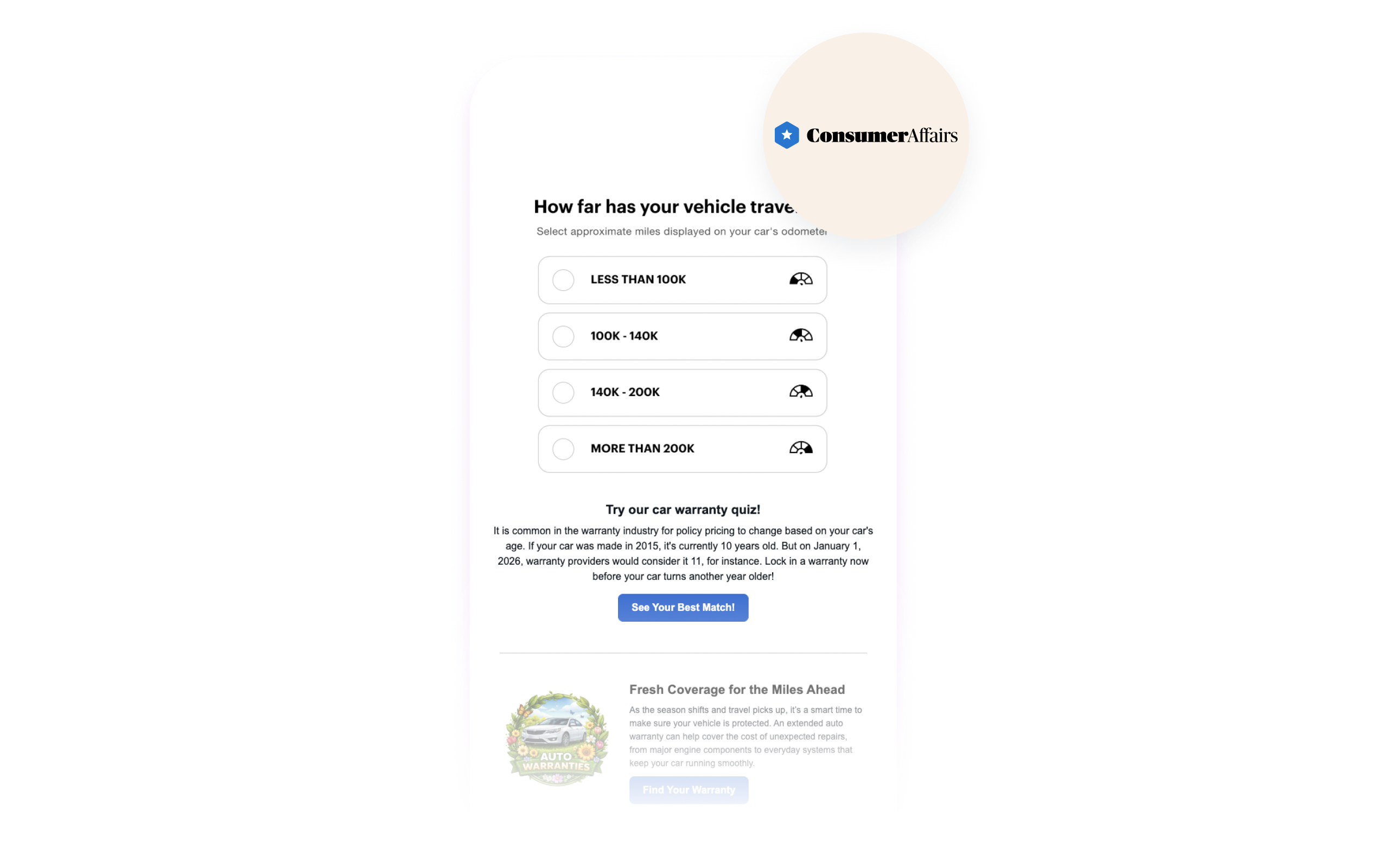
The ConsumerAffairs’ lifecycle marketing team relies on a sophisticated custom decisioning engine built in Snowflake and Braze Catalogs to automate 85% of their marketing program. However, the remaining 15% of low-engagement users lacked enough behavioral data to be effectively served by the engine. As a result, these users require manual, time-intensive campaigns to engage them.
The team implemented BrazeAI Agent Console™ as a complement to their existing decisioning engine. After defining a target audience of low engagement users with sufficient profile and click data for the agent to analyze, the agent recommended up to three relevant categories per user, which the team could use to build and test personalized emails.
Over the full 12-week test, combining both phases, there was a 136% increase in revenue per send, 69% increase in CTR, 60% increase in match request rate, and a 22% increase in overall revenue while sending 49% fewer emails. They were also able to save 20 to 25 hours a week that had been spent on manual build and QA.

PRODUCTS USED
BY THE METRICS
136%
Increase in revenue per send
60%
Increase in match requests rate
22%
Increase in overall revenue while sending 49% fewer emails
ConsumerAffairs helps millions of consumers with major purchasing decisions such as mortgage lending, extended auto warranties, solar energy options, and more. The platform combines editorial buyer guides, in-house research, and a proprietary matching tool to connect customers with brands and give them a buying advantage when facing major life purchases. ConsumerAffairs generates revenue through lead generation: When the platform successfully connects a consumer to a brand partner, that match drives the business.
Sydney Smith, Senior Manager of Lifecycle Marketing, oversees communications with visitors to the website who have expressed intent either by leaving a review or filling out a form asking to be matched with a vendor. The Lifecycle Marketing team's key performance indicators—match request rate (or request from a site visitor to be matched with a vendor), clicks per send, clicks per open, and match requests per click—sit at the intersection of engagement and revenue, making sending relevant emails a meaningful revenue driver.
Discovering the edge where automation falls short
ConsumerAffairs had already automated approximately 85% of its email marketing program through a custom decisioning engine. Built in Snowflake, that decisioning engine employs a hybrid rule-based and machine learning model connected to Braze via Segment and Braze Catalogs. This engine analyzes website behavior and profile attributes to recommend the right product categories and determine the most effective product category mix and weekly email frequency for each user. The decisioning engine was already handling the bulk of outreach to their active, data-rich audience when the team began piloting BrazeAI Agent Console™.
The problem was that the decisioning engine couldn't reach the least engaged users. The remaining 15% of the audience was identified as low-engagement because they hadn’t completed a website form in the last year, and lacked sufficient behavioral or profile data to qualify for automated category recommendations. This group was instead manually served by Sydney and her team, who spent 20-25 hours each week building five to eight emails per day. These campaigns targeted users based on known category interests or tested a range of categories to surface potential cross-sell signals. Every send required building the email, QA-ing it, scheduling it, and reporting on results. It was high-effort, low-scale work that consumed significant team bandwidth without a clear path to automation.
Redefining the lowest engagement audience
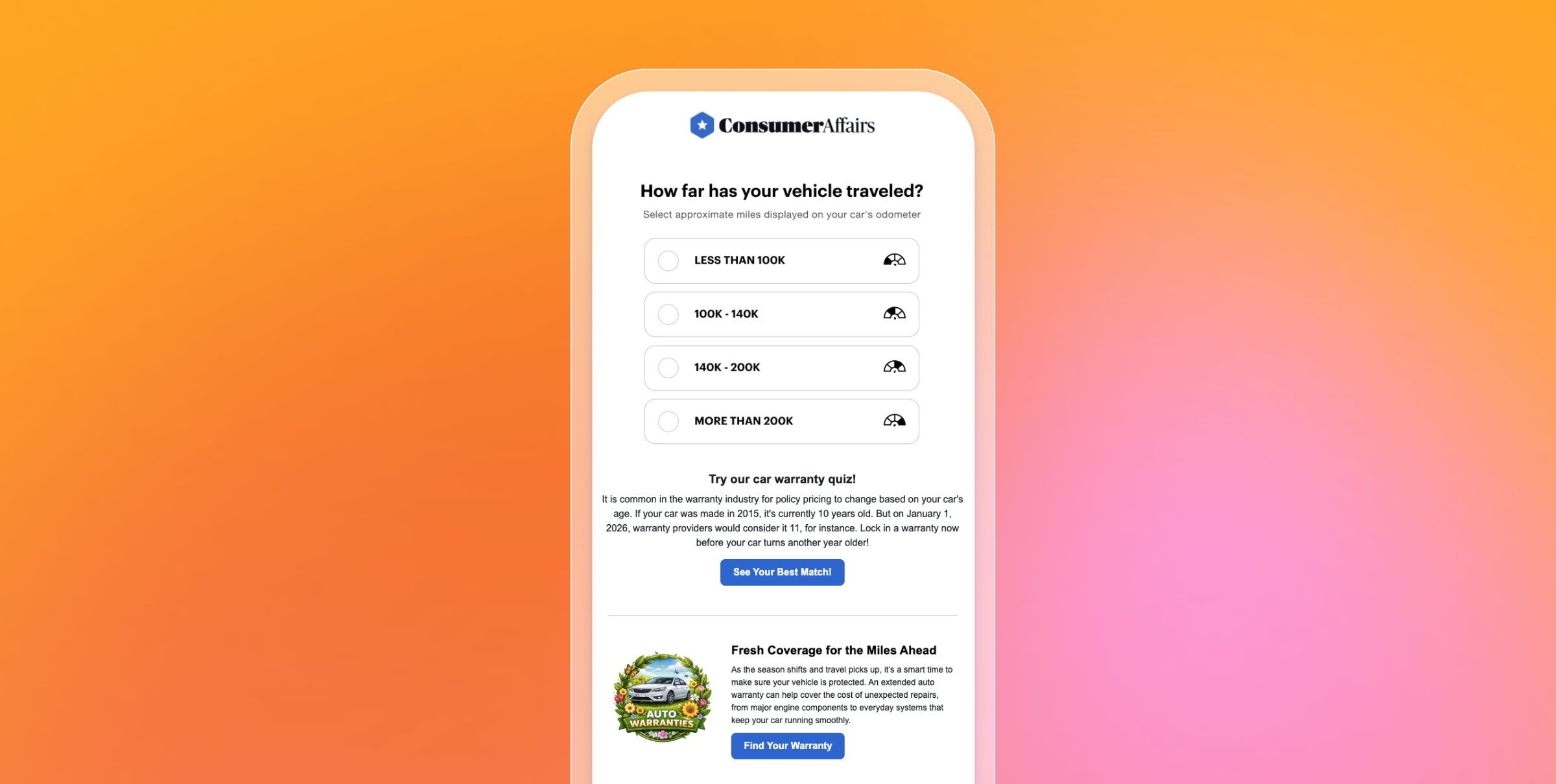
Sydney and her team approached the problem by using the BrazeAI Agent Console™ to build a lighter-weight version of the same logic, calibrated for sparser data. Sydney set parameters for what the agent could analyze: profile attributes, custom event data, email engagement metrics (such as opens and clicks) over the past 30 days, and content preferences inferred from keywords in clicked URLs. This reduced the eligible audience to roughly one-third of the original pool based on the qualification threshold. The agent's first task was to recommend up to three relevant product categories per user, but was explicitly told not to guess or make a recommendation it was not sure about, in order to not affect performance.
From there, Sydney applied the best performing content key for each product category across all users—a hybrid process she describes as "decisioning engine light." The enriched user data was uploaded back to Braze, where a campaign within a Canvas used Liquid logic to dynamically assemble each email from a Catalog containing: Subject lines, preheaders, body copy, URLs, image paths, and Content Blocks, based on the assigned content key. The result was a personalized send for an audience that had previously only received more generic, manually built emails.
Developing multi-agent lead scoring
Encouraged by the initial results, the team developed a five-agent Canvas to fully automate the recommendation and key selection process end-to-end. The expanded architecture introduced lead scoring logic: Separate agents analyze click and open behavior across multiple timeframes (3, 7, 14, 30, and 90 days), along with message volume received, to calculate an engagement score and assign users to a frequency tier. Downstream agents then determine weekly email cadence and assign a product category to target for each day of the week. The final agent selects the key that notes the components of each email’s content from the Catalog—replacing the previous manual download-and-re-upload workflow.
The results: Relevance that unlocks revenue for a low-engagement audience
The results from the testing periods demonstrate significant improvements in engagement and revenue metrics compared to manual calendar sends. Key highlights include:
- During the first 6-week test period with one agent and manual key selection, the match request rate doubled while sending 39% fewer emails, accompanied by a 68% increase in CTOR, 62% increase in CTR, 61% increase in match requests per click, and an 85% increase in revenue per send.
- The second 6-week test period with the fully automated five-agent process showed further gains: an 18% increase in open rate, 49% increase in CTOR, 77% increase in CTR, doubled match request rate, 63% increase in match requests per click, and a 115% increase in revenue per send while sending 58% fewer emails.
- Comparing the first and second test periods directly, the five-agent process outperformed the single-agent setup with a 26% higher open rate, 10% higher CTR, and 17% higher revenue per send.
- Over the full 12-week test, combining both phases, there was a 136% increase in revenue per send, 71% increase in match requests per click, 69% increase in CTR, 60% increase in match request rate, 58% increase in CTOR, and a 22% increase in overall revenue despite sending 49% fewer emails.
They were also able to save 20 to 25 hours a week that had been spent on manual build and QA. These results underscore the effectiveness of the automated multi-agent Canvas in driving stronger engagement and revenue outcomes while optimizing email volume.
“The agent was able to find the relevance signal in sparse data. When the match request rate doubled during the initial test phase, it validated the approach and gave us the confidence to begin the scaling.”
Sydney Smith
Senior Manager of Lifecycle Marketing, ConsumerAffairsKey takeaways
- AI agents can extend automation beyond previous limitations: ConsumerAffairs had already automated 85% of its program through a custom-built decisioning engine connected to Braze. They used BrazeAI Agent Console™ to solve about 5% of the remaining audience, addressing a low-data audience that didn’t qualify for algorithmic recommendations but was too large and too valuable to leave to manual processes.
- Leveraging a modular "decisioning engine light" approach lets teams reuse existing infrastructure: By combining the agent's category recommendations with creative keys from their existing Braze Catalogs setup, ConsumerAffairs avoided rebuilding from scratch. The agent plugged into an existing content architecture that built upon its value.
- Lead scoring at scale becomes possible with a multi-agent Canvas architecture: The five-agent workflow—spanning behavioral analysis across five time windows, engagement tier assignment, frequency logic, and content key selection—demonstrates how complex CRM logic that once required dedicated engineering resources can now be composed directly within Braze Canvas.
FEATURED TOPICS

Check out more Case Studies
 Case Study3 min read
Klover turned a testing plateau into its biggest open-rate wins with Braze Content Optimizer
 Case Study3 min read
Uswitch turns AI-optimized subject lines and CTAs into a smarter path to smart meter connections
 Case Study3 min read
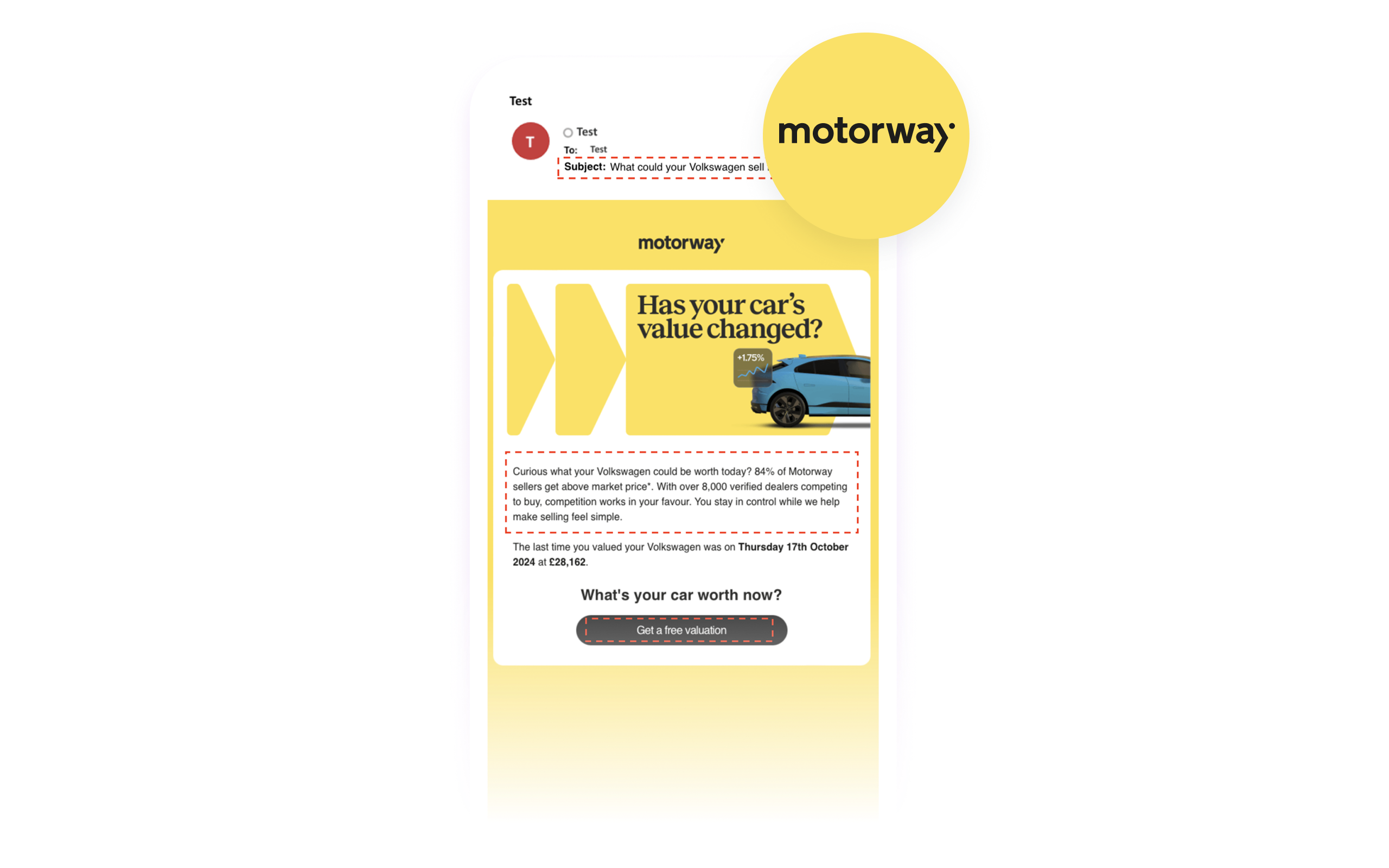
Motorway refuels its reactivation campaign into an always-on testing engine with BrazeAI Content Optimizer™