Key insights from Grow with Braze Hong Kong 2026
Published on July 08, 2026/Last edited on July 08, 2026/9 min read

Team Braze
BrazeContents
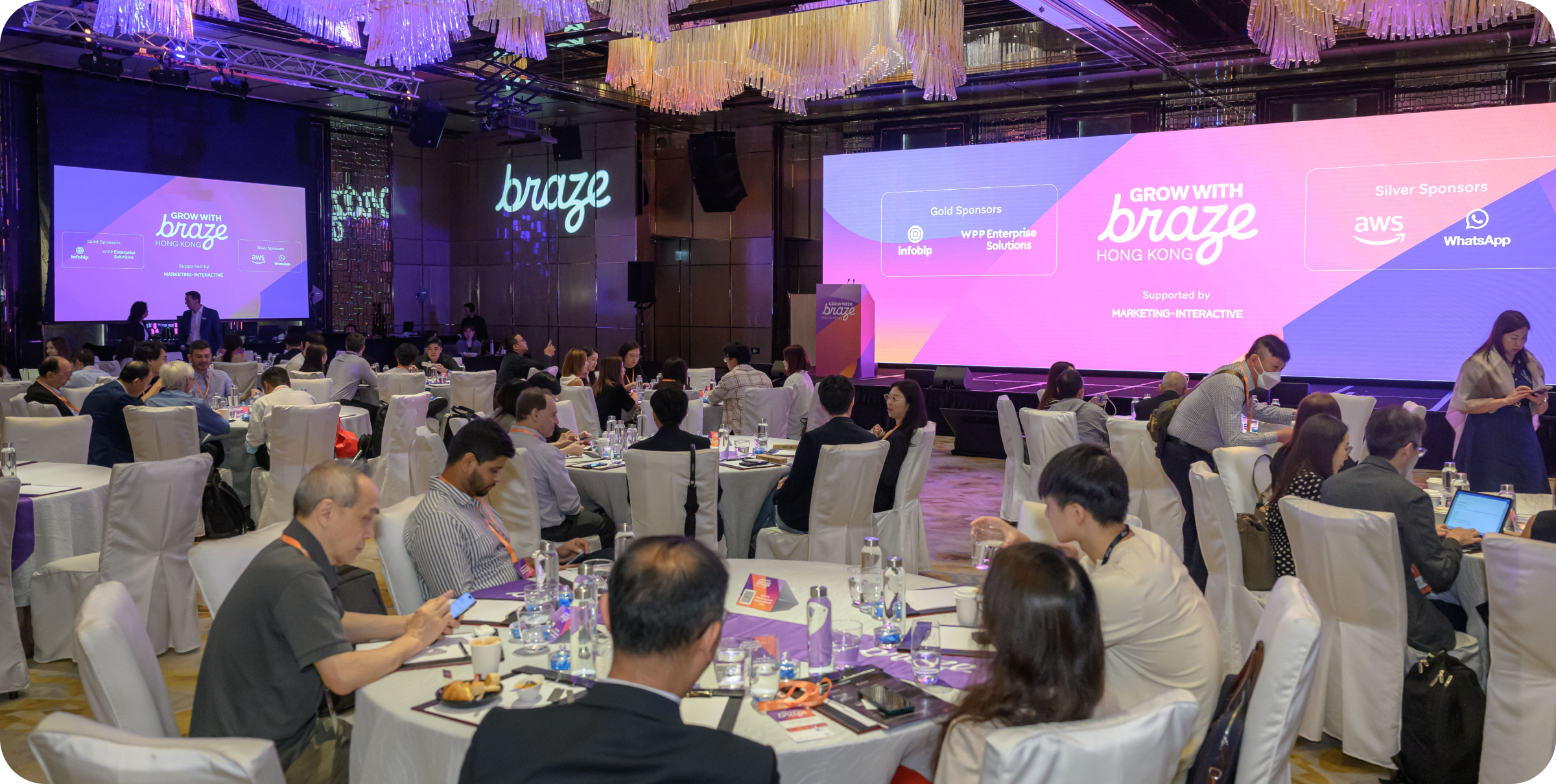
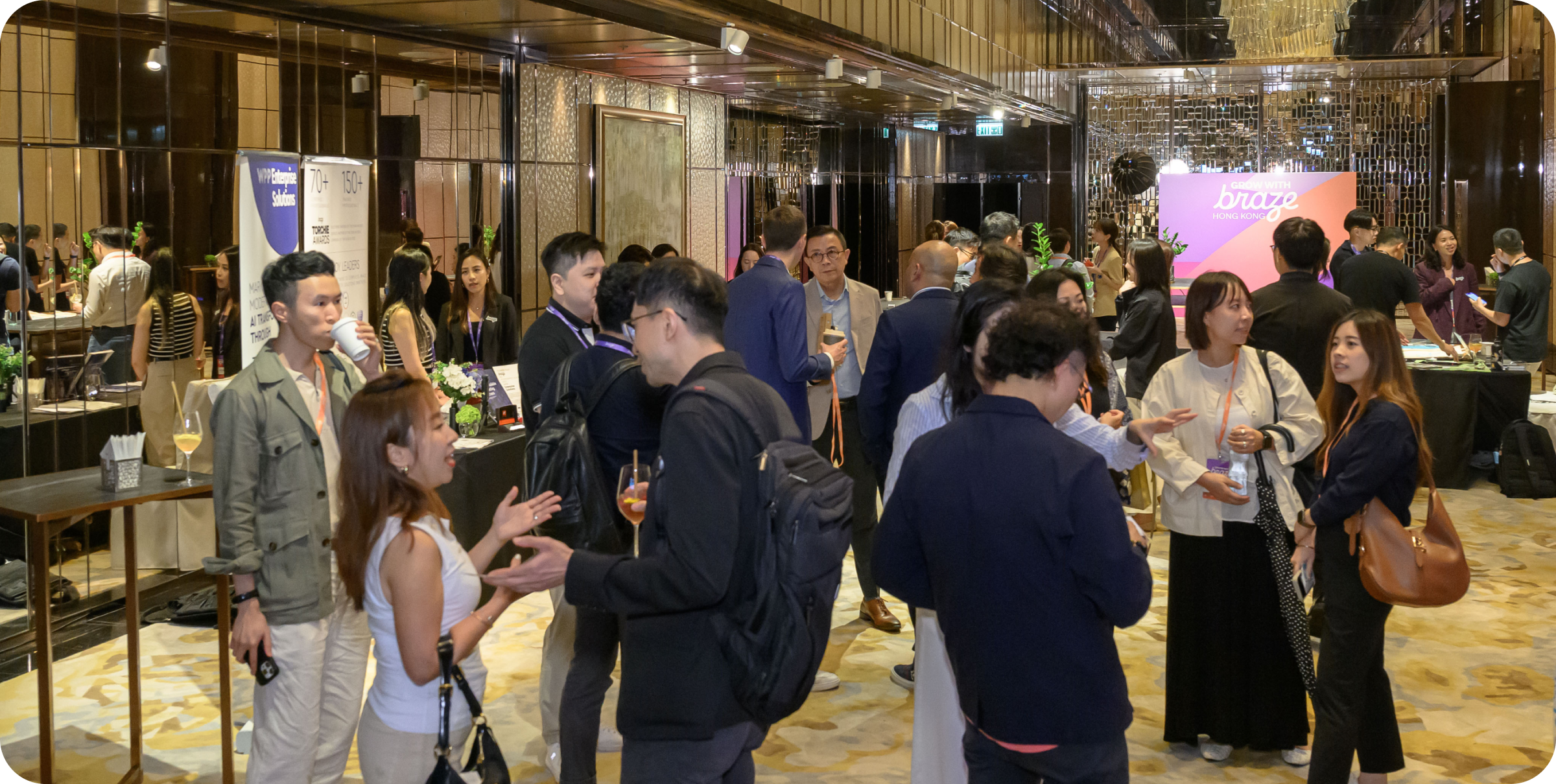
Grow with Braze Hong Kong 2026 brought together 150 marketers, CRM leaders, and digital innovators at The Ritz Carlton. The question at the centre of the afternoon being: In a world where AI can automate nearly every touchpoint, how do brands in Hong Kong and across Asia build engagement that is genuinely intelligent and genuinely human?
From streaming and F&B to airport hospitality and digital banking, the day brought together some of the region's most ambitious practitioners to share the strategies, architectures, and mindset shifts shaping the next era of customer engagement.
Welcome: The opportunity of genuine engagement
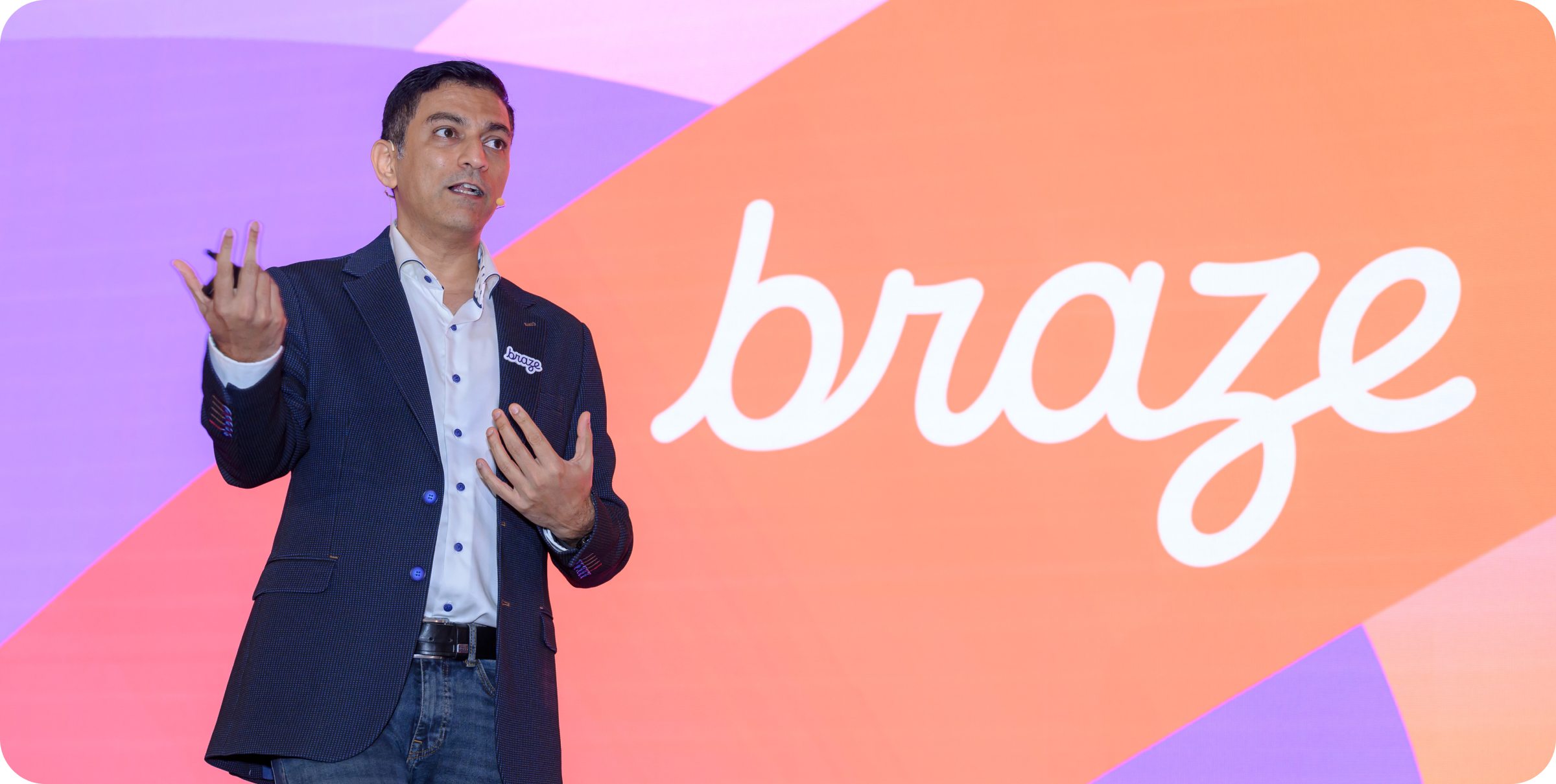
Shahid Nizami, VP of APAC & GCC at Braze, opened the afternoon by framing the moment. Braze today serves over 8.5 billion monthly active users across more than 2,700 customers, and processed over 4.5 trillion messages and Canvas actions in 2025, a foundation that underscores just how central customer engagement infrastructure has become to modern business.
But scale, Shahid reminded the room, is not the goal. The goal is connection: Listening to customers, understanding their context, and acting on it in a way that feels personal rather than automated.
Viu: Automating personalization at scale
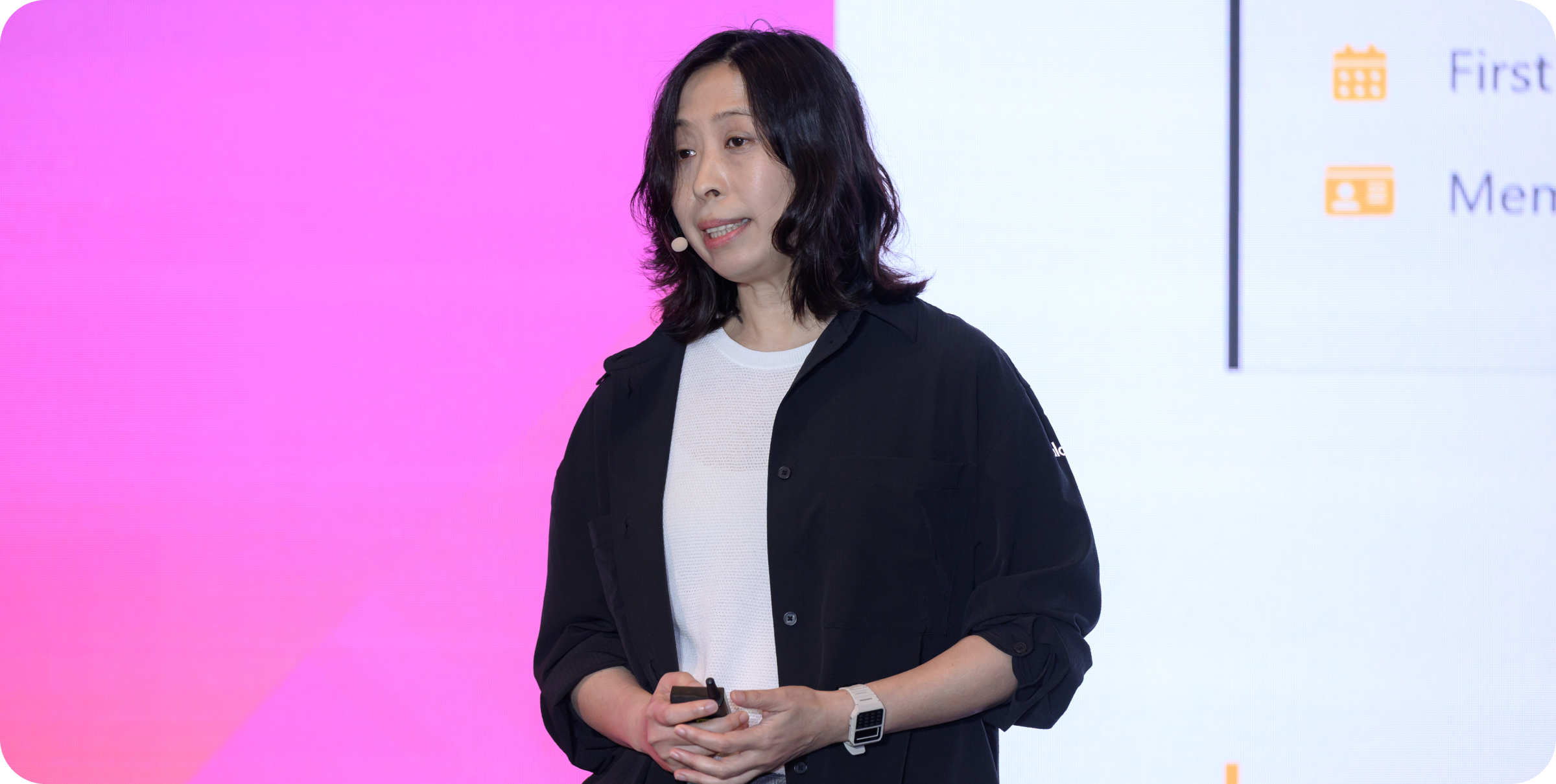
Carrie Tong, AVP Digital Strategy & Growth at Viu took the stage to share how one of Asia's leading streaming platforms, has built a personalization engine operating across 16 markets not by deploying a single model, but by assembling three interconnected levers: Data, Intelligence, and Scale.
- Data: See people, not devices. Viu builds a unified customer view that captures behavior across touchpoints, creating a richer understanding of each user beyond fragmented channel-level data.
- Intelligence: Make engagement adaptive. Users are dynamically grouped into eight personas based on viewing behavior, while send times are continuously optimized according to individual habits. The result is journeys that evolve alongside the user rather than relying on fixed segments and schedules.
- Scale: Extend the reach of a lean team. Viu runs more than 30 experiments each week across 16 markets, using AI to generate localized campaign copy and provide instant access to insights through natural-language analytics. This allows marketing teams to move faster without adding operational complexity.
The closing message was clear: AI isn't a buzzword at Viu, it's a practical system that makes recommendations sharper, copy more creative, and execution more scalable. With Braze as the execution engine and AI as the intelligence layer, a lean team can reach and meaningfully engage millions of users simultaneously.
State of customer engagement in 2026
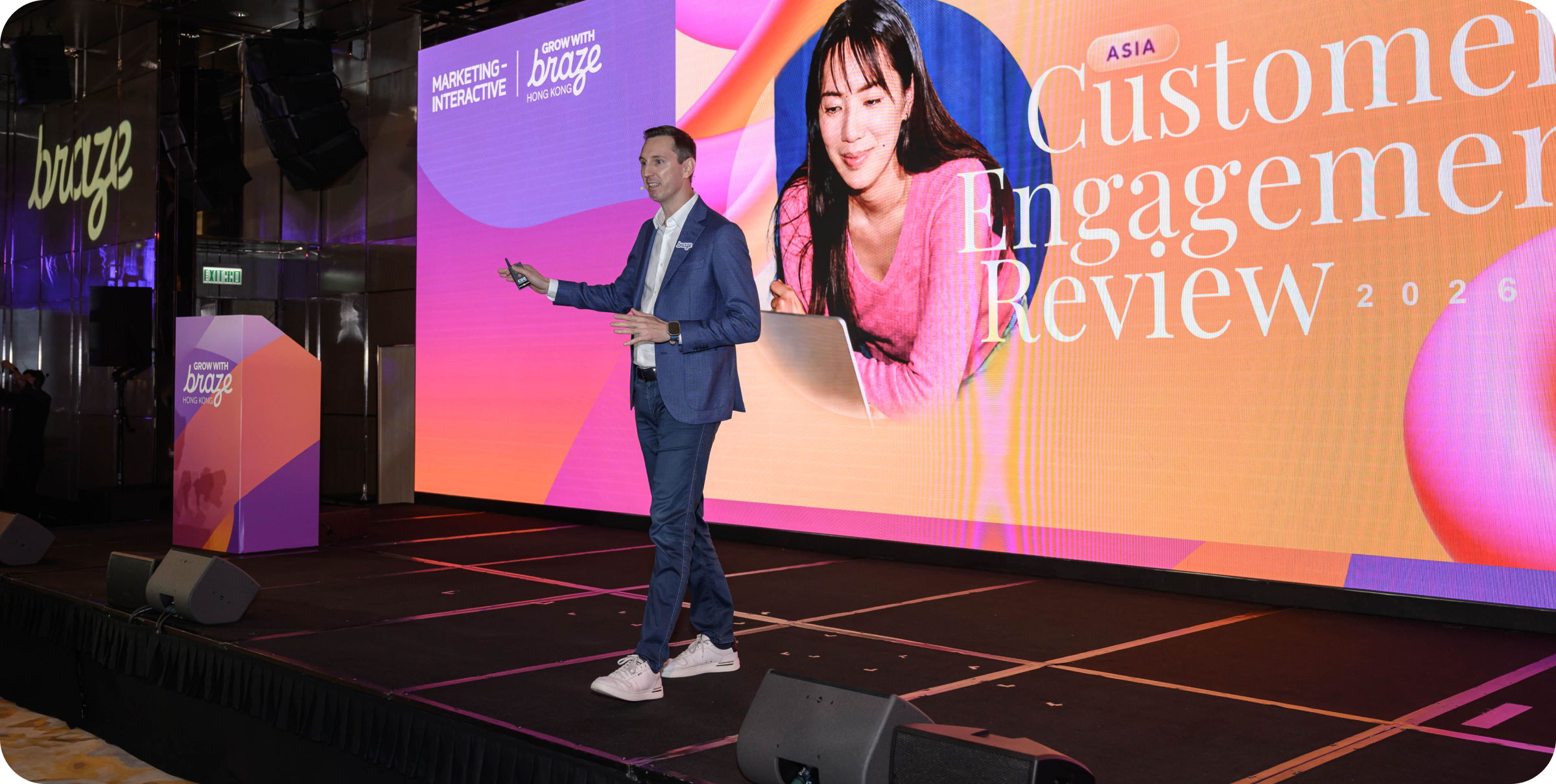
Drawing from the 2026 Braze’s Global Customer Engagement Review, Sam Meyer laid out three trends shaping the engagement landscape in Asia and beyond.
Trust Gap: Brands believe AI helps them understand customers, but consumers remain unconvinced. The opportunity lies not in better technology, but in earning trust through relevant, value-driven experiences.
AI as the New Gateway: Consumers are increasingly discovering brands through AI intermediaries rather than direct channels. Success will depend on becoming useful enough to be recommended, not just visible enough to be found.
From Rules to Decisioning: Personalization is moving beyond segments and business rules. The next frontier is AI-driven decisioning, where agents continuously determine the best message, channel, timing, and experience for each customer.
The message was clear. AI's biggest impact won't come from automating marketing tasks, but from helping brands build more trusted, relevant, and adaptive customer relationships at scale while maintaining the human touch.
From martech stack to meaningful engagement with WPP and Infobip
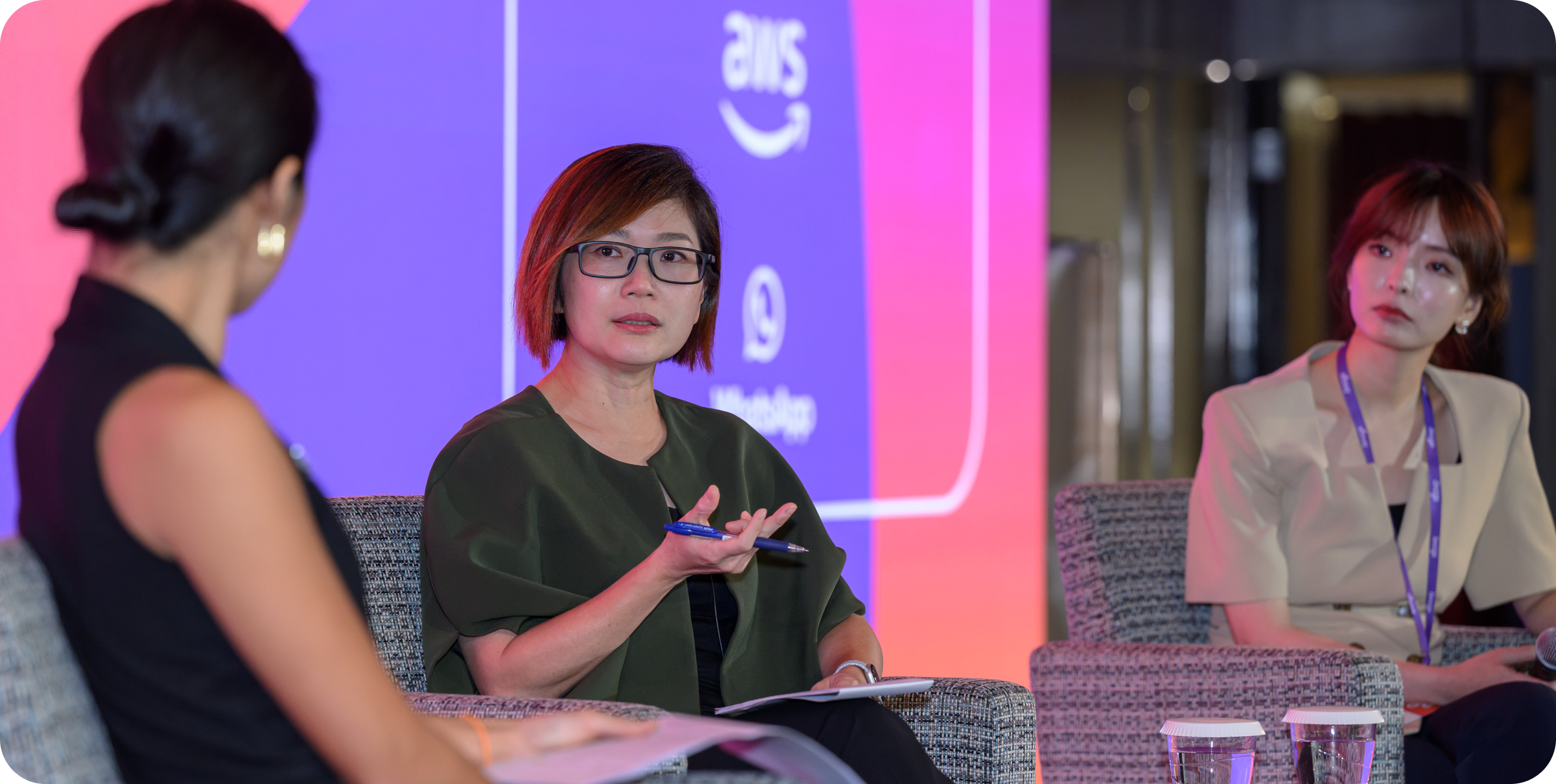
Moderated by Rachel Poon, Team Lead at Braze, the conversation started with Genevieve Tan, WPP, opening with a challenge to the room: Most brands are mistaking motion for progress, deploying AI on fragmented data and producing broadcasts that feel impersonal.
But in reality, the brands winning have done the hard work first. Her core argument on architecture was it must start before technology is selected. WPP's AI Readiness Framework sequences deliberately; Business Impact, Data Readiness, Governance, Technology. One customer rebuilt 34 journeys across 19 markets in six months on Canvas Flow; a global foodservice brand unified 3 million contact records and 94 live data points to make every customer feel known.
Tina Wang from Infobip added that infrastructure shapes what is even possible in journey design. Across APAC, there is no single channel reality, multiple touchpoints across the region with a copy-paste channel strategy across all, she noted, rarely works.
On authenticity, Genevieve pointed to the CER trust gap shared by Sam earlier in the day and the cultural dimension unique to Hong Kong is the difference between earned familiarity and assumed familiarity. Trust here accumulates through demonstrated understanding over time.
Goodnotes: Glimpses into global growth
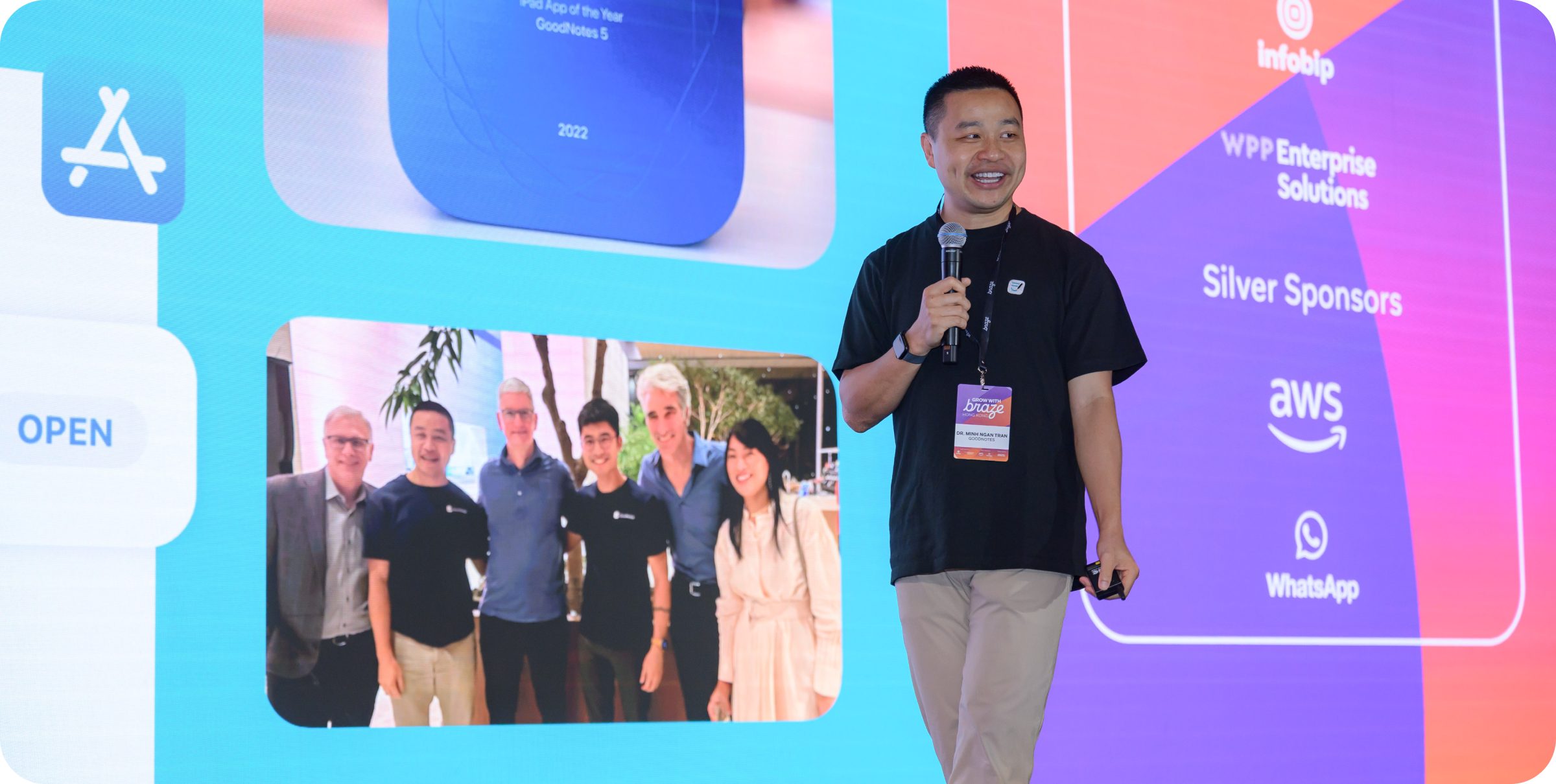
Minh Tran, COO of Goodnotes, one of the top productivity apps in the world showed what rigorous CRM looks like at a fast-scaling global product company. Braze is Goodnotes' single orchestration layer across iOS, Android, and web.
Since February 2024, the team has run 310+ campaigns across seven categories: Sell, Nurture, Announce, Listen, Recruit, Retain, and Inform. Alongside that, a dedicated lifecycle growth engine has run 24 experiments since July 2025, each measured against a randomized global holdout.
The results from the most recent 30-day window is a 14.35% lift in completed in-app purchases at 99.7% statistical confidence 4,941 incremental purchases. App session engagement showed a 0.92% change from control (+0.49% incremental uplift), representing an additional 315,233 sessions in 30 days. The CRM team now layers with BrazeAI™, Claude Code, and Codex to scale experiments faster and serve timely campaigns at the moments that matter.
Rigorous experimentation, clear measurement, and a single orchestration layer have made it one of the most tangible drivers of business performance across the company.
Tamjai International: CRM as a growth engine
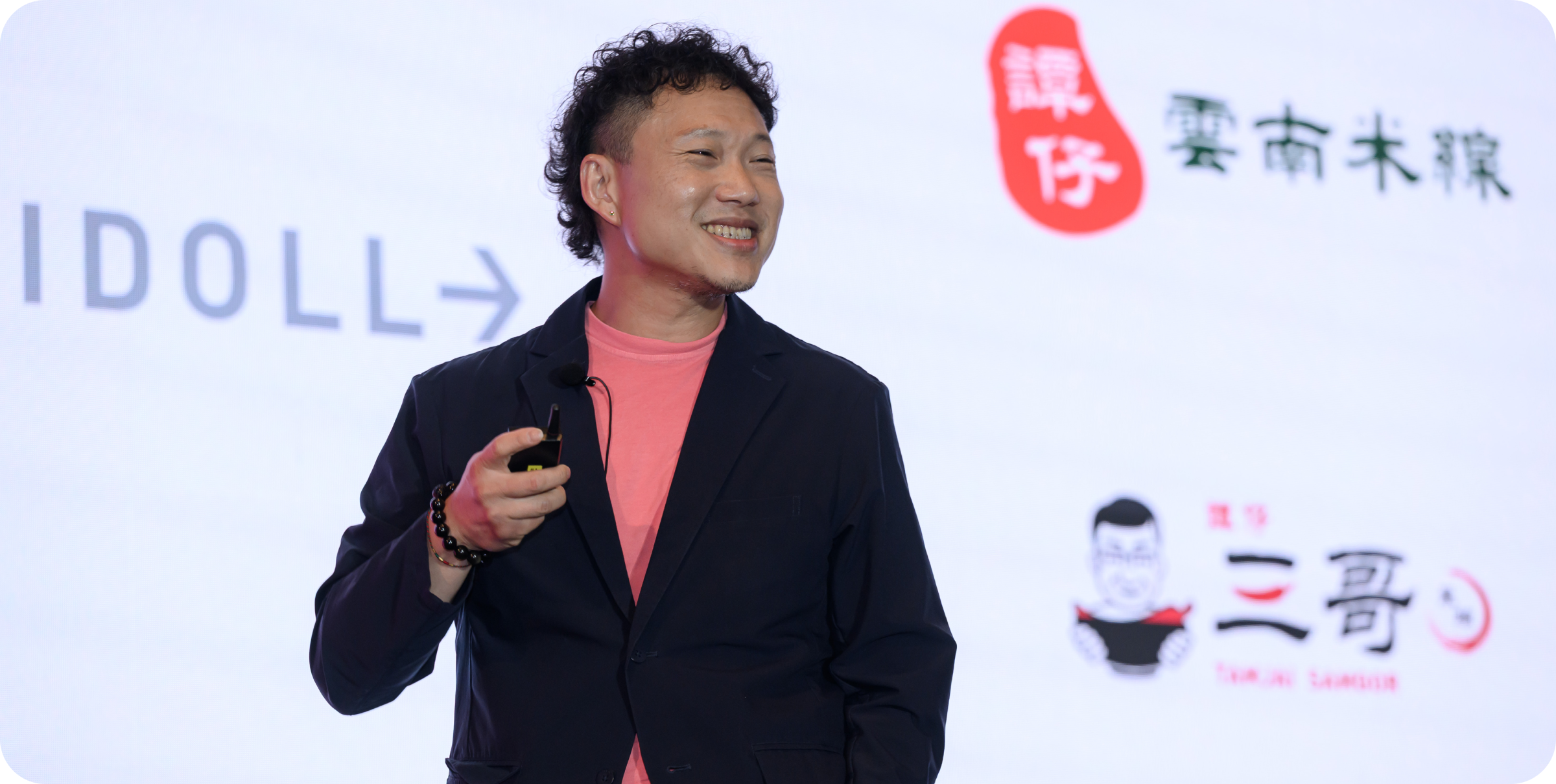
Ronald Wong, Chief Marketing Officer at Tamjai, told the story of how Tamjai International built their customer engagement into a core business driver during a tough macro environment. Three live use cases showed the breadth of what became possible.
- The RPG Mission Game. Braze's SDK tracked every in-app mission event in real time, triggering push notifications and SMS to bring a gamified brand campaign to life without building an actual game. The result was over HK$20M in attributed revenue, 15%+ inactive member reactivation, 55%+ new member acquisition, and a 28%+ lift in visit frequency.
- VIP tier protection via Canvas. An automated journey triggered by expiry proximity, nudged at-risk VIP members to spend before losing status. VIP maintenance improved from 70% to 72%, with members most responsive in the final five days.
- CNY Lai See in-app messages. AI-generated interactive digital Lai See packets replaced static e-cards, with exclusive offers triggered by webhook upon opening. Structured coupon expiry drove post-holiday traffic and a 4% weekly sales uplift, produced entirely in-house, at zero agency cost.
Tamjai's story is a reminder that CRM doesn't need to be complex to be effective, it needs to be intentional. When relevance and timing are right, the commercial results follow.
Loyalty beyond the transit with Plaza Premium Group
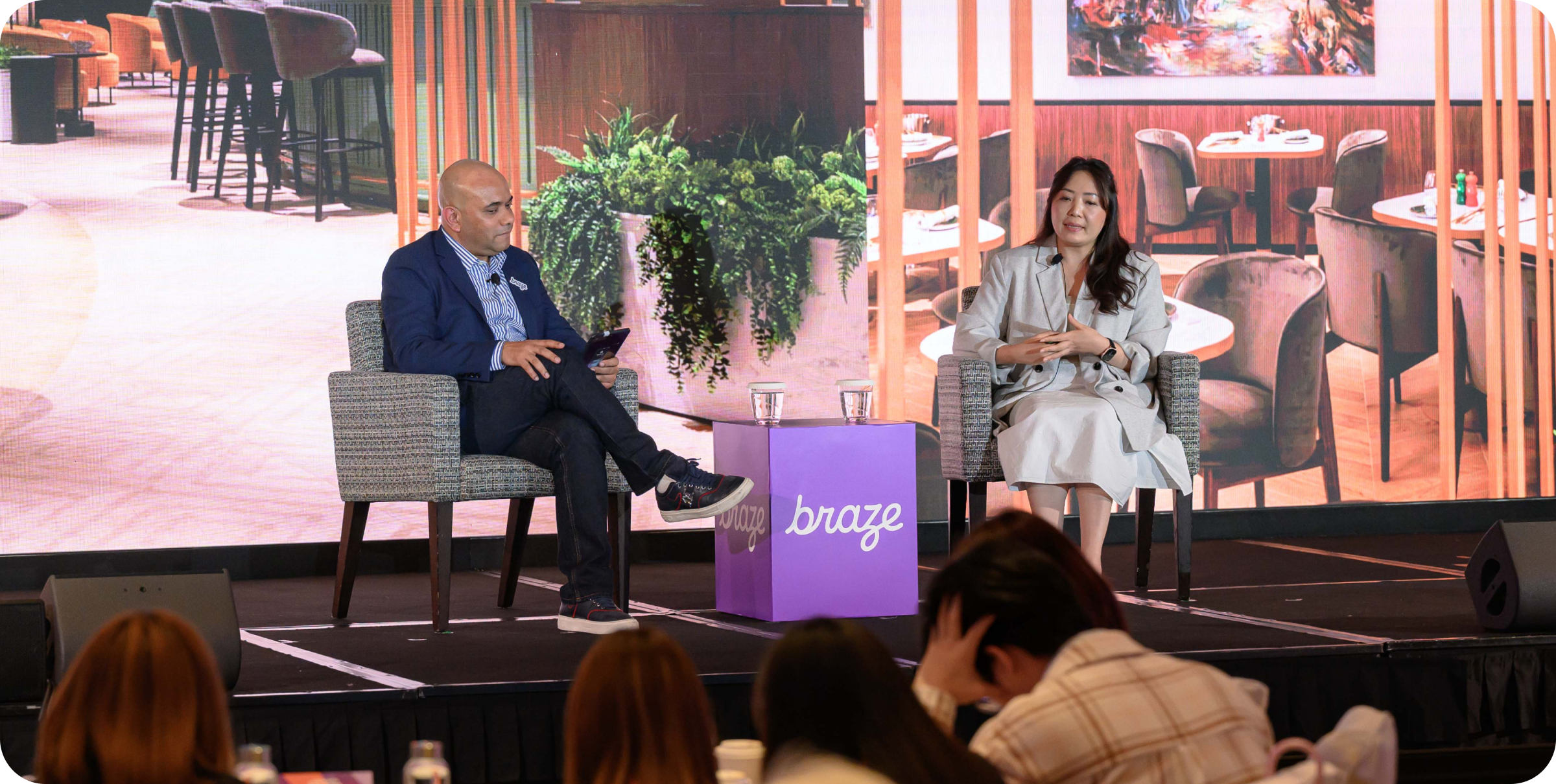
Manzar Imam and Lydia Chung, Director of Global Market Activation & Partnership at Plaza Premium Group discussed how hospitality loyalty has always been built on a specific promise: That you will feel recognized.
For decades, that was the job of a concierge who remembered your name and preferences and is now being tasked to AI. The shift as Lydia described is from service-level personalization to journey-level orchestration.
AI at Plaza Premium is enabling real-time decisions about services such as showers and massages before a long flight or a meet-and-greet support on arrival, not just upsell messages. According to IATA, 61% of frequent flyers actively seek customized services and the differentiation should come from a sense of place, experience and human connection, with AI enabling that at scale to ensure a passenger or visitor goes from a one-time visit to a long-lasting relationship with the brand.
From signal to scale with WeLab Bank
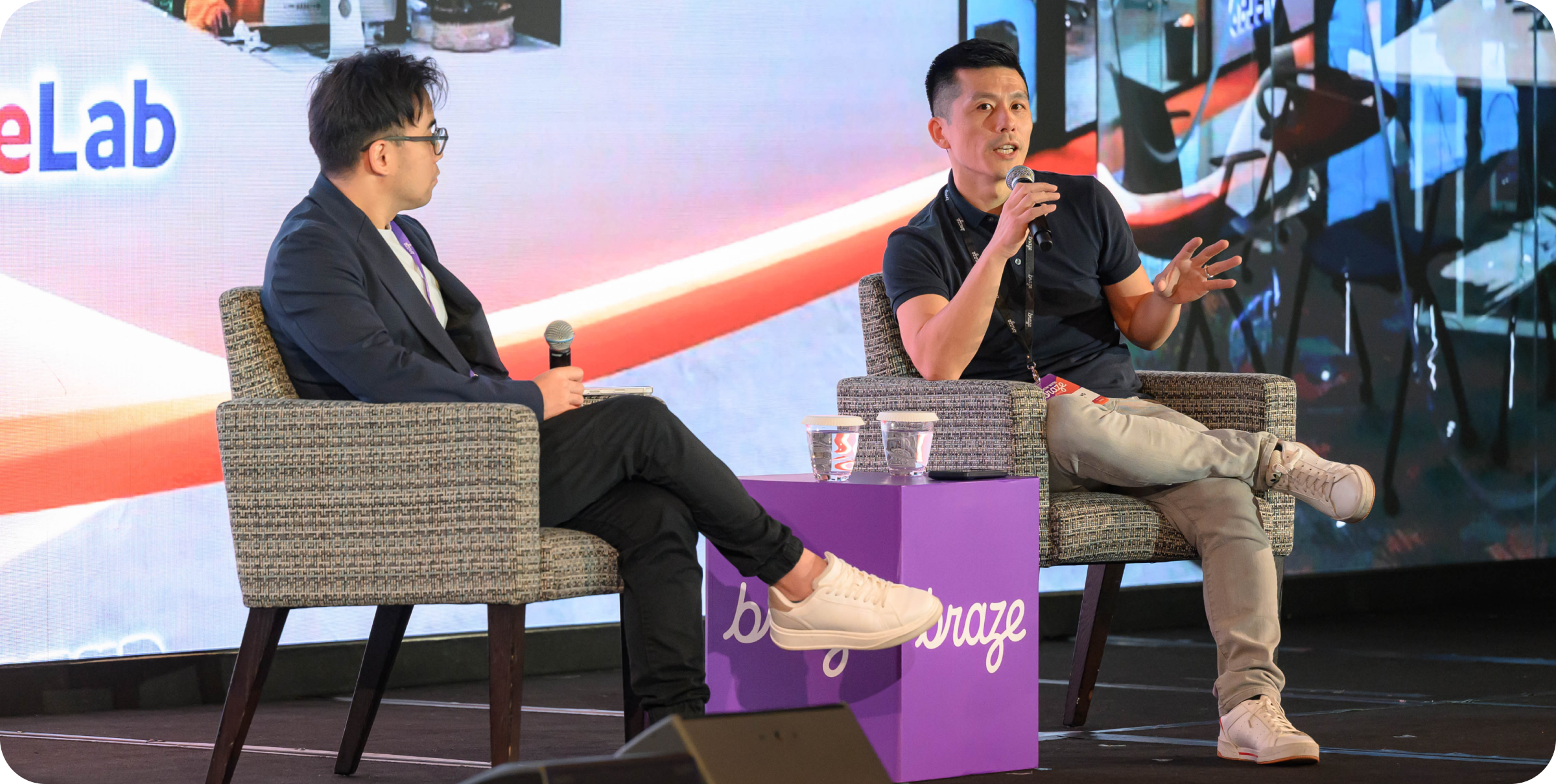
WeLab Bank is one of Hong Kong's leading digital banks, natively built, locally grown, and six years into a journey that has delivered 35%+ revenue growth year-on-year. Kevin Tsang described WeLab as an AI-first institution in practice, applying AI to listen, understand, and act on customer signals faster. A recent FX campaign illustrated this well; rather than targeting obvious travel signals, the team fed transactional and demographic data into AI to uncover a much wider range of FX intent: overseas education, property investment, cross-border business. The model surfaced attributes the team had never anticipated. On onboarding, AI generated an entire Braze Canvas flow from a campaign brief alone, with humans reviewing and refining and the journey was iterated month by month as customer behavior evolved.
On the biggest gap to real-time personalization, Kevin named something organizational rather than technical: Product alignment. When different business heads compete over whose message goes first, rule-based journeys create internal friction. The fix, he argued, is to make customer behavior the thing that determines the message. When the journey is behavior-driven, the org chart conflict largely disappears.
His stop/start closed the session with a Marvel analogy. Stop thinking in campaigns; that mindset underutilizes the full system. Start by mapping the ideal customer journey, and treat every campaign as something that feeds into it. Then borrowing from Marvel’s Loki, to build agents that bring people back when they deviate from the ideal timeline.
Most teams design the main journey and ignore everyone who falls off it. The real unlock, Kevin said, is building the return paths with the same rigour as the journey itself.
Three takeaways for Hong Kong marketers
1. Architecture before technology. The brands getting the most from AI have done the foundational work first,unified data, connected stacks and a clear definition of the experience they are trying to create. The platform amplifies the architecture; it cannot substitute for it.
2. Trust is the actual product. Across every session, the gap between what marketers believe AI delivers and what consumers experience was the central tension. The brands pulling ahead earn the right to personalize by demonstrating value consistently, before asking anything in return.
3. AI frees up human judgment, not replace it. The clearest thread of the day: AI owns scale, signal processing, and operational complexity. Humans own cultural nuance, tone, and the judgment to know when not to engage at all. In Hong Kong especially, that human layer is the foundation on which loyalty is built.
Grow with Braze Hong Kong 2026 confirmed what Asia's most ambitious brands already know, that the era of AI experimentation is over and execution is what matters now. The brands that will define the next chapter are those building the intelligence, the architecture, and the human judgment to make every interaction feel designed for a person.
Related Tags
Be Absolutely Engaging.™
Sign up for regular updates from Braze.