Gemini in Gmail and AI on Android: What marketers need to know
Published on January 26, 2026/Last edited on January 26, 2026/4 min read

Haley Trost
Director, Product Marketing, BrazeGoogle’s latest AI announcements signal a meaningful shift in how people will experience email and push notifications across the larger Google ecosystem. With Gemini coming to Gmail and AI summaries arriving on eligible Pixel devices, Google is inserting itself more directly between brand and customers. For the first time, Google—not the user—is actively deciding which messages deserve attention.
This is a major change in the customer engagement landscape, one Apple set in motion a couple years ago with AI-powered notification summaries and email previews in iOS 18. Increasingly, this shift means that engagement will depend on how artificial intelligence interprets, summarizes, and surfaces a message on a user’s behalf.
Let’s unpack what’s happening and what it means for your engagement strategy.
Gemini-powered Gmail and the rise of the AI-curated inbox
Google is transforming Gmail from a chronological inbox into an intent-driven experience. Instead of scanning individual emails, Gmail users with Google AI Pro and Ultra subscriptions can now rely on AI to summarize long threads, highlight messages that require action, and answer questions about what matters most in their inbox. As a result, users may interact with Gemini’s interpretation of an email before actually engaging with the email itself. (In some cases, they may never open the message at all.)
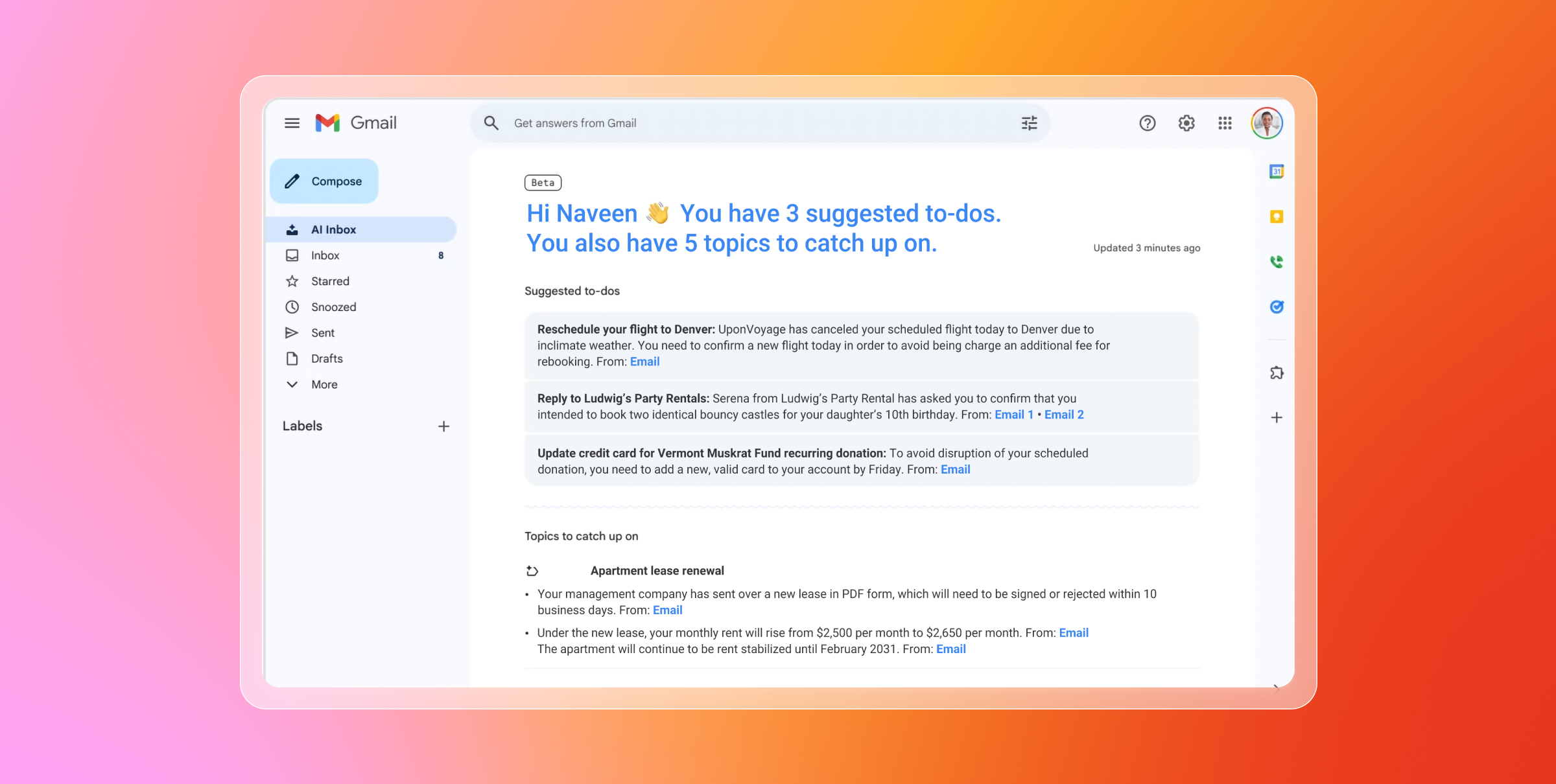
Historically, email deliverability has been about avoiding spam filters and earning a place in the inbox. Gemini introduces a new layer beyond that. Even when an email is successfully delivered, it still has to prove its relevance in an AI-mediated environment.
Emails that feel repetitive, unclear in purpose, or low in perceived value may be summarized, deprioritized, or effectively hidden behind more relevant content. In practical terms, this means that technical deliverability is still essential, but it’s no longer the finish line. AI relevance will now play a key role in determining whether a message truly reaches its audience.
This also means that inbox metrics may shift. Open rates may decline as summaries replace traditional previews, but that doesn’t necessarily mean performance is worse. Instead, engagement may become more concentrated among users who see clear value and take meaningful action.
Designing email content for people and for AI
In an AI-powered inbox, every email has two audiences: The person reading it, and the model deciding whether and how it should be surfaced.
That reality puts a premium on clarity and intent. Emails that quickly communicate why they exist and what the recipient should do next are more likely to be elevated by AI systems. Messages that bury their purpose or rely on generic promotional language risk being compressed into summaries that strip away their impact.
Quality also matters more than ever. When brands send fewer, more relevant emails that align with user behavior and expectations, AI has stronger signals to work with. Over time, this can improve how messages are prioritized and presented, even if it also leads to decreases in overall send volume.
AI notification summaries on Pixel extend the same logic to mobile
Google also announced that Android 16 will bring similar features to push notifications. AI will group and summarize alerts so users can understand what’s happening without being interrupted by every individual message.
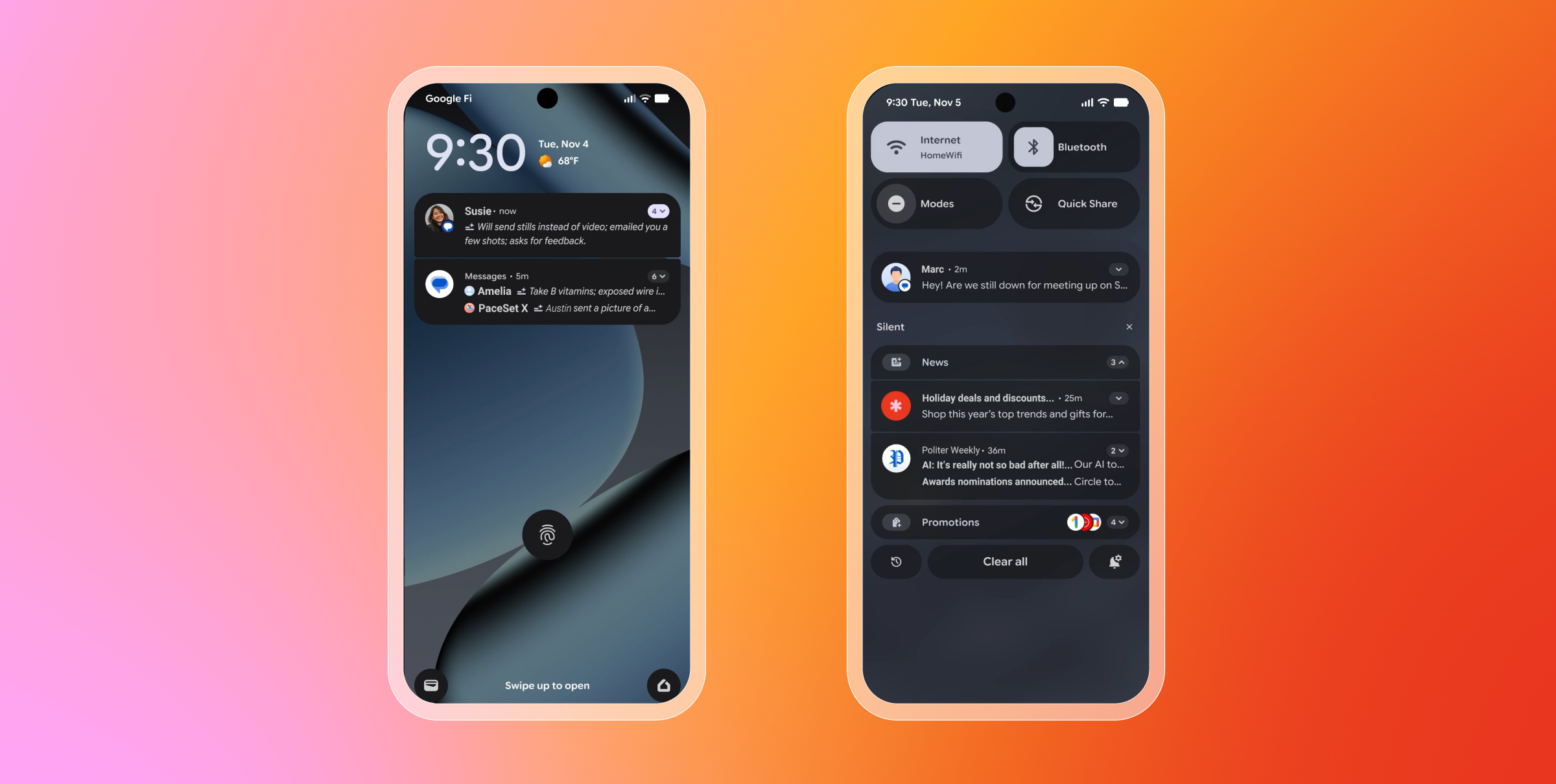
For marketers, the implications mirror what’s happening in email. Notifications that don’t convey immediate or personal value are more likely to be bundled, delayed, or ignored by users entirely. The opening line of a push notification carries even more weight when AI decides whether it deserves attention. Once again, relevance determines visibility.
What this shift means for modern engagement strategies
Across email and mobile, Google is reinforcing the same message: Your communication has to earn its place by delivering clear, timely value.
It might feel like a loss of control over your message, but try to reframe it as an opportunity: when AI reduces noise, high-quality communication stands out more clearly. Brands that focus on intent, context, and restraint will be better positioned to build trust and drive meaningful action.
In short: In an AI-curated world, every message has to matter.
Related Tags
Be Absolutely Engaging.™
Sign up for regular updates from Braze.