What are anonymous users?
Published on February 27, 2026/Last edited on February 27, 2026/6 min read

Team Braze
Contents
Anonymous users are everywhere. They browse your website, open your mobile app, add items to their cart, and engage with your digital properties—all without logging in or creating an account. For most brands, these unidentified visitors aren't a fringe audience or a data gap—they're the starting point of the customer lifecycle. Every known customer, subscriber, and loyal user begins as an anonymous visitor.
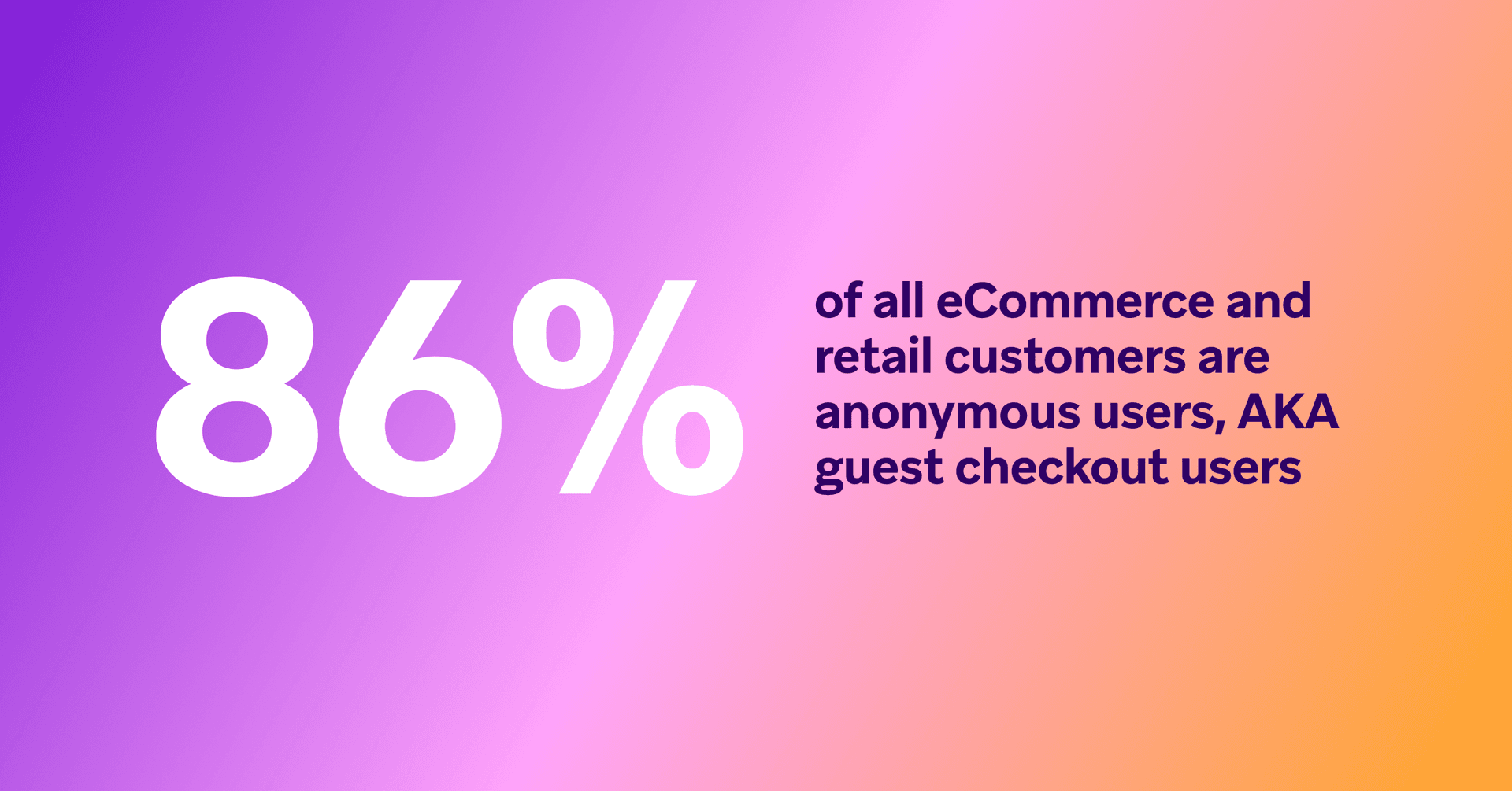
According to Braze research analyzing 2.5 billion active users across popular retail and eCommerce apps, 86% of shoppers are anonymous users—they engage as guests rather than logged-in customers. This pattern holds across industries, from media and entertainment to SaaS and on-demand services. Yet despite their prevalence, up to 80% of these anonymous users receive zero marketing outreach.
This represents a massive missed opportunity. Anonymous users aren't just casual browsers with no intent—they're potential customers at the very beginning of their journey with your brand. Many are actively evaluating your products, comparing options, and moving toward a purchase decision. With the right engagement strategy, these unidentified visitors can become your most valuable known users and loyal customers.
The good news? The same customer engagement principles and lifecycle marketing approaches that work for known users can be adapted to reach anonymous audiences.
This article explains what anonymous users are, why they matter strategically, and how brands can engage and activate them responsibly—turning anonymous interactions into meaningful customer relationships.
TL;DR
Anonymous users are individuals who engage with your brand’s digital properties without creating an account or otherwise identifying itself.
Anonymous users explained?
An anonymous user is a person who interacts with your website or app without identifying themselves. Anonymous users haven't logged in, created an account, or shared an identifier that lets you reliably tie their activity back to a specific person across sessions and channels.
If you've ever browsed a website without signing up, read articles without subscribing, or added items to a cart as a guest, you've been an anonymous user yourself.
Anonymity usually happens because there's no moment yet where identification makes sense. A visitor browses product pages, reads articles, or starts onboarding, then leaves before signing up. There's also often a privacy and consent layer—people may limit what they share, decline certain tracking, or use device settings that reduce available identifiers.
Even without a known identity, anonymous users generate meaningful behavioral signals. First-party data like sessions, pages viewed, clicks, in-app actions, and content engagement reveal intent, friction points, and areas of interest. A visitor who browses winter coats three times in a week is signaling purchase consideration—you just don't know their name yet.
Anonymous users and your customer engagement strategy
Across industries, anonymous users represent the majority of digital traffic, with similar patterns seen in retail, media, and SaaS platforms. Yet in anonymous users marketing, most brands reserve all engagement efforts for identified users, treating anonymous visitors as unactionable.
This is a strategic opportunity. Anonymous users belong in your engagement strategy because they're already taking meaningful actions across your owned digital touchpoints, including purchases.
Braze research found that 12% of retail and eCommerce purchasers are anonymous users, and that anonymous users are 58% more likely to make a purchase within their first week of engaging with a brand compared to known users.
That changes how you should think about audience value. Each anonymous user may not be identifiable yet, but their behavior still signals intent, urgency, and friction.
Those signals can inform how you shape messaging, onboarding, and content experiences earlier in the customer journey. Using first-party data and clear consent as your guardrails, you can create an intentional, strategic approach.
There's also upside in simply showing up. Braze found that using just one messaging channel to engage anonymous users can drive a 5.3X increase in likelihood to buy among this segment. The engagement strategies that work for known users can be adapted for anonymous audiences—you just need the right channels and a privacy-first approach.
Ready to convert your anonymous users to known users?
Converting anonymous users to known users starts by treating early interactions like the beginning of the customer journey—building relevance from what people do, asking for information at the right moments, and using consent and transparency as your guardrails.
Understand anonymous users through behavior
Each anonymous user leaves behind plenty of first-party signals that point to intent and friction. Sessions, browsing patterns, content consumed, search behavior, and interaction depth can show what someone wants, what's slowing them down, and where they're most likely to drop.
This learning can happen without identification. It gives teams a way to improve engagement while staying privacy-first, because you're responding to what's happening across your owned digital touchpoints.
Know when and why to ask for information
The fastest way to lose trust is to ask for data before a user sees the gain for them is. Moving from anonymous to known has more impact when data collection is value-based, with a clear purpose and benefit for the user.
That could mean capturing preferences to tailor content, offering account creation to save progress, or requesting an email address for order updates. Keep the request specific, and be clear about what changes for the customer once they share it.
Activate insights through engagement
Once you have behavioral signals, you can group anonymous users by what they care about and how they're engaging. Segmentation and triggered messaging let you respond to actions in real time, keeping outreach relevant without needing a fully known identity.
Contextual interactions can happen inside the experiences people are already using, such as in-browser prompts or in-app messages that reflect the page they're on or the content they just consumed.
Convert anonymous users into known users
Conversion is rarely a single moment. Progressive identification—also known as identity resolution—builds trust over time, starting with low-friction opt-ins, then deeper signals like account creation, loyalty enrollment, or profile enrichment.
Make opt-ins consent-based and transparent. Let users choose which channels they want to hear from (email, SMS, push) and be clear about what each will be used for. This respects user preferences and builds trust through transparency.
Known user status should unlock something a customer actually wants, such as a smoother experience across devices, faster checkout, saved favorites, more relevant recommendations, or access to member benefits.
If you want a concrete way to turn this framework into campaigns, the Braze Inspiration Guide includes a customizable template for nudging anonymous users through account creation. Inside, you'll also find Braze insights on increasing anonymous users' likelihood to become buyers by up to 21X, plus ideas for driving up to 20% higher spend among this segment.
You'll also find additional campaign ideas for key activation moments, including free trial activation and account onboarding, with cross-channel examples designed to reach people while they're actively engaging.
Learn how Braze helps you turn anonymous interactions into meaningful customer relationships. Explore the platform or contact our team.
Frequently Asked Questions
What are anonymous users in digital marketing?
Anonymous users are people who interact with your website or app without providing identifying information like an email address or account credentials. They browse, engage, and generate behavioral data as guests, representing the earliest stage of the customer journey before any formal relationship is established.
Why are anonymous users important to customer engagement?
Anonymous users represent the majority of digital audiences and show high purchase intent. They're 58% more likely to buy within their first week than known users, and 12% of eCommerce purchasers remain anonymous. Engaging them early accelerates conversion and builds relationships before competitors can.
How can brands engage anonymous users without violating privacy?
Brands can engage anonymous users by using first-party behavioral data, delivering contextual messages through in-browser or in-app channels that don't require identifiers, being transparent about data collection, and asking for information only when offering clear value in return. Make engagement helpful, not intrusive.
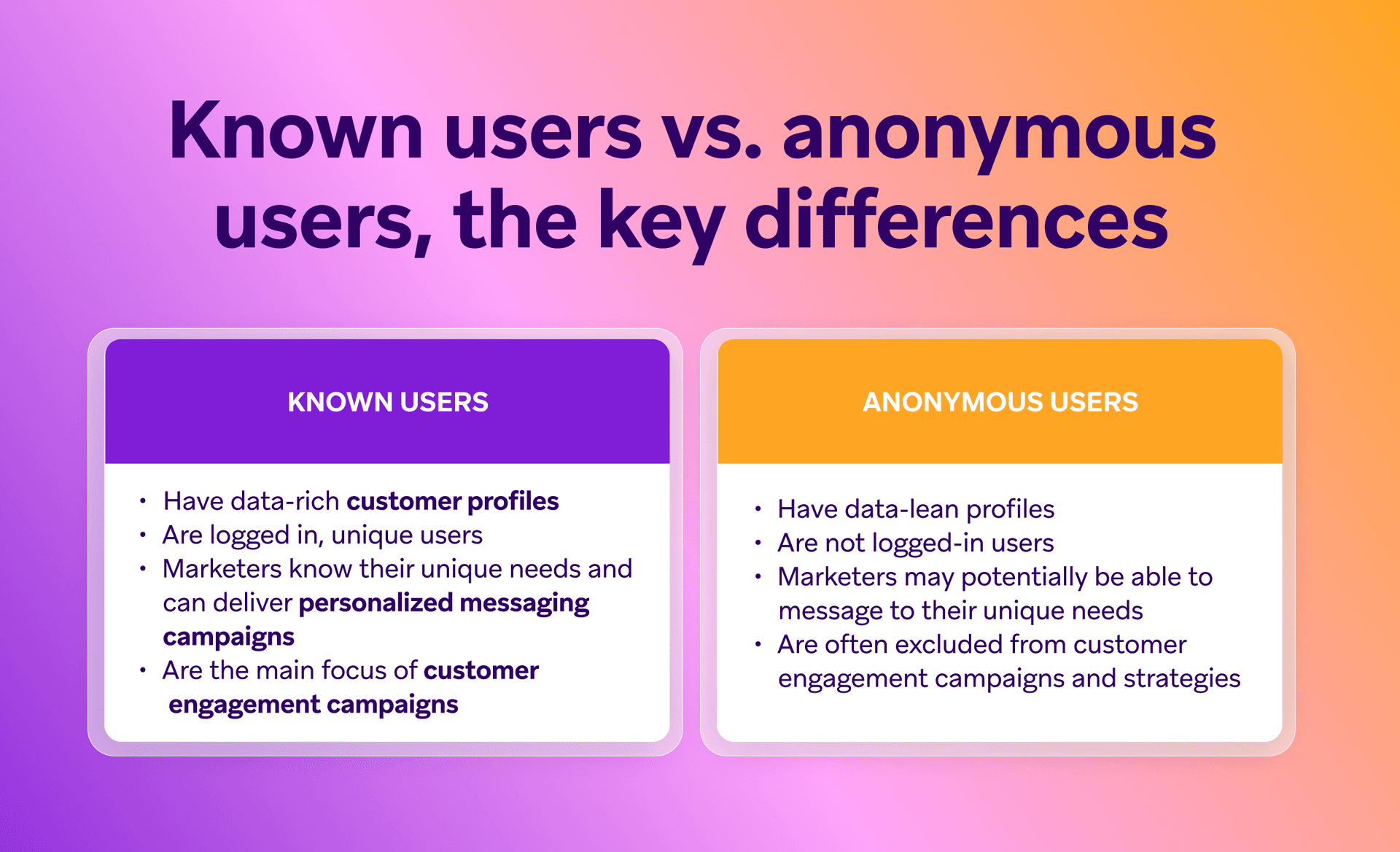
What's the difference between anonymous and known users?
Anonymous users haven't provided personally identifiable information—brands observe their behavior but don't know who they are. Known users have identified themselves through signup or account creation, enabling personalized outreach across channels like email and SMS. Anonymous users are observable but not identifiable.
How does Braze help convert anonymous users into known users?
Braze tracks anonymous behavior across web and mobile, segments users by actions without requiring identification, delivers contextual in-browser and in-app messages, triggers timely engagement based on intent signals, and enables progressive identification strategies that convert users gradually using a privacy-first approach.
Related Tags
Be Absolutely Engaging.™
Sign up for regular updates from Braze.